

Langstaff for Harrods Aviation
Pete Wackett

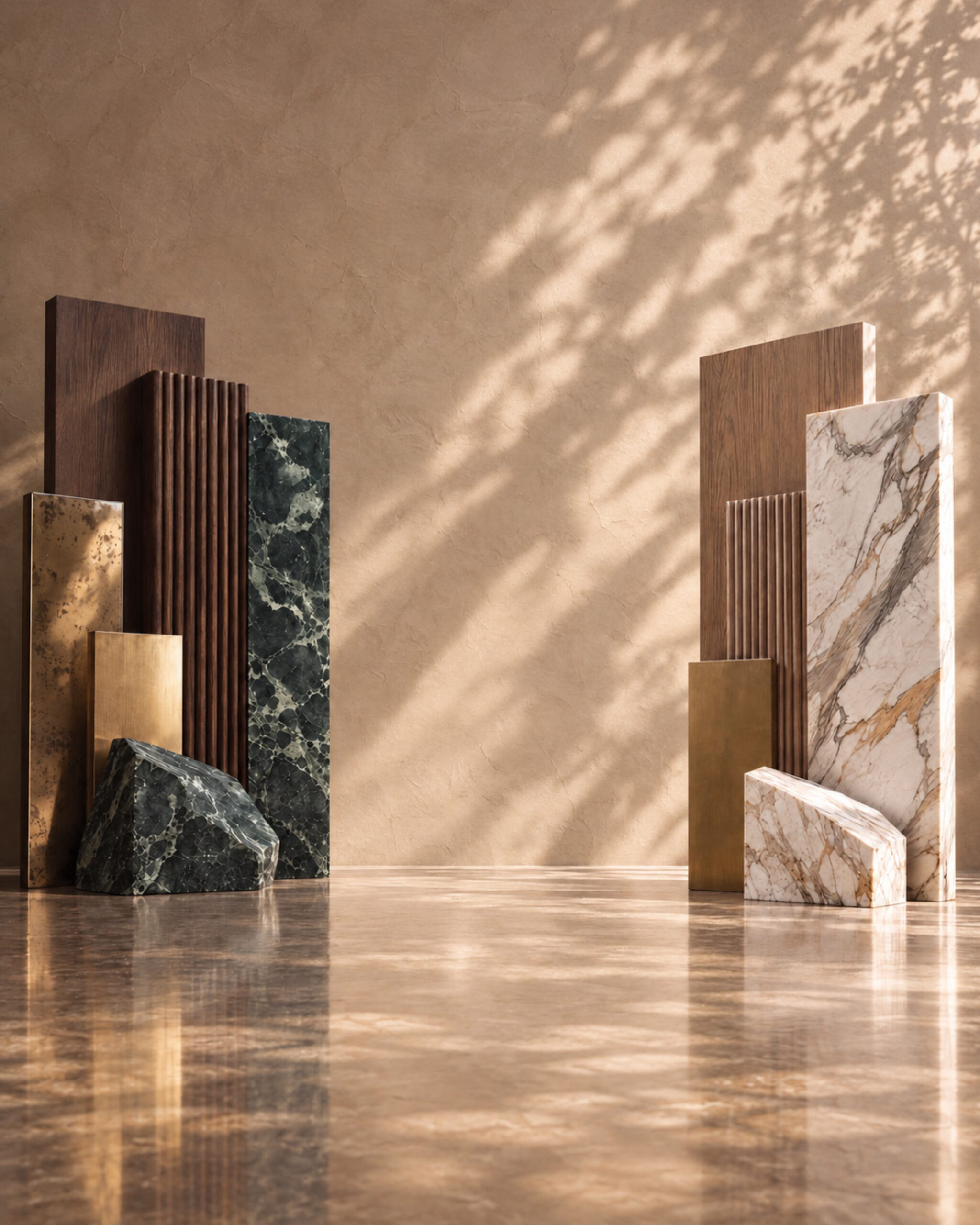
Harrods Aviation has commissioned Langstaff to design, build and install two bespoke bars at The Omnia, its private terminal at London Luton Airport. Scheduled for completion by December 2026, the project draws on Langstaff’s expertise in design and architectural joinery.
Each bar has its own atmosphere, shaped by richly veined surfaces, finely crafted walnut and the warmth of brass.
Honed Verde Alpi marble, dark-stained walnut and brushed brass
The first bar pairs the deep green and white veining of Honed Verde Alpi marble with dark-stained walnut, combining timber panelling with finely fluted detailing. Brushed brass and antiqued gold mirror introduce warmth and reflection, adding depth to the rich palette.
Curved brass inlay defines the bar front, while statement suspended shelving creates an elegant display for spirits.
Soft-touch Calacatta Mediceo, washed walnut and satin brass
The second bar takes a lighter approach. Soft-touch Calacatta Mediceo, distinguished by gold and grey veining across a white ground, sits alongside washed walnut and satin brass. Fluted timber brings texture and rhythm, while the brass echoes the warmer tones within the veining.
Bespoke glass doors, three metres tall with liquid metal-finished frames, complete the design.
Langstaff is providing a turnkey service, with full responsibility for design, manufacture, project management and installation.
You can follow our progress on our Instagram in the lead up to the opening.
If you have a hospitality or private residential project in mind and would like to explore how you can collaborate with us, click below to book in time with our design director or call us at +44 204 620 3803.
Book an Appointment
Get in touch today to arrange a personal design consultation in your home or an appointment to visit the Langstaff studio.
Book an appointment
Get in touch today to arrange a personal consultation in your home or an appointment to visit the Langstaff studio.


Patagonia Marble & Reeded Timber
Pete Wackett
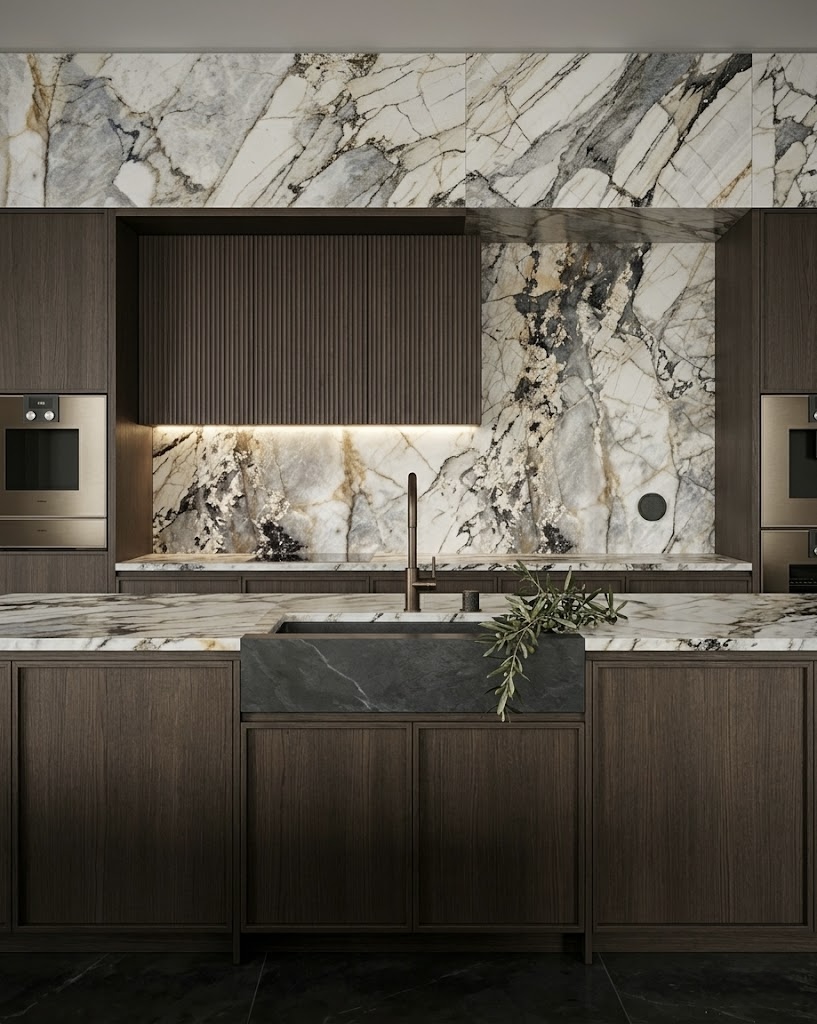
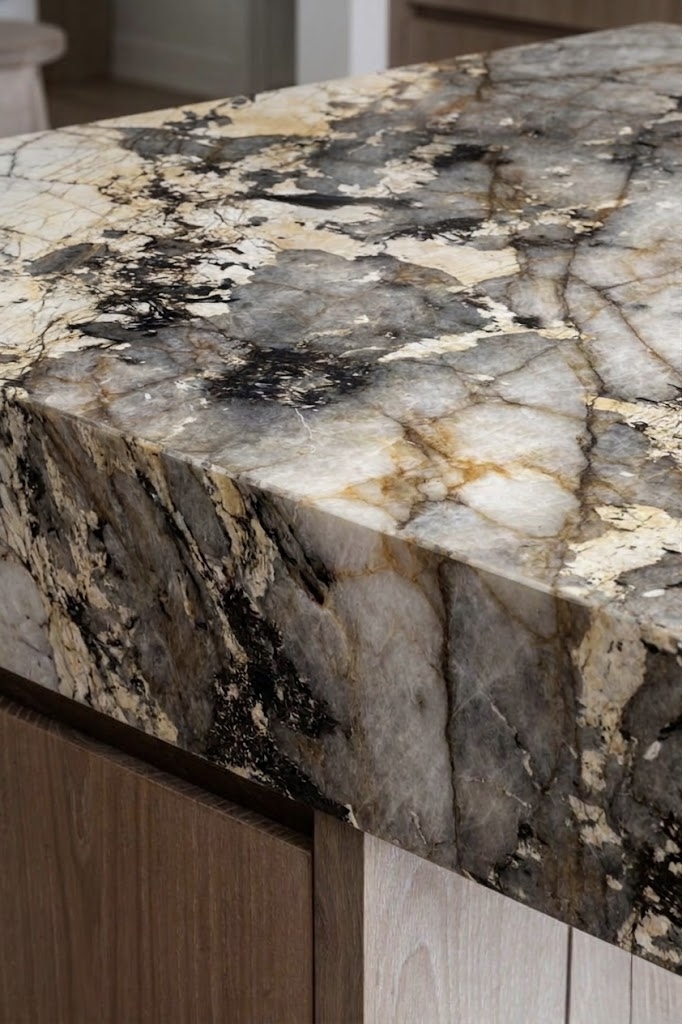
Patagonia marble sits somewhere between surface and landscape. Quartz, mineral, shadow and light are layered into a kind of geological collage. In the Elements: Patagonia marble piece, we touched on its ability to catch and carry light. In a well-designed kitchen, that quality is allowed to spread across planes, edges and junctions.
The vertical timber reeding introduces both rhythm and an architectural order. It takes the wildness of the stone and gives it a framework: not to contain it, exactly, but to set up a contrast. In terms of texture, the eye moves differently across each surface – gliding across the timber, then catching and pausing in the stone.
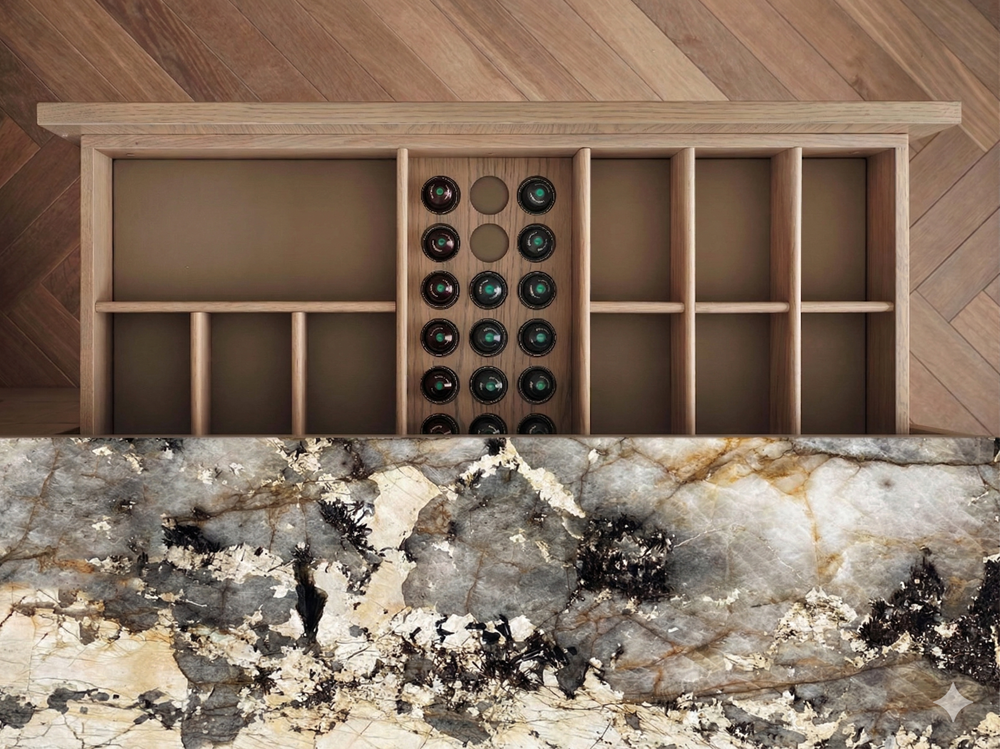
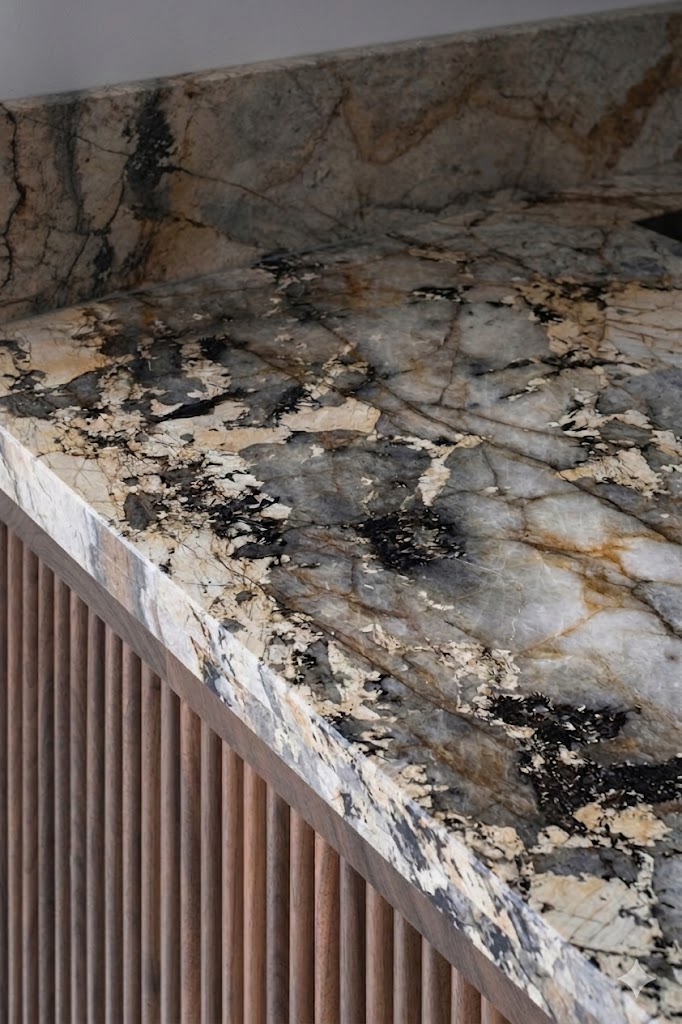
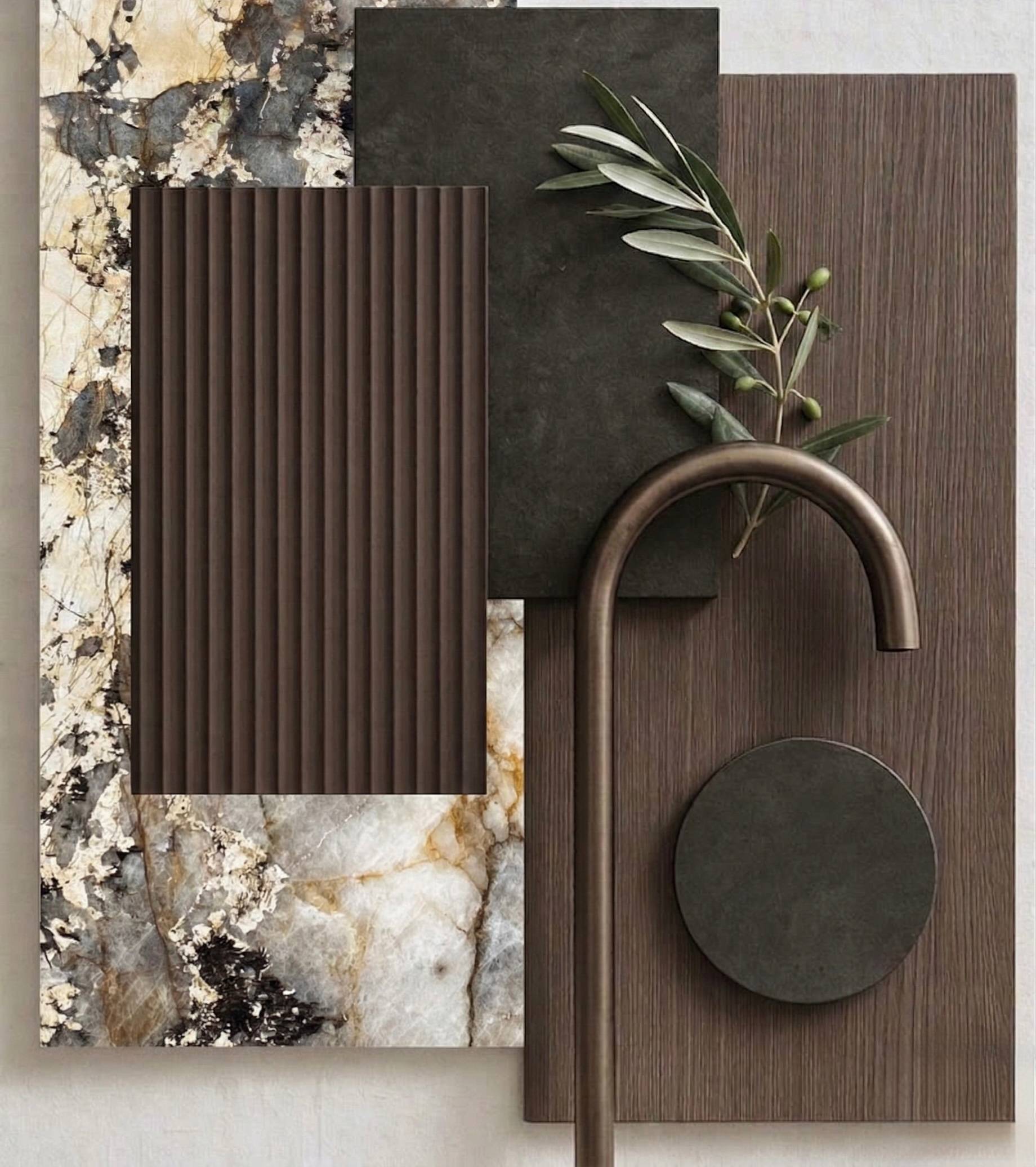
Tone plays its part too. The timber sits in that darker, smoked register, with enough depth to lend the composition a certain density, but still open enough to reveal grain and variation. Nothing is flat; nothing is overly resolved. The metalwork follows suit – warm, muted, closer to bronze than brass.
A substantial Patagonia worktop reads as mass rather than surface: something cut from a larger whole, giving weight and presence. It shifts Patagonia from something applied to something constructed.
Behind it, the joinery is structured and precise, with everything in its place: a counterpoint to the movement in the stone.
There is no single focal point here. Instead, a balance of movement and control: Patagonia brings variation, light, unpredictability; reeded timber introduces rhythm, repetition and order.
Held together, they create something composed, but full of life.
Book an Appointment
Get in touch today to arrange a personal design consultation in your home or an appointment to visit the Langstaff studio.
Book an appointment
Get in touch today to arrange a personal consultation in your home or an appointment to visit the Langstaff studio.
Patagonia marble
Pete Wackett
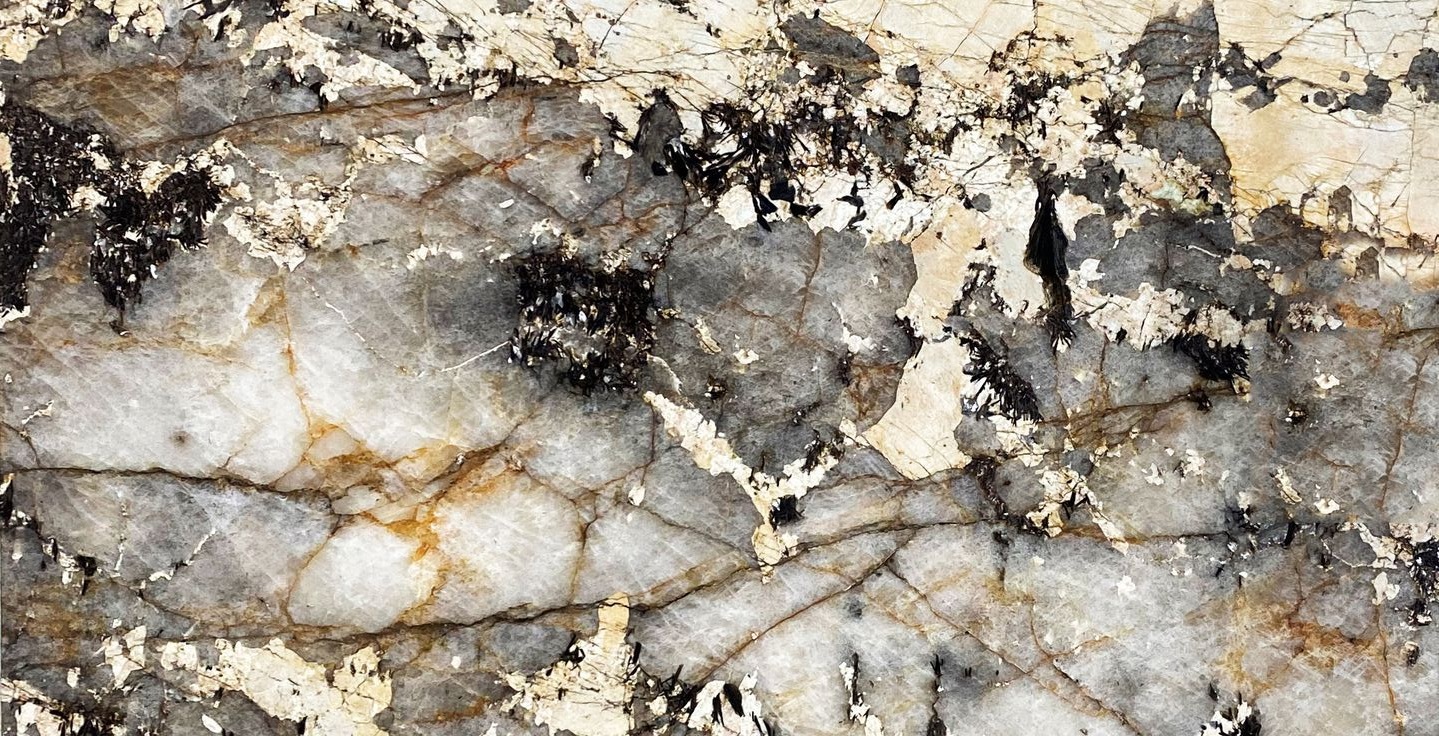
Patagonia is a dramatic, high-contrast stone: a pale ivory-to-cream ground packed with oversized translucent quartz crystals, beige and gold feldspar, grey tonal splashes and occasional black mineral accents.
Each slab reads almost like a geological collage – or a cabinet of semi-precious stones laid open. The larger crystal fields can appear almost luminous, especially when light is allowed to pass through them.
It is quarried primarily in Brazil, formed over millions of years through the slow cooling of mineral-rich magma deep within the earth. Much of its character comes from pegmatite – a type of igneous rock known for producing unusually large crystals as it cools very slowly, allowing minerals the time and space to grow. The result is a distinctive structure: not a fine, even grain, but a dramatic assembly of oversized quartz and feldspar crystals locked together within the stone.
Rather than a uniform surface, Patagonia presents something far more complex: a composition of fragments and transparencies, like a natural artwork.

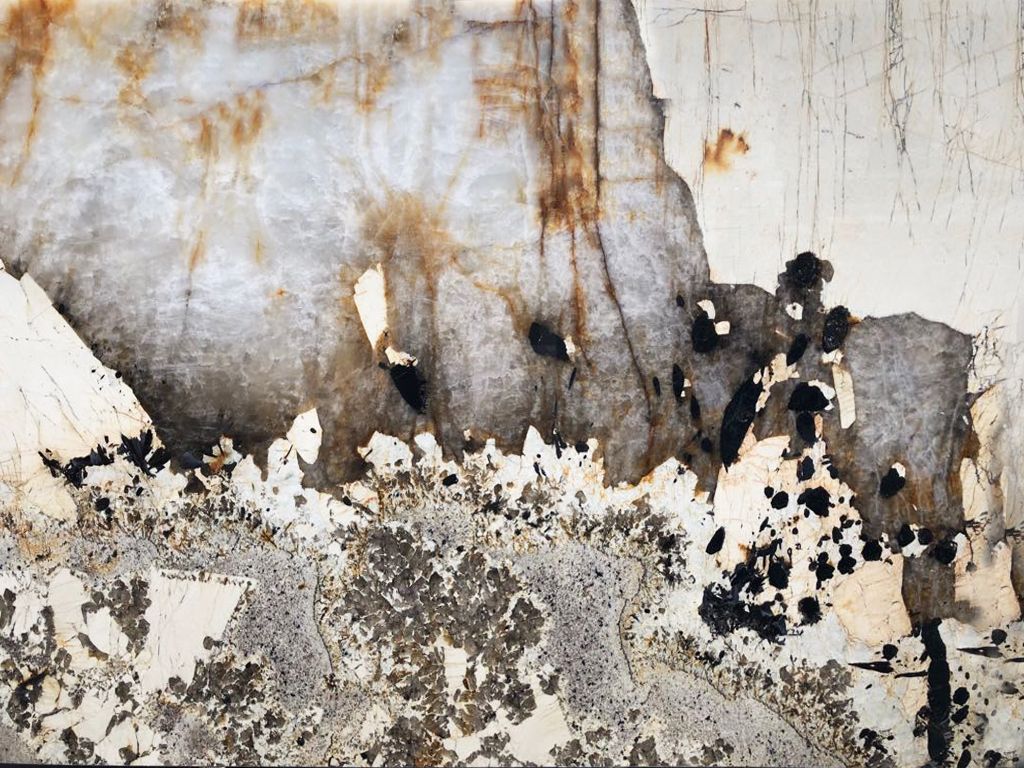
This complexity underpins its distinctive relationship with light. Unlike more homogenous marbles, which reflect light evenly across their surface, Patagonia interacts with it in layers. Some areas absorb it, others scatter it, and the quartz crystals can transmit it, creating moments of brightness that seem to glow from within.
For this reason, Patagonia is often used sparingly and deliberately. It is not a background material. It resists repetition, because each slab is entirely unique, and it draws the eye in a way that few stones can. In many settings it is treated less as a surface and more as a focal piece – something to be framed, to be positioned with care, so that it can be experienced in different lights.
Its reputation is relatively recent. Unlike the Carrara marbles, which carry centuries of architectural and sculptural history (think classical statues), Patagonia belongs to a more contemporary language of luxury. Its appeal is that it is visually singular. It offers something that cannot be replicated or standardised – a material expression of rarity, complexity and natural beauty.
Book an Appointment
Get in touch today to arrange a personal design consultation in your home or an appointment to visit the Langstaff studio.
Book an appointment
Get in touch today to arrange a personal consultation in your home or an appointment to visit the Langstaff studio.
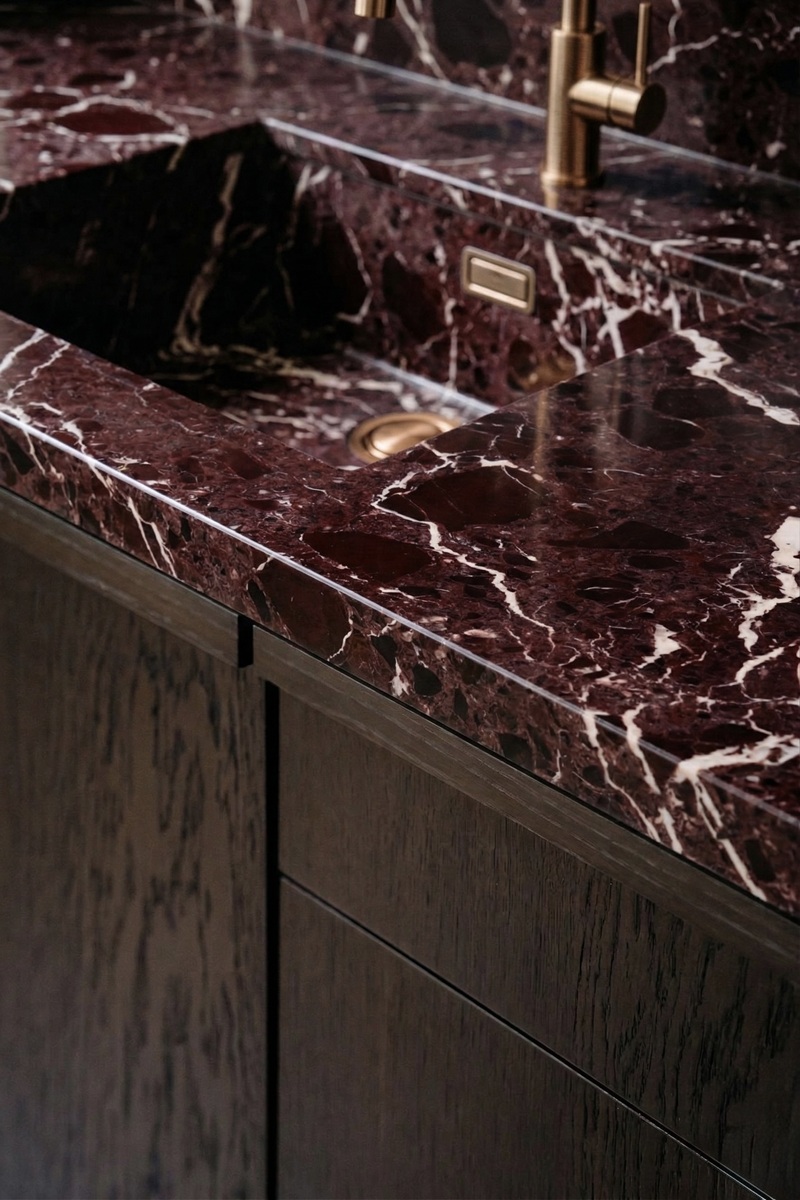
Rosso Levanto Marble & Dark Stained Timber
Pete Wackett
Rosso Levanto marble is defined by contrast.
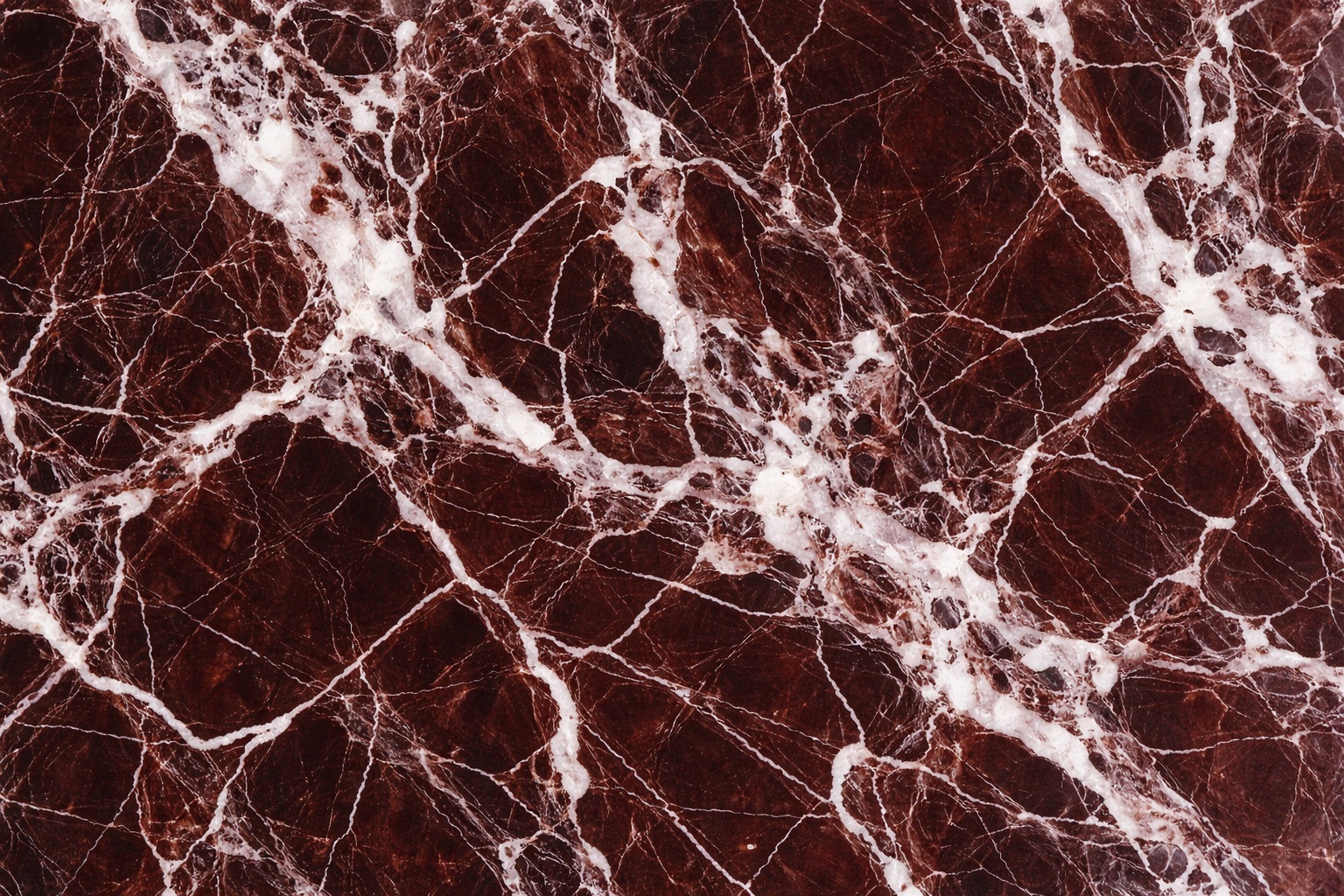
Deep claret tones are cut through with sharp white veining, creating a surface that feels both dense and highly active. The pattern feels like it moves with intent, forming bold, irregular shapes that hold the eye.
It carries a certain weight, not just visually, but materially – the sense of something solid, compact, almost geological in its intensity. In the Elements: Rosso Levanto marble piece, we noted its richness and depth; here, that quality is brought forward and allowed to dominate.
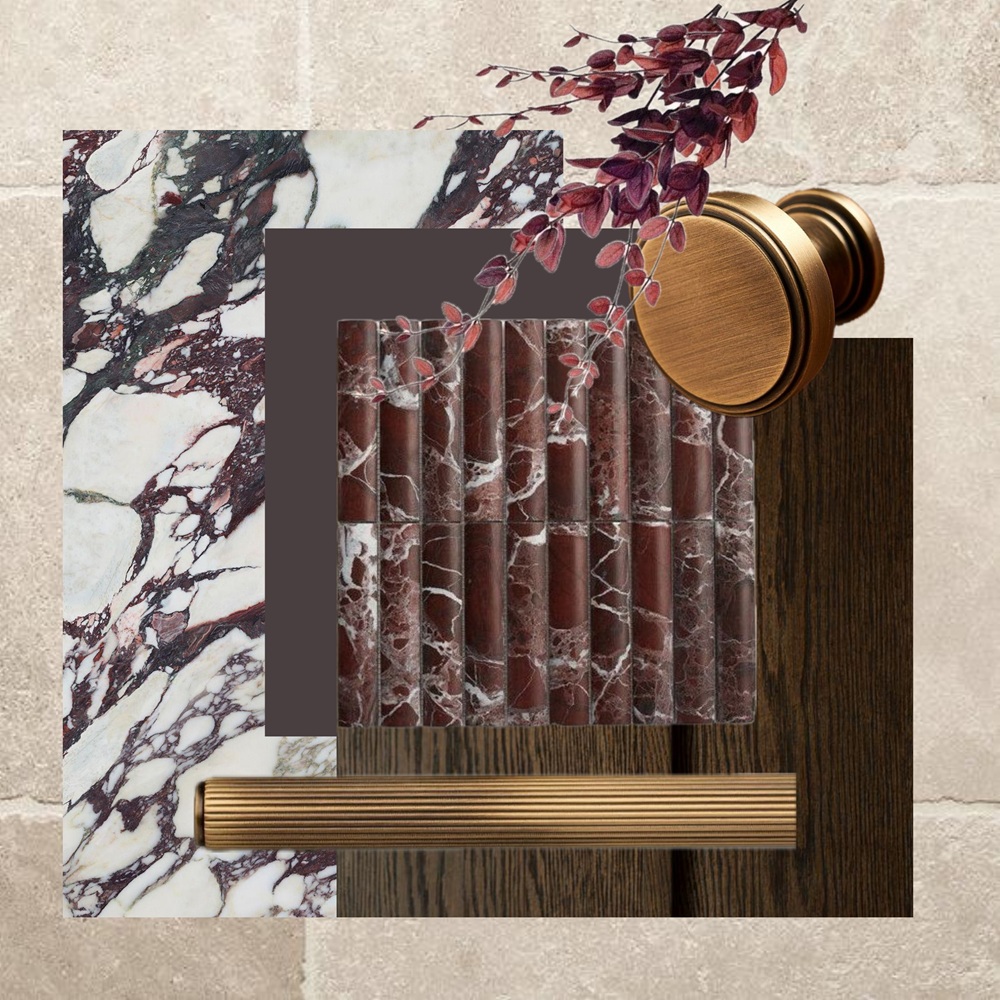
Dark stained timber meets it with equal conviction. Whether walnut or stained oak, the tone sits firmly in the same register – deep, warm, and saturated. The grain remains visible, but subdued, allowing the timber to read as mass rather than pattern. Instead of competing, it reinforces the marble’s intensity.
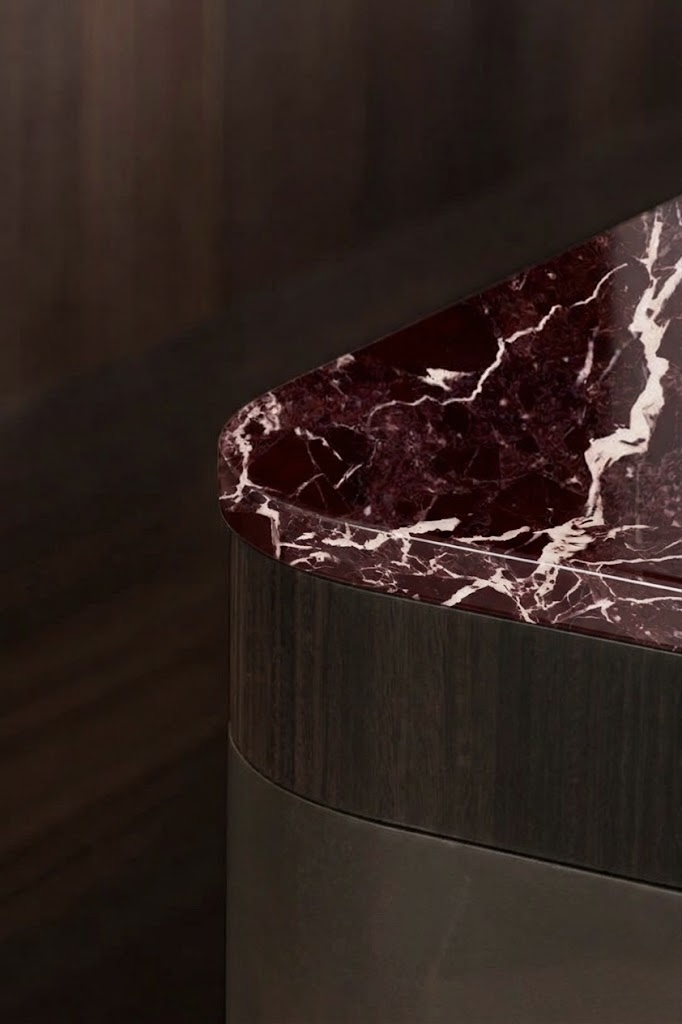
Edges are precise: the stone is cut cleanly, its thickness emphasised. The junction between timber and marble is tight and controlled – each material clearly defined, neither bleeding into the other.
There is a density to the palette. Light is absorbed rather than reflected, settling into the surfaces and deepening the overall effect. Metalwork – brushed brass or similar – introduces a warmer note, but remains within the same tonal family.
There is no need for contrast beyond what is already present in the stone.
Instead, we have a focus on depth, materiality, and control. Rosso Levanto brings drama and movement; dark timber introduces structure and restraint.
Together, they create a space that feels rich, composed, and deeply atmospheric.
Book an Appointment
Get in touch today to arrange a personal design consultation in your home or an appointment to visit the Langstaff studio.
Book an appointment
Get in touch today to arrange a personal consultation in your home or an appointment to visit the Langstaff studio.
Rosso Levanto marble
Pete Wackett
Rosso Levanto is characterised by its dark, reddish-brown ground, often appearing as a deep plum, oxblood or wine tone, crossed by thin, irregular white or pale pink veining. The surface can feel almost velvety in its depth, with the veining providing contrast and structure without disrupting the overall richness.
Each slab has a sense of density and cohesion. Where some marbles are expansive and open, Rosso Levanto feels more contained – its beauty lying in its depth rather than its spread.
Quarried in northern Italy, Rosso Levanto is a metamorphic stone formed from ancient limestone subjected to intense heat and pressure over geological time. The distinctive colouring comes from mineral content within the stone, particularly iron compounds, which give it its characteristic red and burgundy tones.

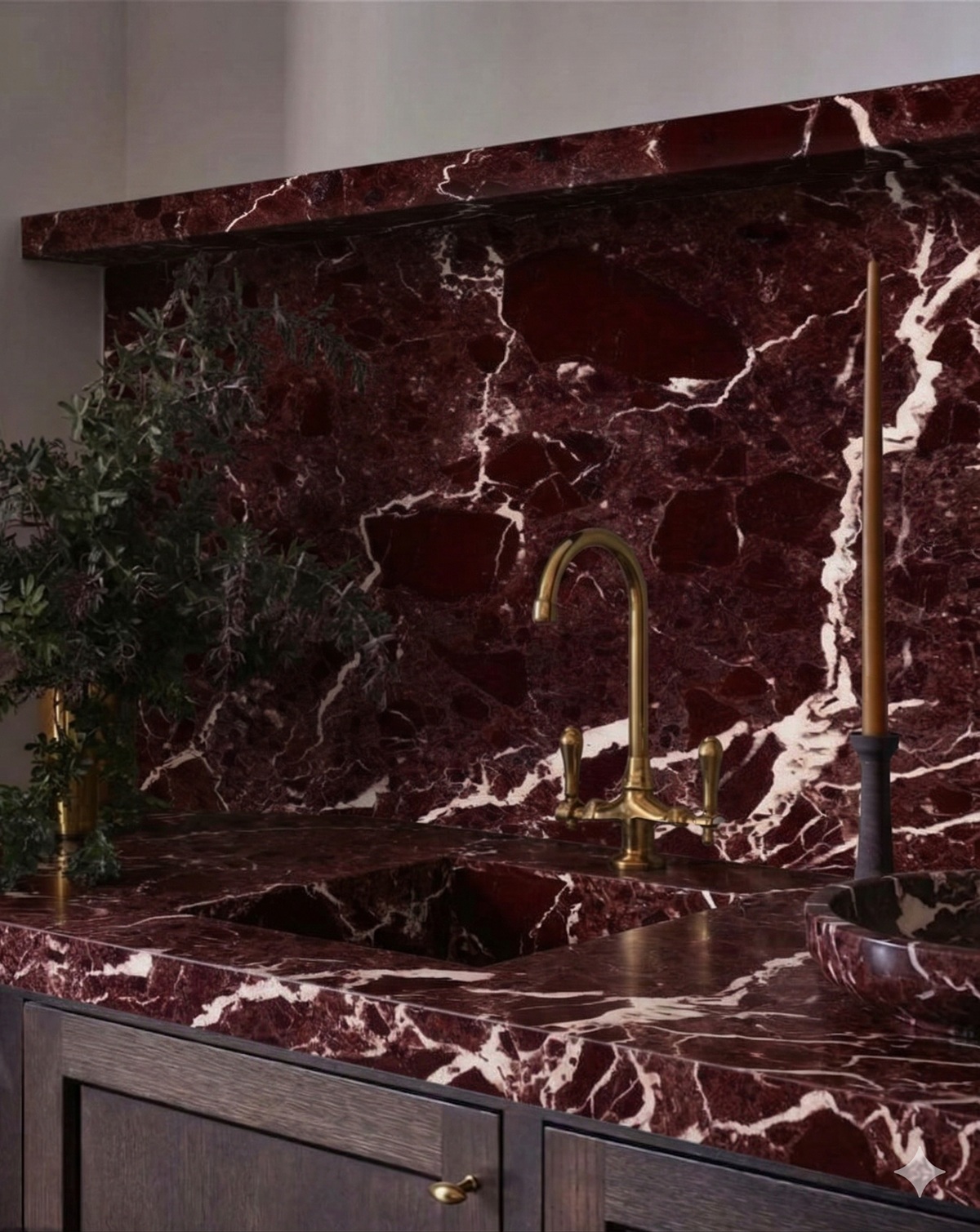
Unlike marbles that rely on high contrast or large-scale patterning, Rosso Levanto works through subtle variation. The fine veining moves across the surface in delicate, often irregular lines, creating a complexity that reveals itself gradually rather than immediately.
Its interaction with light is markedly different from paler stones. Rather than reflecting brightness, it absorbs and softens it, creating a sense of warmth and enclosure. This gives Rosso Levanto a more intimate quality – one that lends itself to spaces where atmosphere is as important as form.
For this reason, it is often used with intention and restraint. It can anchor a space, providing contrast to lighter materials, or create a more immersive environment when used more extensively. In either case, it brings a sense of depth that feels both grounded and refined.
Its associations are less about monumentality and more about mood. Where white marbles suggest openness and clarity, Rosso Levanto speaks to richness and warmth, and perhaps a more introspective form of luxury.
Book an Appointment
Get in touch today to arrange a personal design consultation in your home or an appointment to visit the Langstaff studio.
Book an appointment
Get in touch today to arrange a personal consultation in your home or an appointment to visit the Langstaff studio.
Irish Green Marble & Dark Timber
Pete Wackett
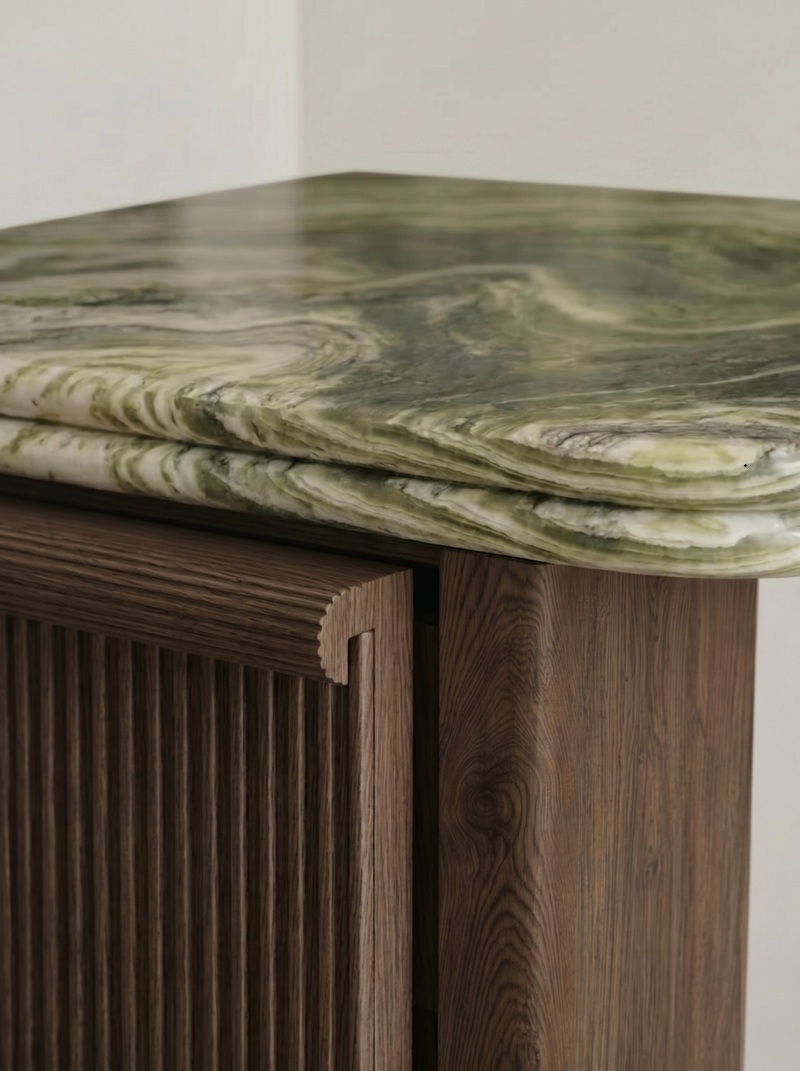
The combination of Irish Green marble with dark timber tones allows colour, grain and mineral pattern to exist within the same tonal register.
Irish Green’s variation is about shifts in tone and density rather than strong contrast. Greens move between softer, mineral washes and deeper, more saturated passages, often within the same surface.
The pattern feels settled, as though it has been formed under pressure rather than drawn across the surface. Light rests on it, rather than moving through it.
Dark timber meets it in the same register. Whether walnut or stained oak, the tone is deep and warm, with the grain present but restrained, allowing the stone to carry the visual movement.
Together, they form a continuous palette. The marble sits confidently within the joinery, and the joinery holds its position around it. Nothing feels applied; everything feels integrated.
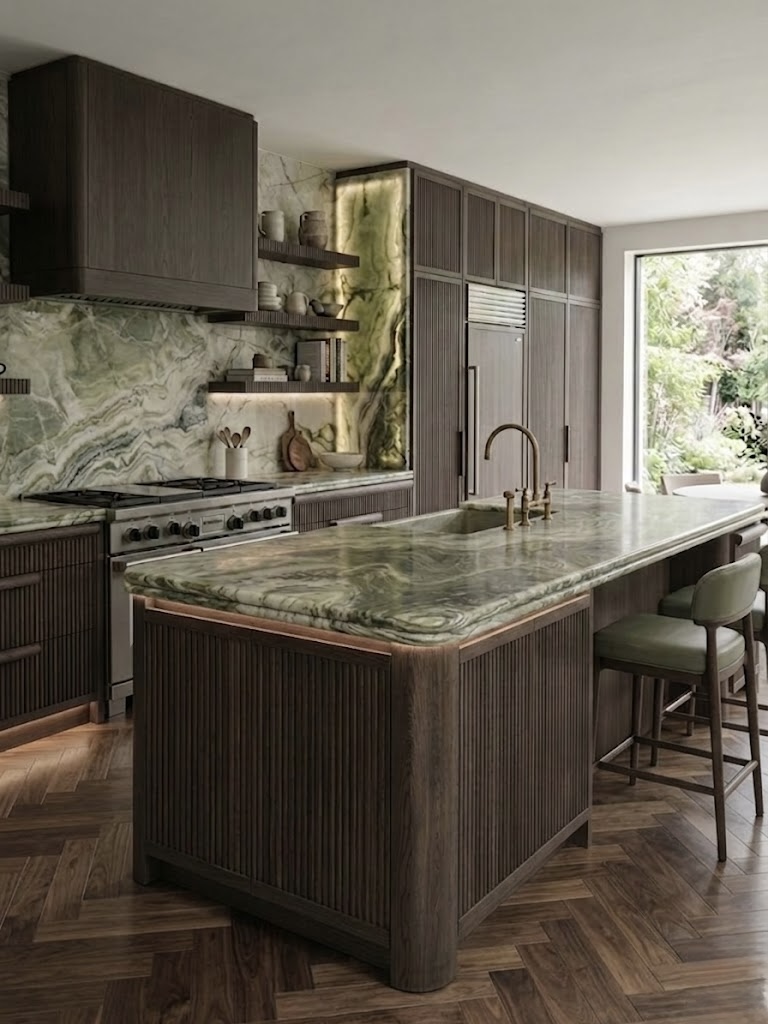
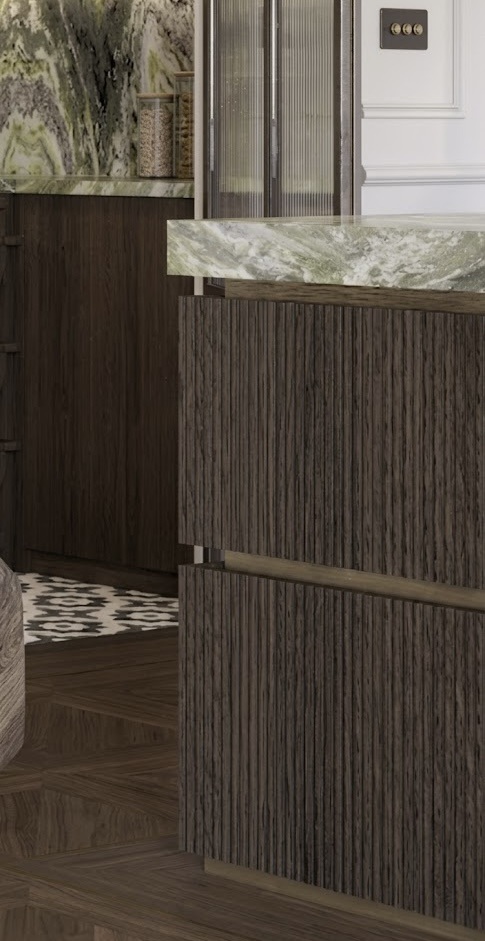
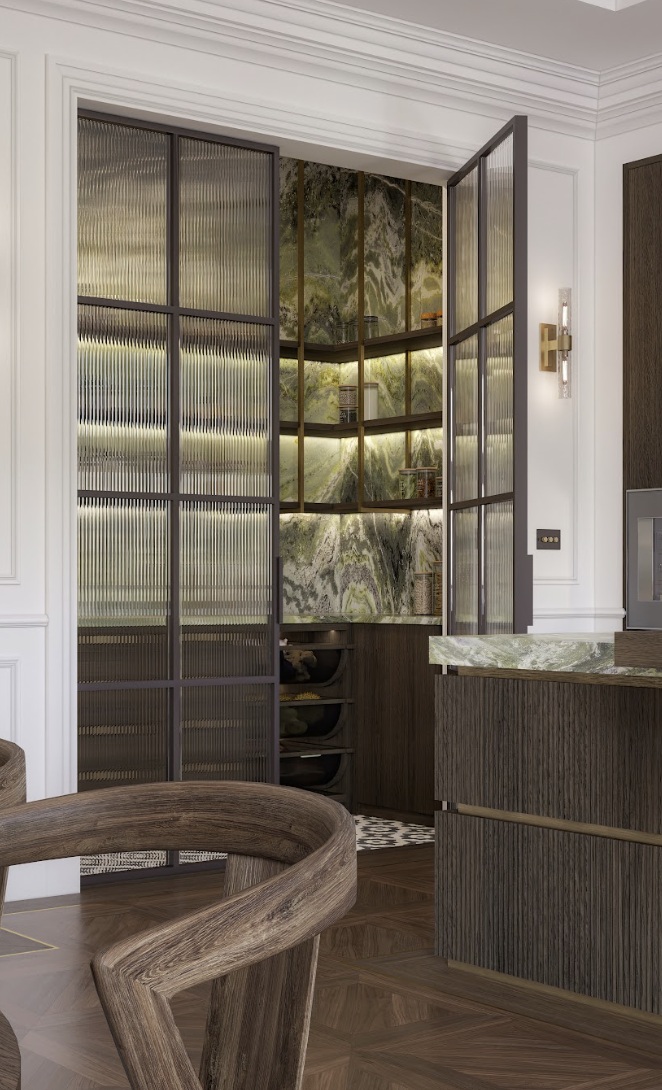
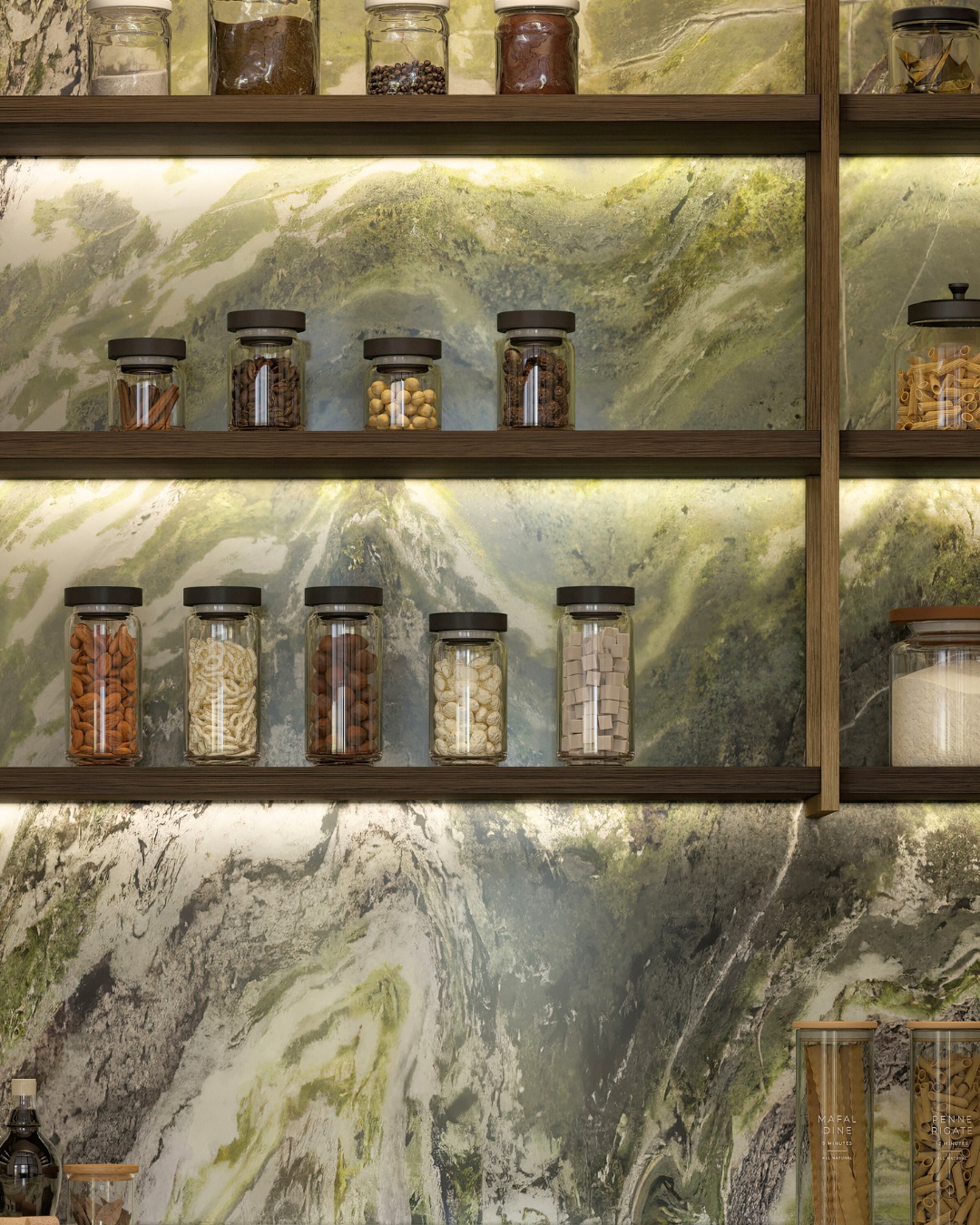
There is a weight to the materials. Surfaces absorb light, deepening the overall tone of the space. Metalwork – brushed brass or similar – introduces a warmer note, but remains within the same spectrum.
The effect is immersive: rather than drawing the eye to a single moment, the materials work across the whole – from surface to interior, from foreground to background.
Irish Green brings depth and variation; dark timber introduces structure and control. Held together, they create a space that feels composed, and timeless.
Book an Appointment
Get in touch today to arrange a personal design consultation in your home or an appointment to visit the Langstaff studio.
Book an appointment
Get in touch today to arrange a personal consultation in your home or an appointment to visit the Langstaff studio.

The Architecture of Living
Pete Wackett
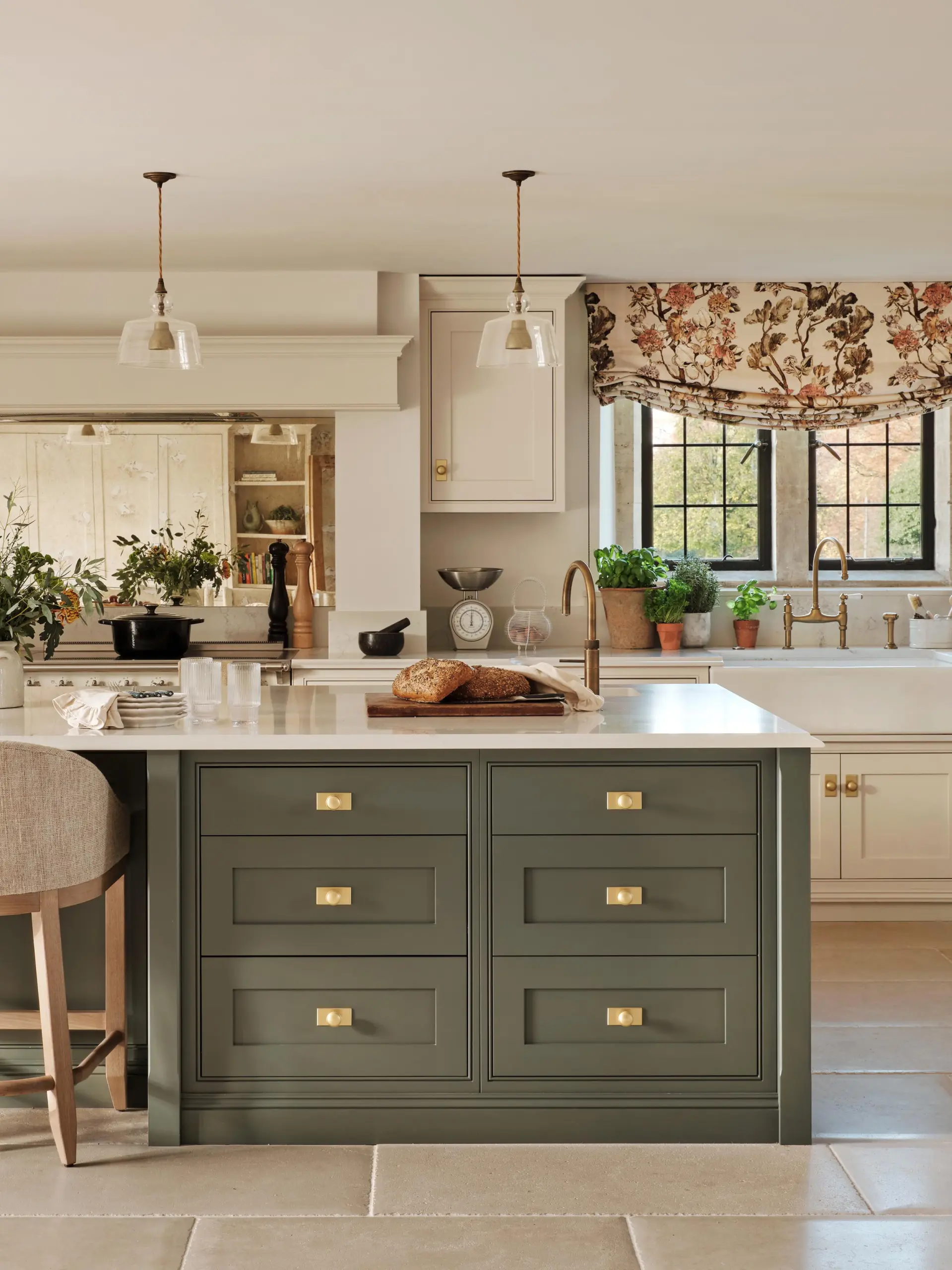
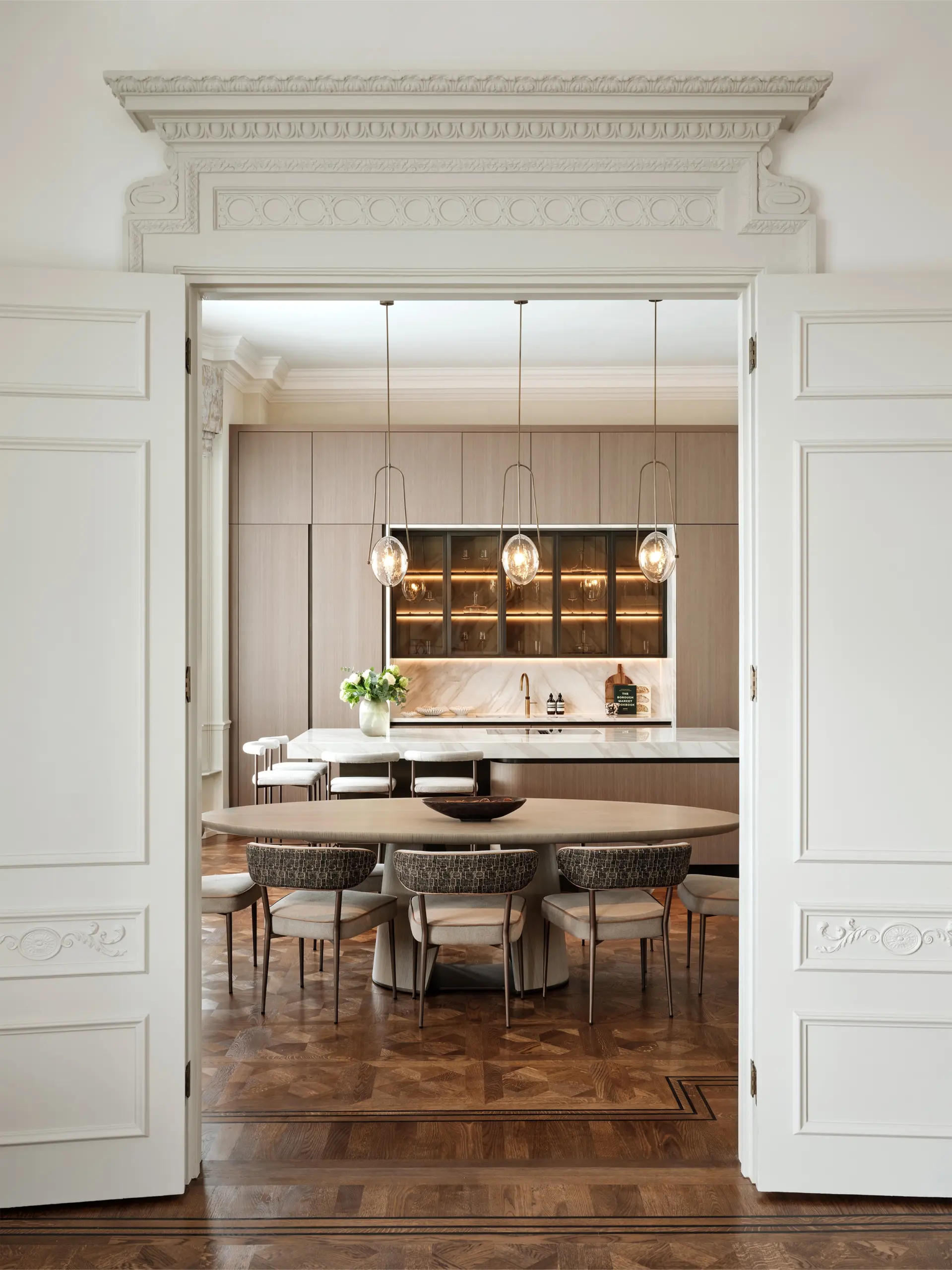
In the finest interiors, fitted furniture is never simply an addition to a room. It is not a decorative afterthought, nor a collection of useful pieces arranged around the edges of a space. At its best, it becomes part of the architecture itself.
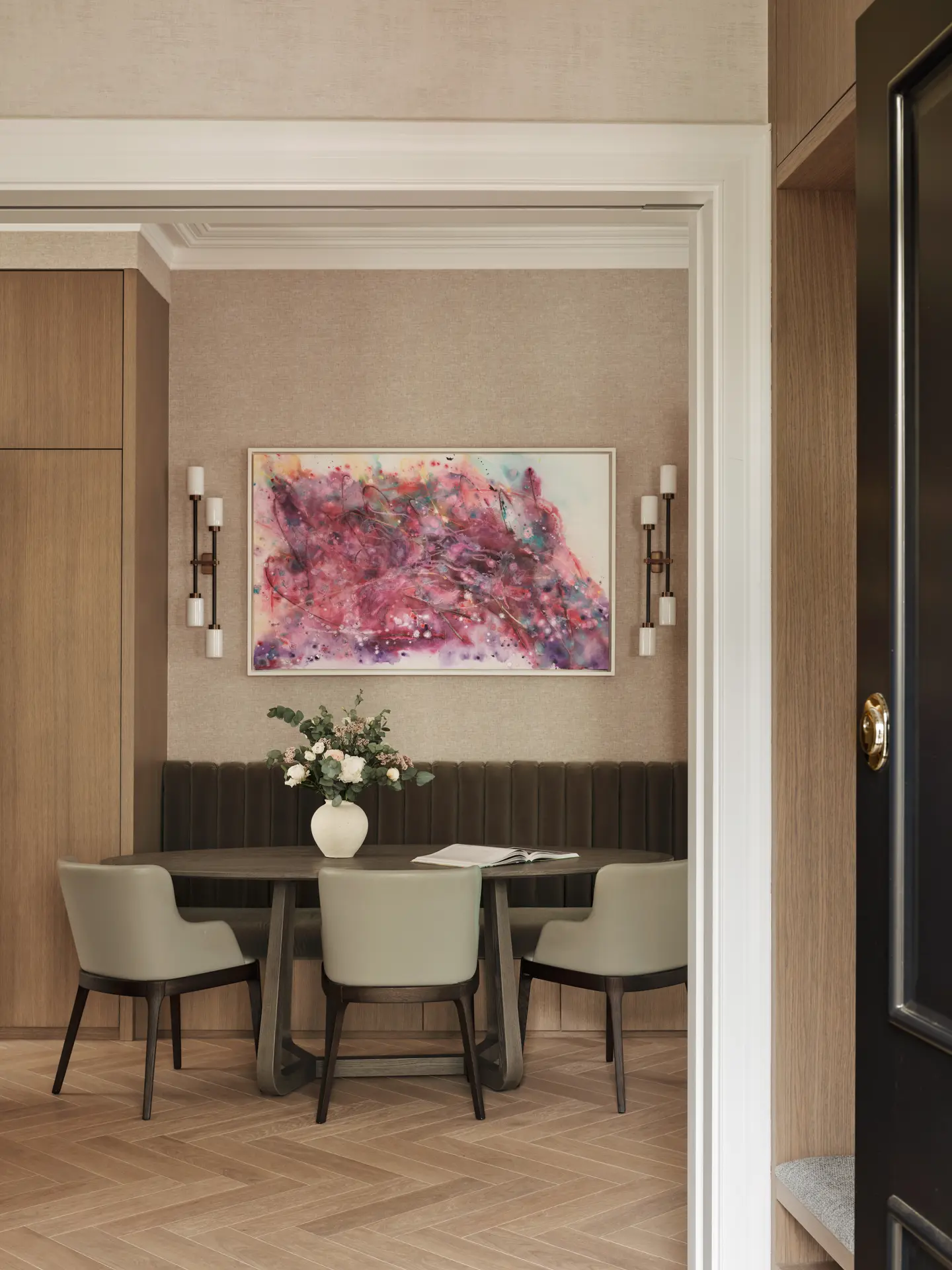
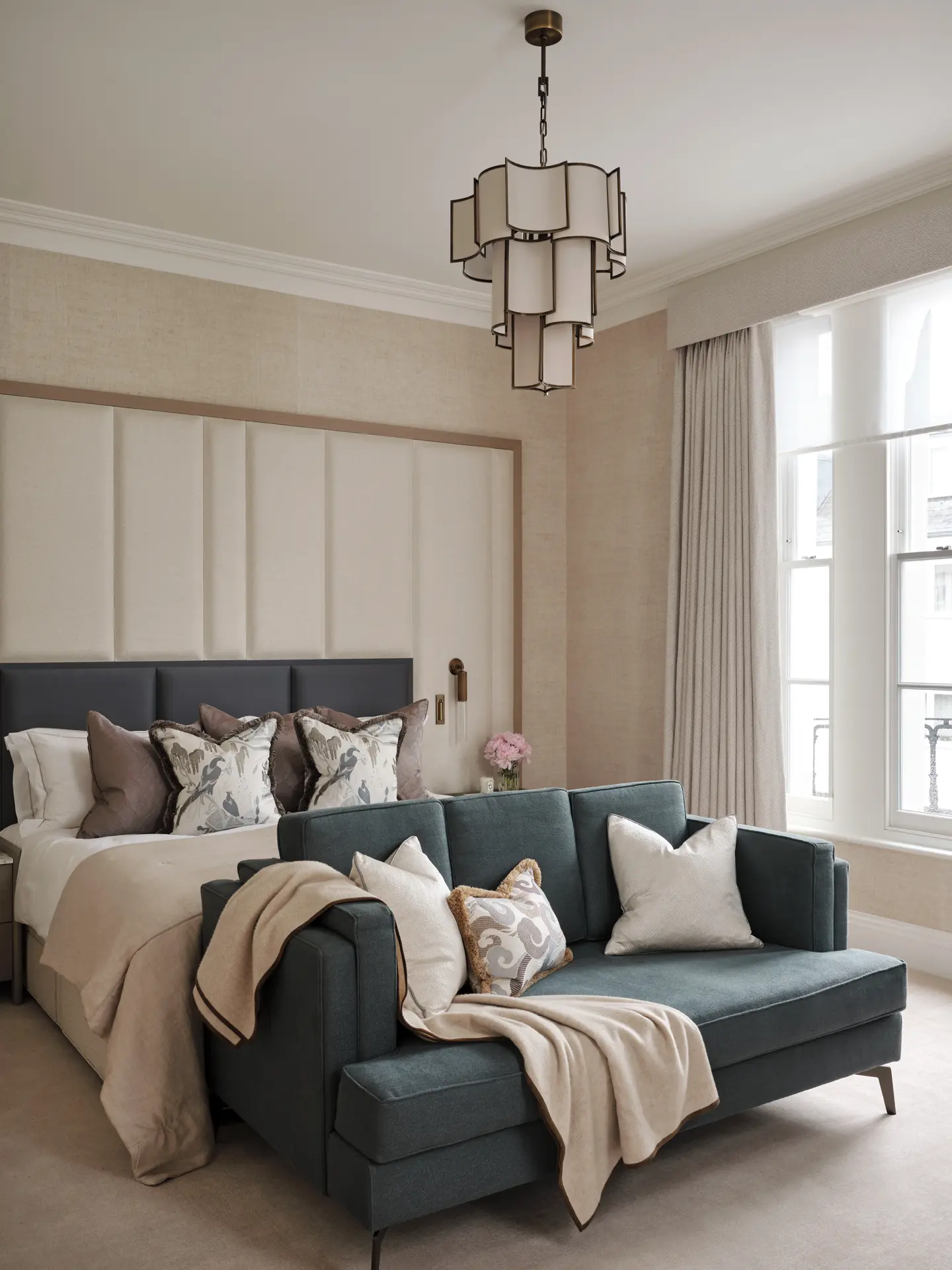
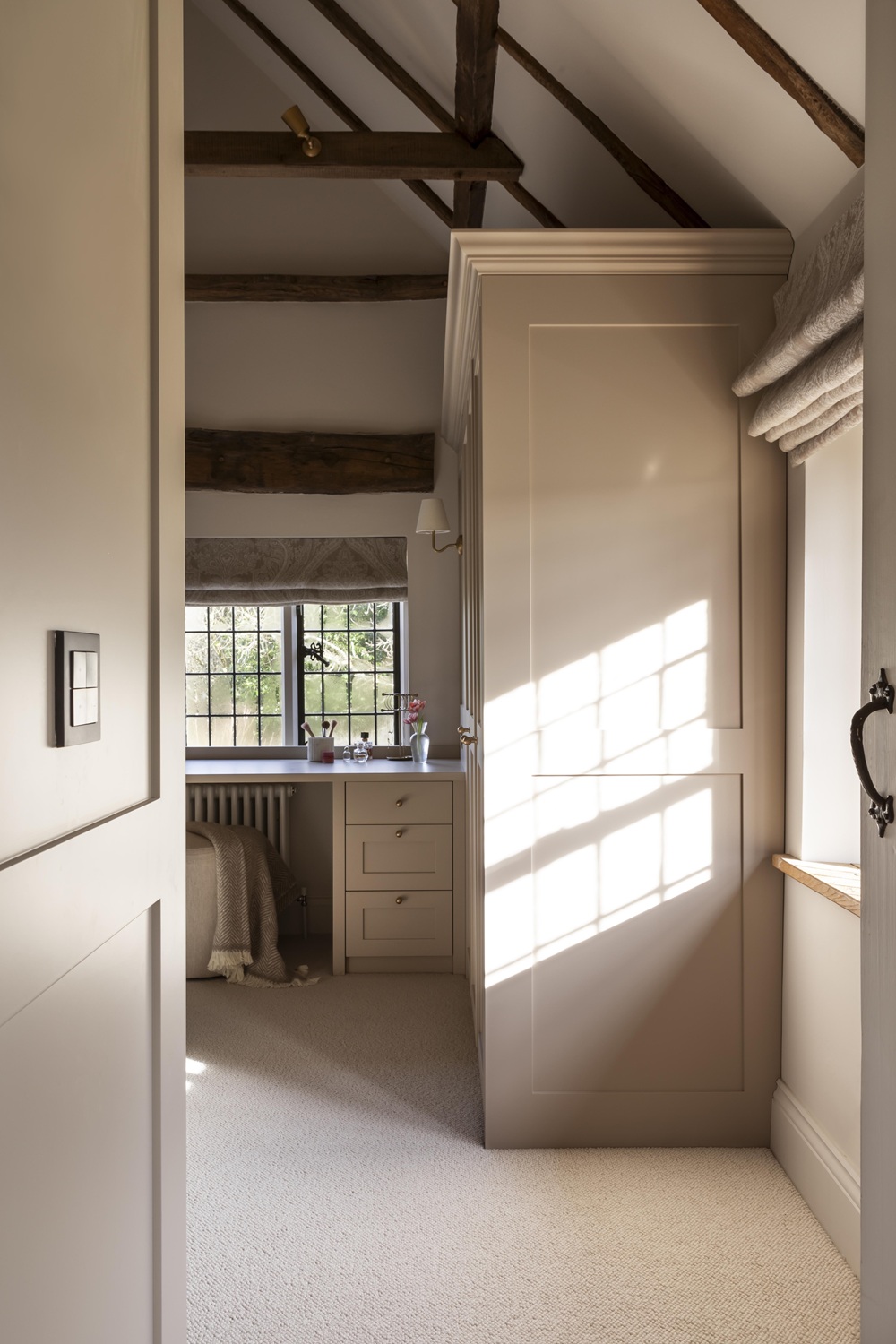
Each rooms is part of a conceptual whole. For example, a kitchen may shape the rhythm of an entire ground floor; while a dressing room may influence the experience of privacy, ritual and retreat. A library may bring gravity and intimacy to a house. A pantry, study, utility or boot room may seem secondary in name, yet each can contribute to the atmosphere and coherence of the whole.
This is the territory Langstaff occupies: not furniture as object, but furniture as architecture.
Furniture as part of the fabric of the home
To think architecturally about fitted furniture is to begin with the space itself.
We must consider its proportions and its sightlines; the way light enters and moves through it; the relationship between one room and another. We must understand the character of the building, whether period or contemporary. We must think about the materials that are already present, and those that might bring new depth, contrast or continuity.
Architectural furniture has to do more than fit a wall or frame an appliance. It must belong to the building. It must respect scale, reveal structure, guide movement and create a sense of inevitability, as though it could not have been designed any other way.
This does not mean imposing a single style – quite the opposite. The best architectural thinking allows for great aesthetic range because it begins with context. A Georgian townhouse, a country estate, a contemporary villa and a restored barn may each call for a different language of form, finish and detail. What unites the many different appearances is intelligence.


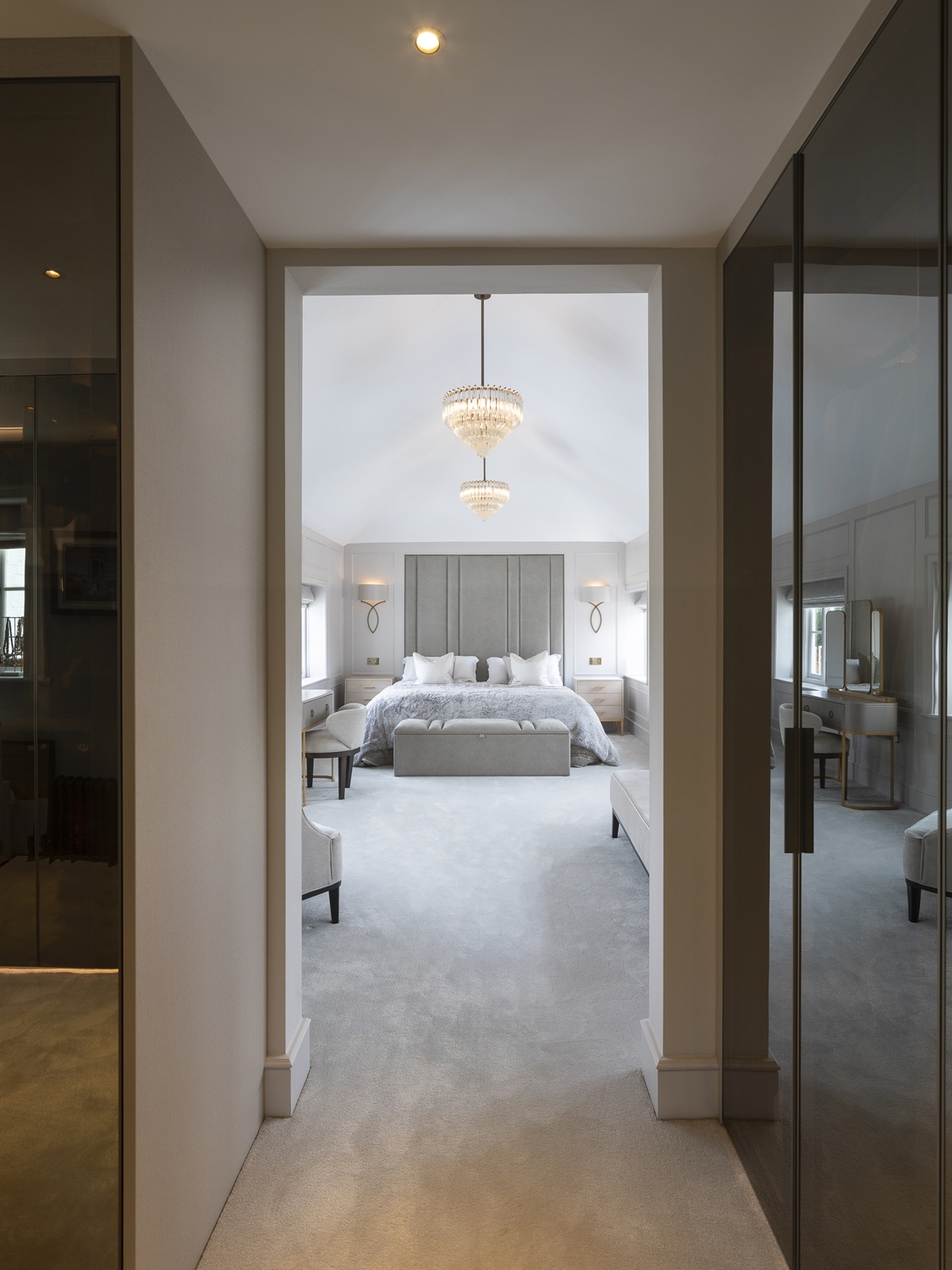
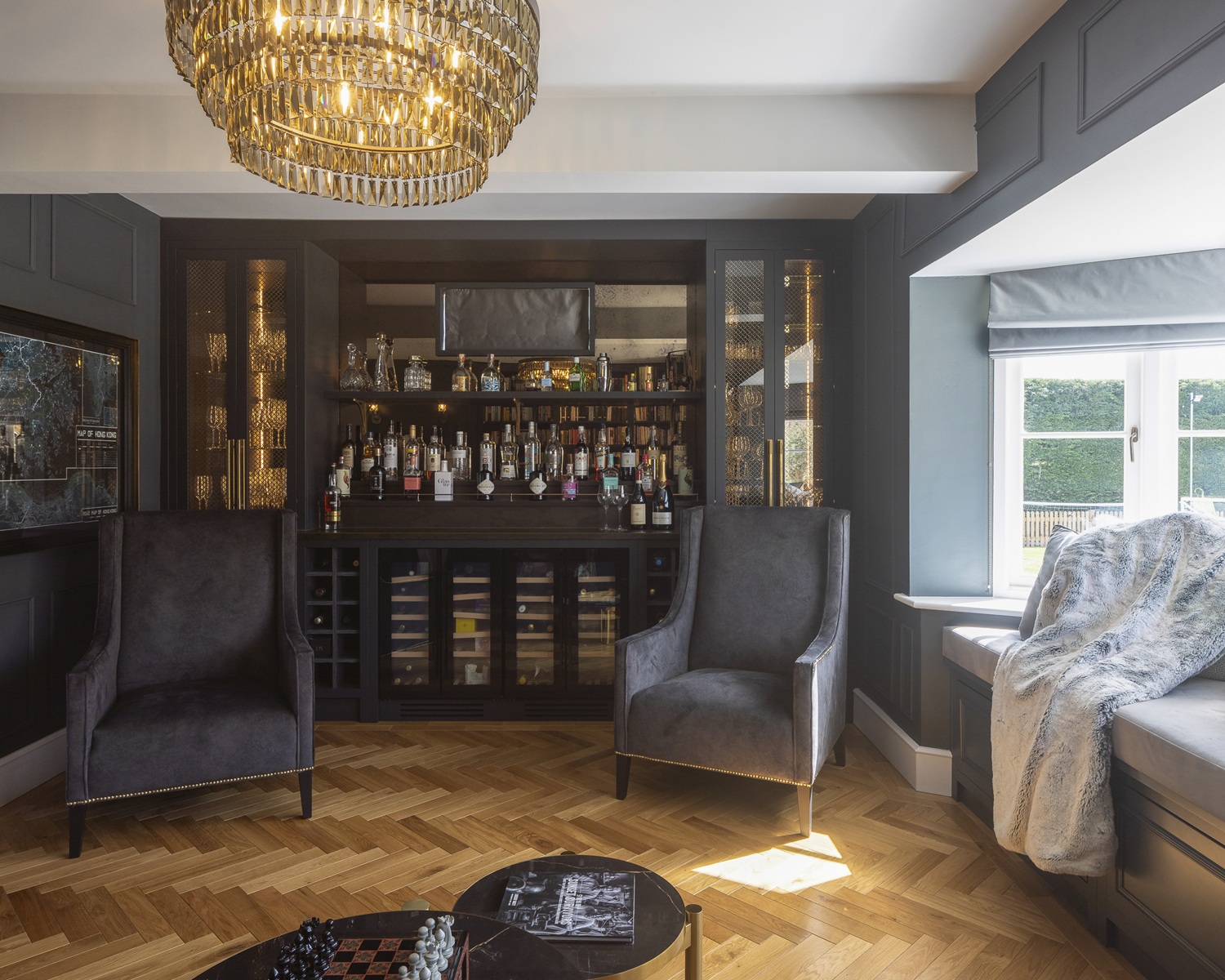

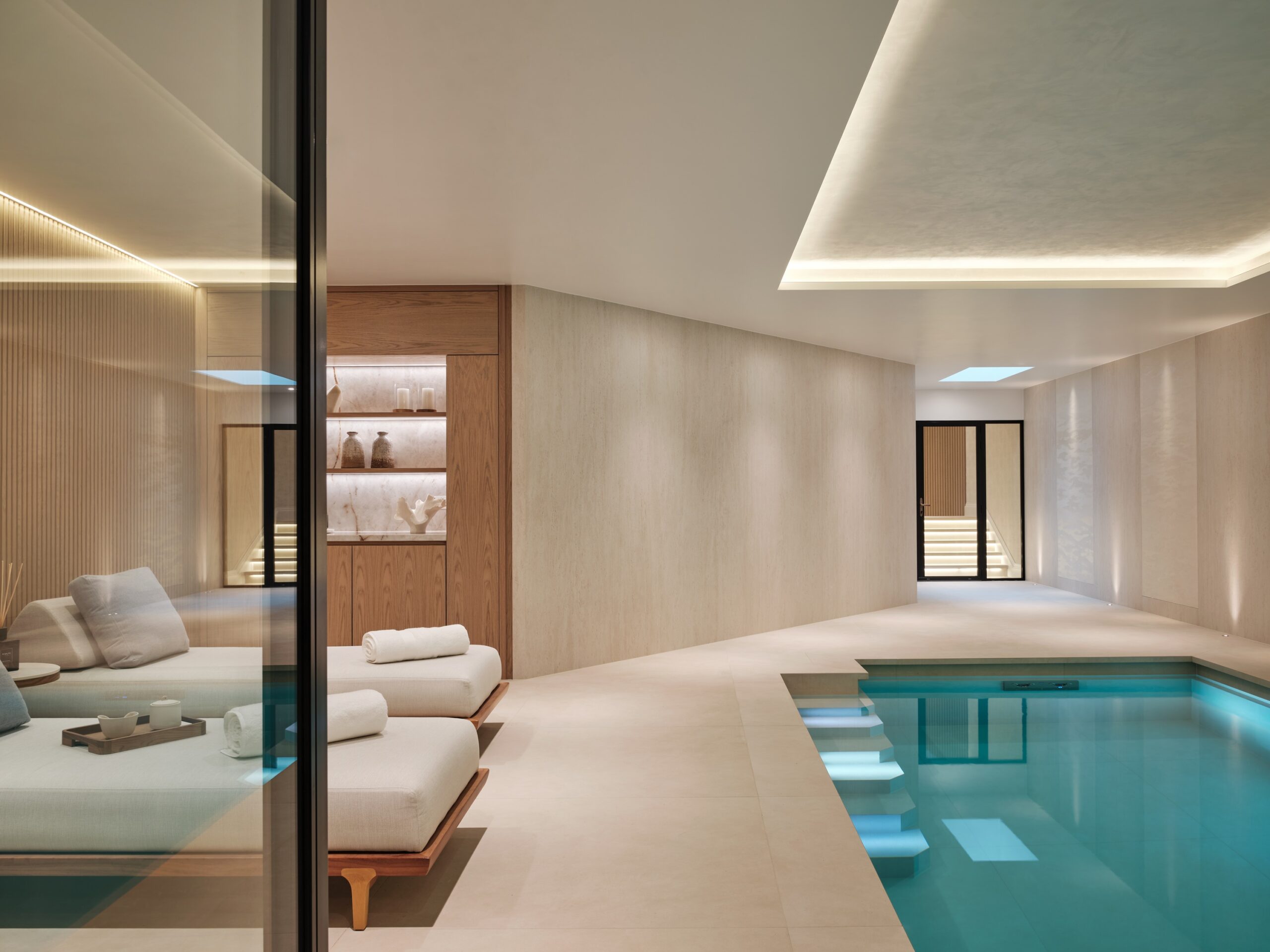
The art of inhabiting a remarkable place
Every great house contains different modes of life. There are spaces for gathering and spaces for retreat; for display and for privacy. There are spaces that create ceremony, and others that offer calm; some that hold objects and some that support entertaining, dressing, working, reading, arriving, leaving and simply being at home.
The Architecture of Living is about giving these experiences form.
It recognises that furniture can do more than provide storage or surface: it can choreograph movement, frame views, heighten atmosphere, express taste and bring a sense of order to even the most complex home.
A kitchen in this context is not merely a place to cook but a showpiece or a social centre. A dressing room is not simply a place for clothes, but a private world. A library is not simply shelving, but an atmosphere of concentration and permanence.
This is where bespoke fitted furniture becomes emotionally powerful. It shapes the experience of living beautifully.
Craft, precision and material intelligence
Langstaff brings two worlds together.
On one side are the great English traditions of cabinetry: natural materials, proportion, hand skill, classical reference, an instinctive understanding of houses with history. On the other are the precision-engineered continental system brands, with their architectural clarity, technical confidence and refined modernity.
Advanced manufacturing allows for exceptional accuracy, continuity and control, while hand craft, material understanding and bespoke design prevent the result from feeling standardised or system-led.
The most compelling design requires both the intelligence of architecture and the sensuality of natural materials. Wood, stone, metal, glass, leather, lacquer and specialist finishes all have architectural force when used well. They affect light, weight, tone, temperature and mood. They change the way a room feels before a handle is touched or a drawer is opened.
Material intelligence is therefore central to the architecture of the interior.
Whole-home coherence
The most exceptional homes are rarely experienced one room at a time, but unfold as you move through them. This is why whole-home thinking is so important.
When furniture is considered room by room, the result can be beautiful but fragmented. When it is considered architecturally, each space can speak to the next. Materials recur with variation. Proportions feel related. The house gains coherence without becoming uniform.
For architects and interior designers, this kind of fitted furniture becomes a powerful collaborative tool. It can resolve transitions, soften structural challenges, strengthen the design narrative and give physical expression to the atmosphere a project is trying to create.
For private clients, the result is more instinctive. The home simply feels personal and complete.
The Architecture of Living
The Architecture of Living is a way of thinking about furniture and design at the highest level. It asks not only what a room should contain, but what the room should become.
This is the space Langstaff is exploring: architectural bespoke fitted furniture for homes of rare quality and character. Furniture that belongs to the building and shapes the art of living beautifully.
Book an Appointment
Get in touch today to arrange a personal design consultation in your home or an appointment to visit the Langstaff studio.
Book an appointment
Get in touch today to arrange a personal consultation in your home or an appointment to visit the Langstaff studio.
Irish Green marble
Pete Wackett
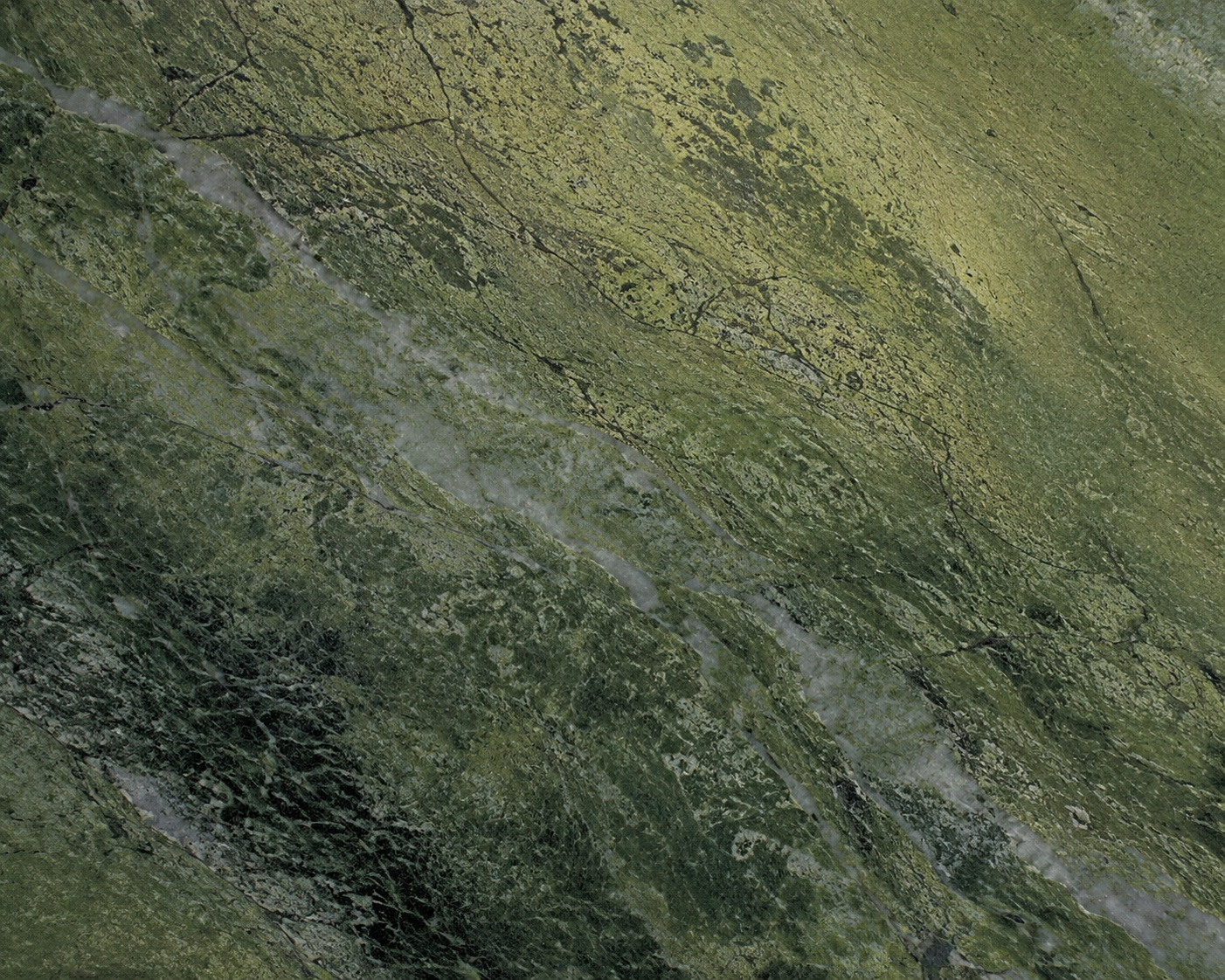
Irish Green marble, often referred to as Connemara marble, is one of the few stones whose identity is tied as much to place as to appearance.
Quarried in the west of Ireland, primarily in County Galway, it has been used for centuries in everything from small decorative objects to architectural interiors. It is sometimes described as the “gemstone of Ireland”, a reflection of both its colour and its cultural significance.
Unlike the more dramatic, high-contrast marbles of Italy, Irish Green tends towards a more compact, mineral quality.
Its colour sits within a range of greens – from soft, misted tones through to deeper, moss-like shades – often within the same piece. The patterning is less about bold veining and more about subtle shifts and cloudy formations, as if the surface has been slowly compressed rather than sharply fractured.

The stone has a density: it feels solid, almost opaque, with light sitting on the surface rather than passing through it. This gives it a steadier, more grounded presence, particularly when used across larger areas.
It also has a certain irregularity. No two sections are quite the same. Some areas appear almost uniform; others carry more visible movement. This variation is quieter than in marbles like Calacatta Verde, but no less distinctive.
Historically, Irish Green has often been used in smaller applications – fireplaces, tabletops, decorative pieces – where its richness can be appreciated up close. In contemporary interiors, it is increasingly used more expansively, allowing its tonal variation to develop across surfaces and spaces.
It pairs naturally with darker timbers and warmer metals. These materials sit comfortably within its tonal range, reinforcing its depth rather than competing with it. The result is a palette that feels cohesive and enduring, rather than driven by contrast.
Irish Green is not a showpiece in the conventional sense; rather, its appeal lies in its material honesty and in the way its variations emerge gradually, and continue to reveal themselves over time.
Book an Appointment
Get in touch today to arrange a personal design consultation in your home or an appointment to visit the Langstaff studio.
Book an appointment
Get in touch today to arrange a personal consultation in your home or an appointment to visit the Langstaff studio.