

Patagonia marble
With its shifting layers of crystal and stone, Patagonia marble catches and carries light in unexpected ways – each slab a singular expression of nature’s slow, intricate work.
Patagonia is a dramatic, high-contrast stone: a pale ivory-to-cream ground packed with oversized translucent quartz crystals, beige and gold feldspar, grey tonal splashes and occasional black mineral accents.
Each slab reads almost like a geological collage – or a cabinet of semi-precious stones laid open. The larger crystal fields can appear almost luminous, especially when light is allowed to pass through them.
It is quarried primarily in Brazil, formed over millions of years through the slow cooling of mineral-rich magma deep within the earth. Much of its character comes from pegmatite – a type of igneous rock known for producing unusually large crystals as it cools very slowly, allowing minerals the time and space to grow. The result is a distinctive structure: not a fine, even grain, but a dramatic assembly of oversized quartz and feldspar crystals locked together within the stone.
Rather than a uniform surface, Patagonia presents something far more complex: a composition of fragments and transparencies, like a natural artwork.

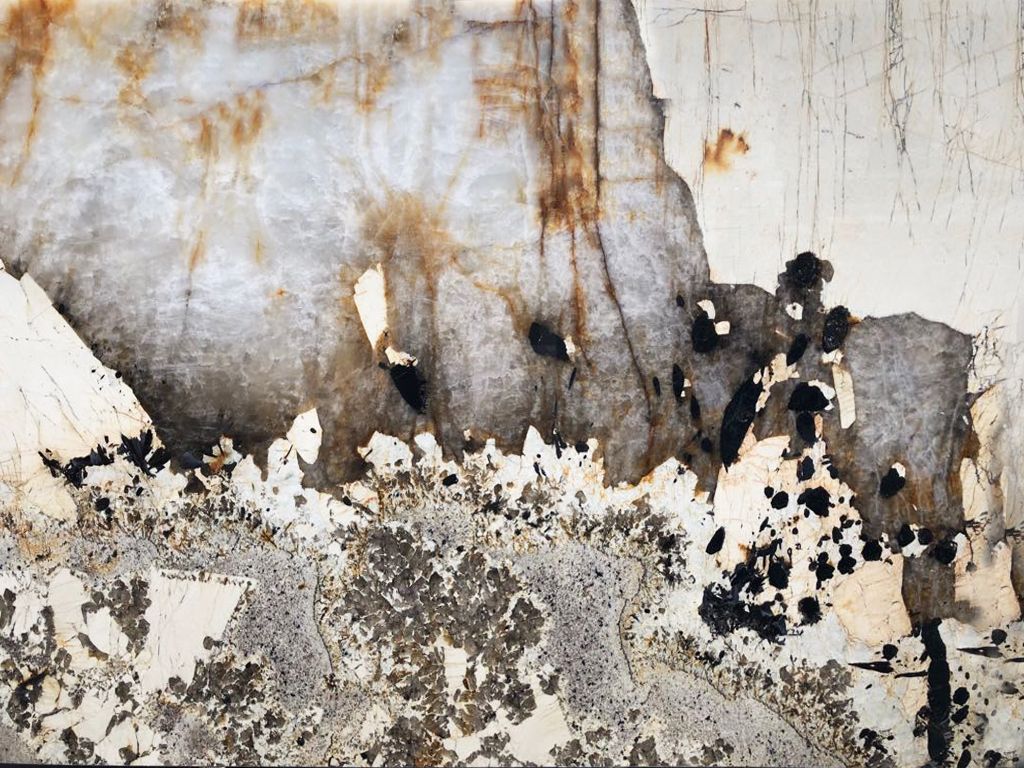
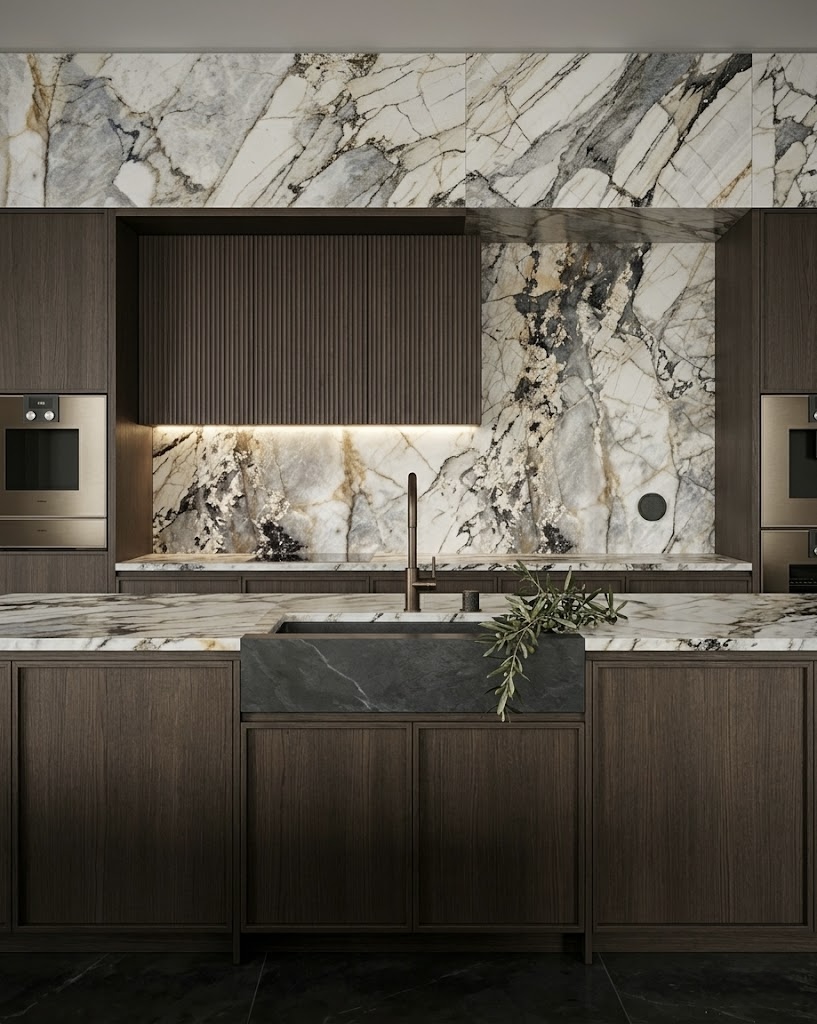
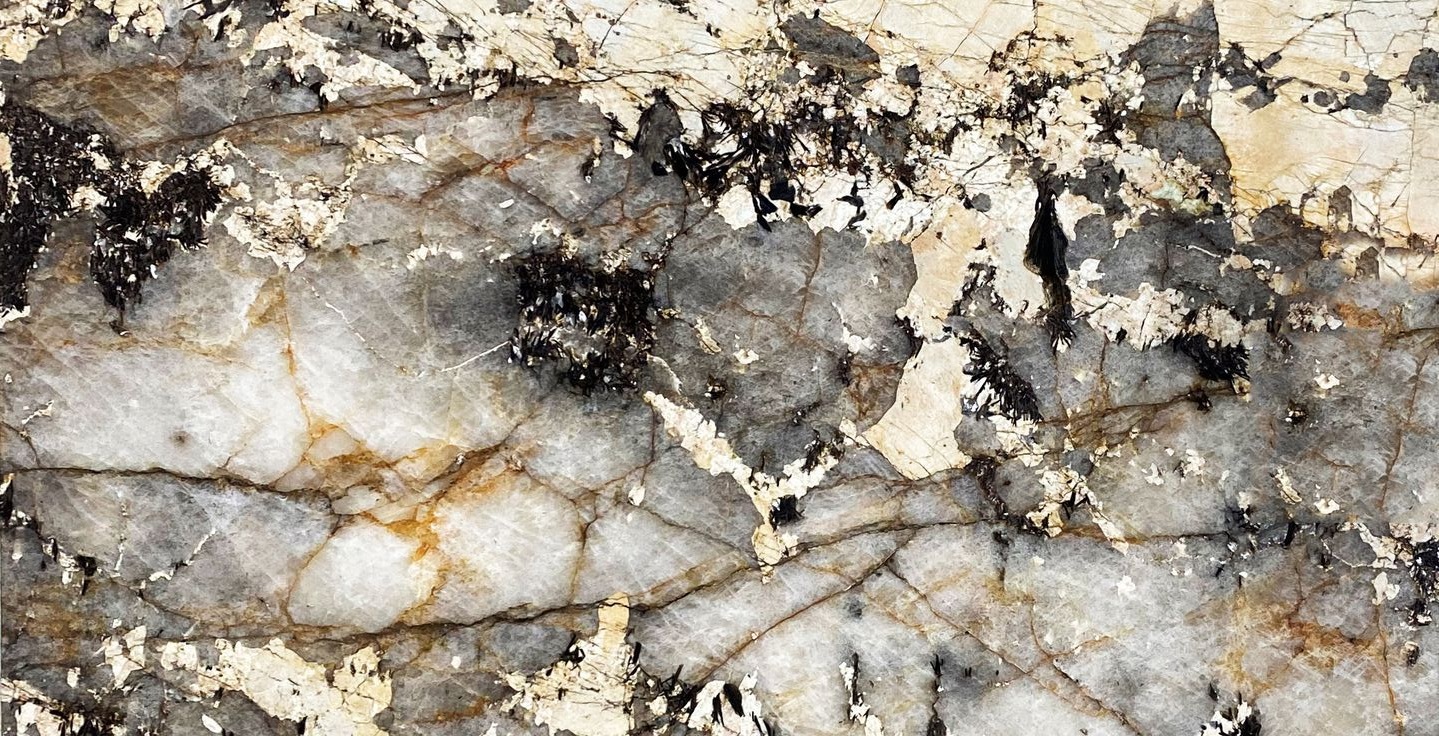
This complexity underpins its distinctive relationship with light. Unlike more homogenous marbles, which reflect light evenly across their surface, Patagonia interacts with it in layers. Some areas absorb it, others scatter it, and the quartz crystals can transmit it, creating moments of brightness that seem to glow from within.
For this reason, Patagonia is often used sparingly and deliberately. It is not a background material. It resists repetition, because each slab is entirely unique, and it draws the eye in a way that few stones can. In many settings it is treated less as a surface and more as a focal piece – something to be framed, to be positioned with care, so that it can be experienced in different lights.
Its reputation is relatively recent. Unlike the Carrara marbles, which carry centuries of architectural and sculptural history (think classical statues), Patagonia belongs to a more contemporary language of luxury. Its appeal is that it is visually singular. It offers something that cannot be replicated or standardised – a material expression of rarity, complexity and natural beauty.
Book an Appointment
Get in touch today to arrange a personal design consultation in your home or an appointment to visit the Langstaff studio.
Book an appointment
Get in touch today to arrange a personal consultation in your home or an appointment to visit the Langstaff studio.
