

Furniture as Architecture
Understood properly, fitted furniture has the power to shape the experience of a space at an architectural level.
The finest fitted furniture shapes proportion, movement, atmosphere and the experience of the home itself. It directs the way a space is read, how light is held, how materials meet, and how the room relates to the wider home.
This is what we mean by furniture as architecture.
It is a way of thinking that looks beyond the individual cabinet or the isolated room. It considers the whole spatial experience: proportion, sightlines, rhythm, mass, materiality and atmosphere. It asks not simply what a piece of furniture should look like, but what role it should play in the architecture of the interior.
More than an addition to a room
In many interiors, fitted furniture is treated as a finishing layer. The walls, windows, thresholds and volumes are established, and cabinetry is then designed to sit within them.
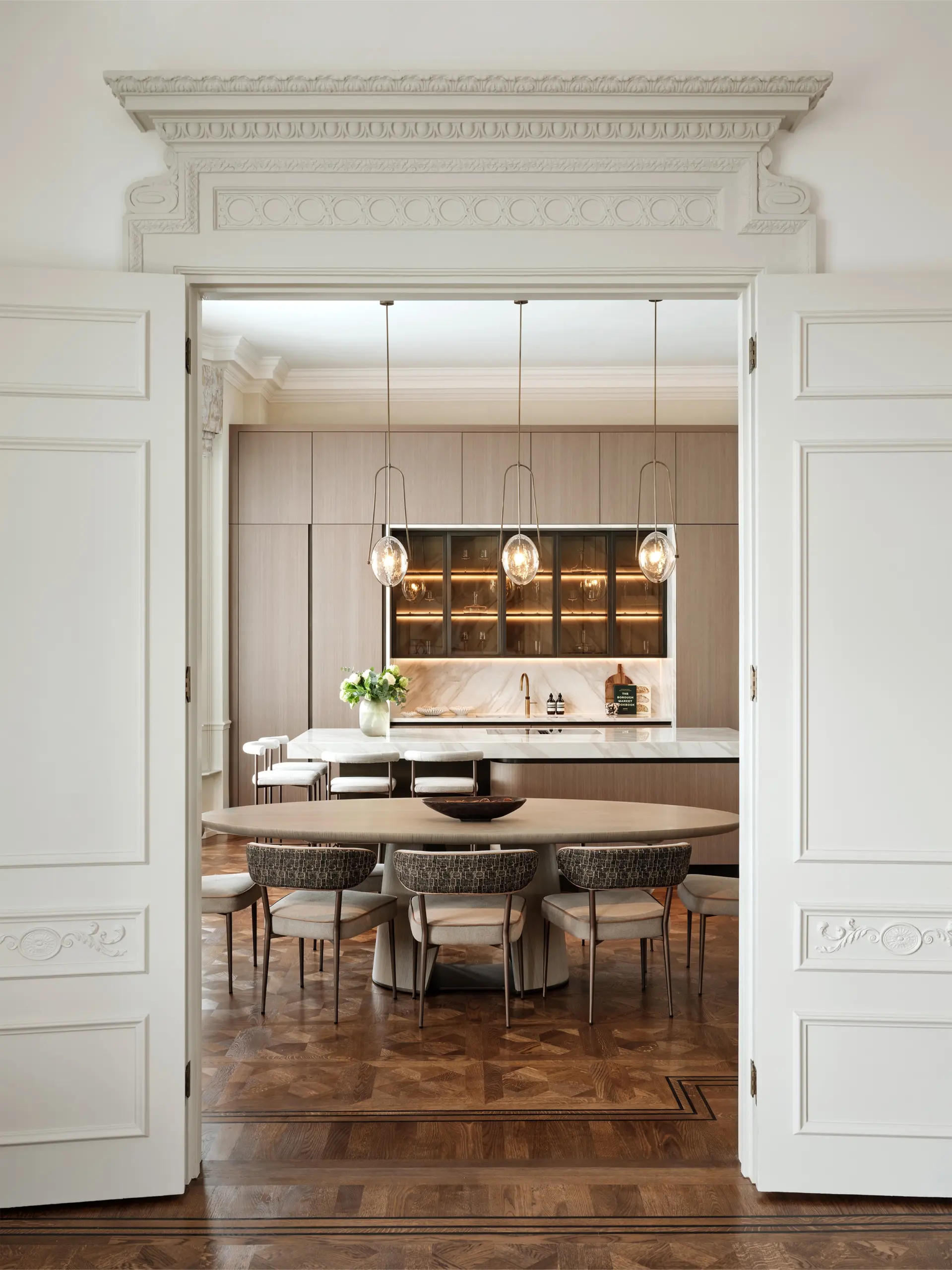
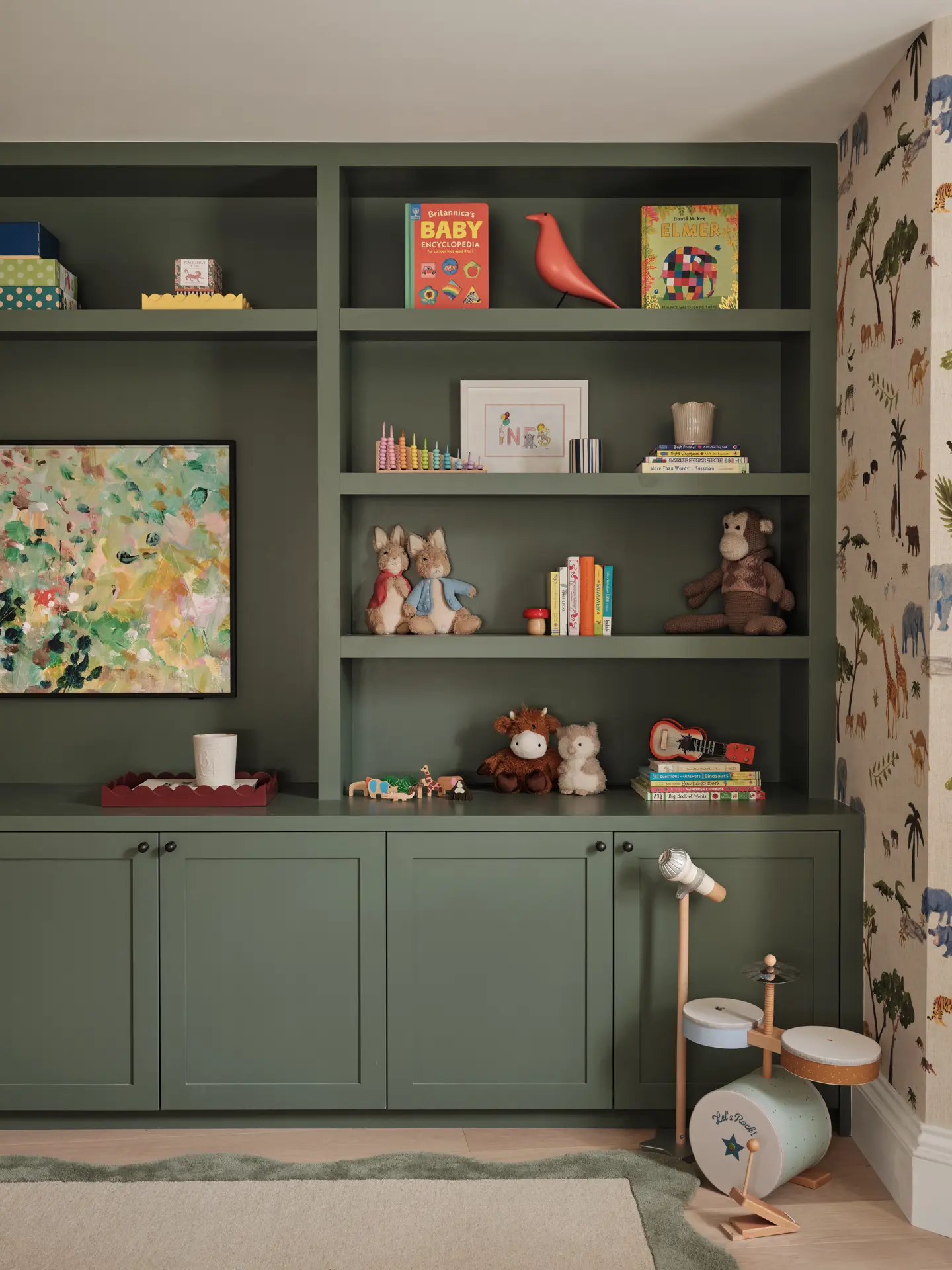
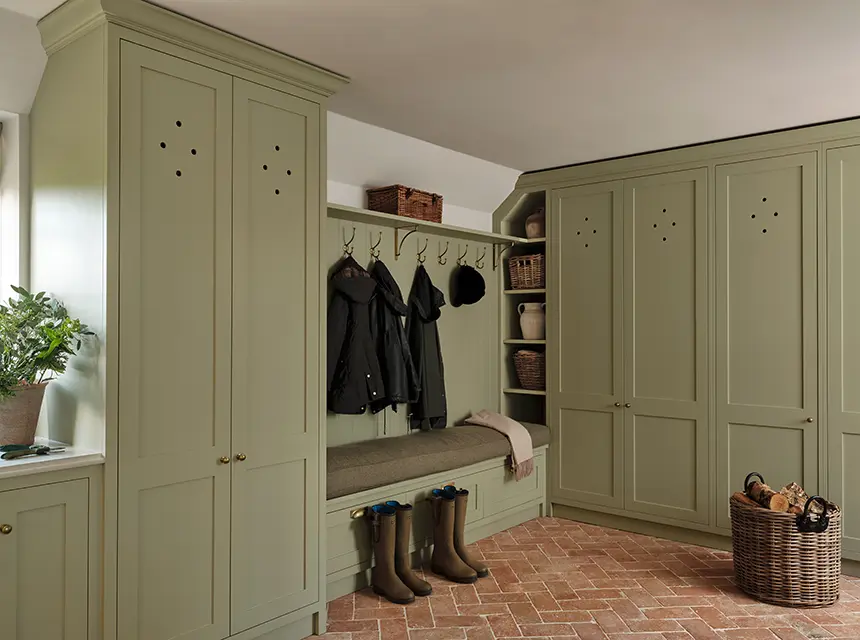
At the highest level, the relationship is more nuanced. A run of cabinetry can alter the perceived proportions of a room. For example, full-height joinery can bring calm and vertical order to a complicated space; while a long island or dining element can establish direction and rhythm.
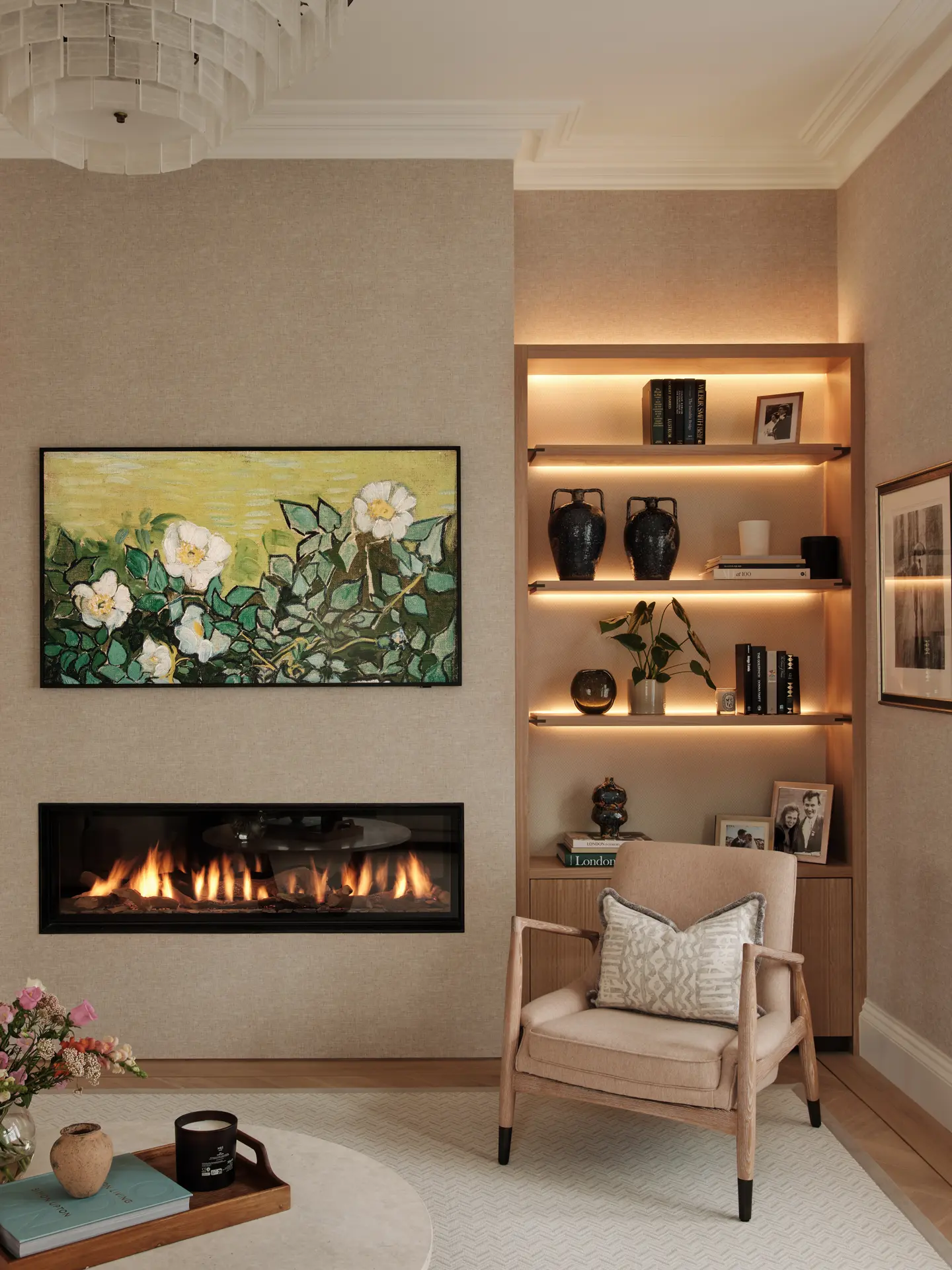
Even the smallest details can change the way a room is experienced: the depth of a shadow gap, the thickness of a shelf, the junction between stone and timber, the alignment of a handle – these are not merely decorative decisions but affect balance, weight and visual coherence.
Beginning with the building
To design in this way, the starting point must be the building itself.
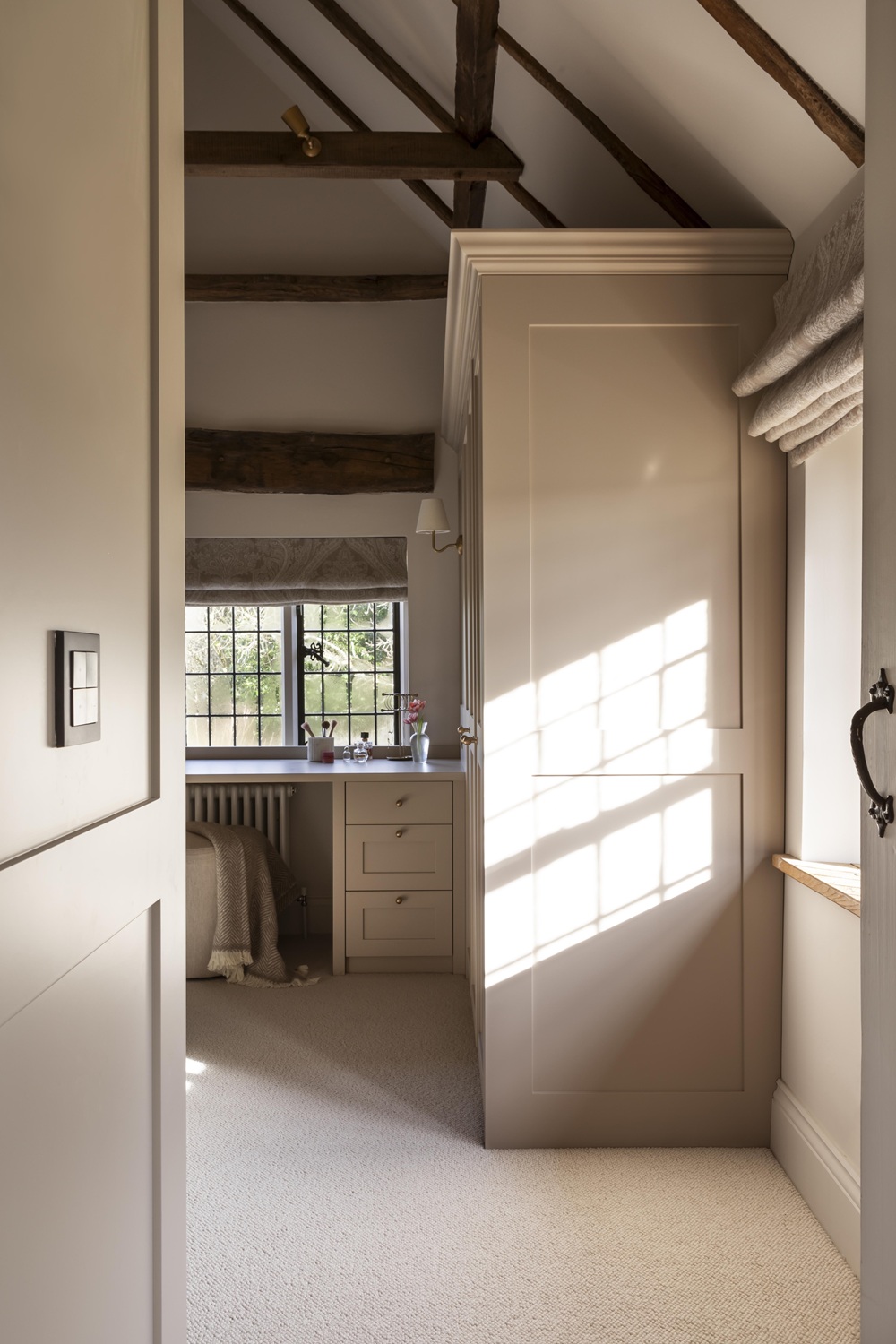
Every home has its own geometry and character: formal and symmetrical, or layered and irregular. A contemporary house may call for long lines, flush planes and precise material transitions, whereas a period property may require a more interpretive approach, responding to walls that are no longer straight, floors that have shifted over time, or architectural details that deserve to be respected rather than overridden.
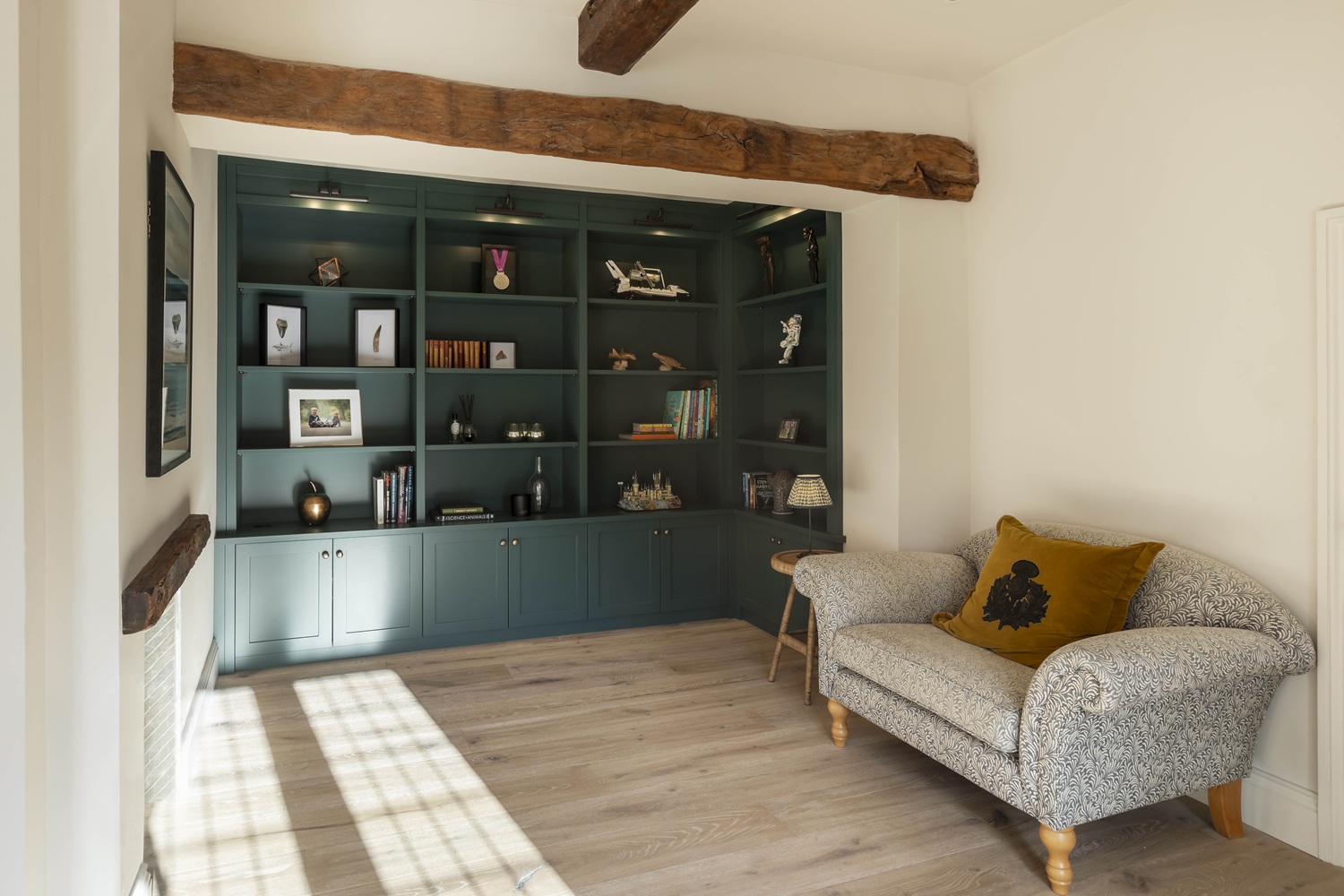
In an older building, architectural intelligence often means working with the slight eccentricities of the fabric The aim is not to erase uneven lines and other historic qualities, but to create furniture that understands the building and feels composed within it.
When fitted furniture is properly designed for its setting, it can make a complex space feel resolved without stripping away the character or losing the particular spirit of the place.

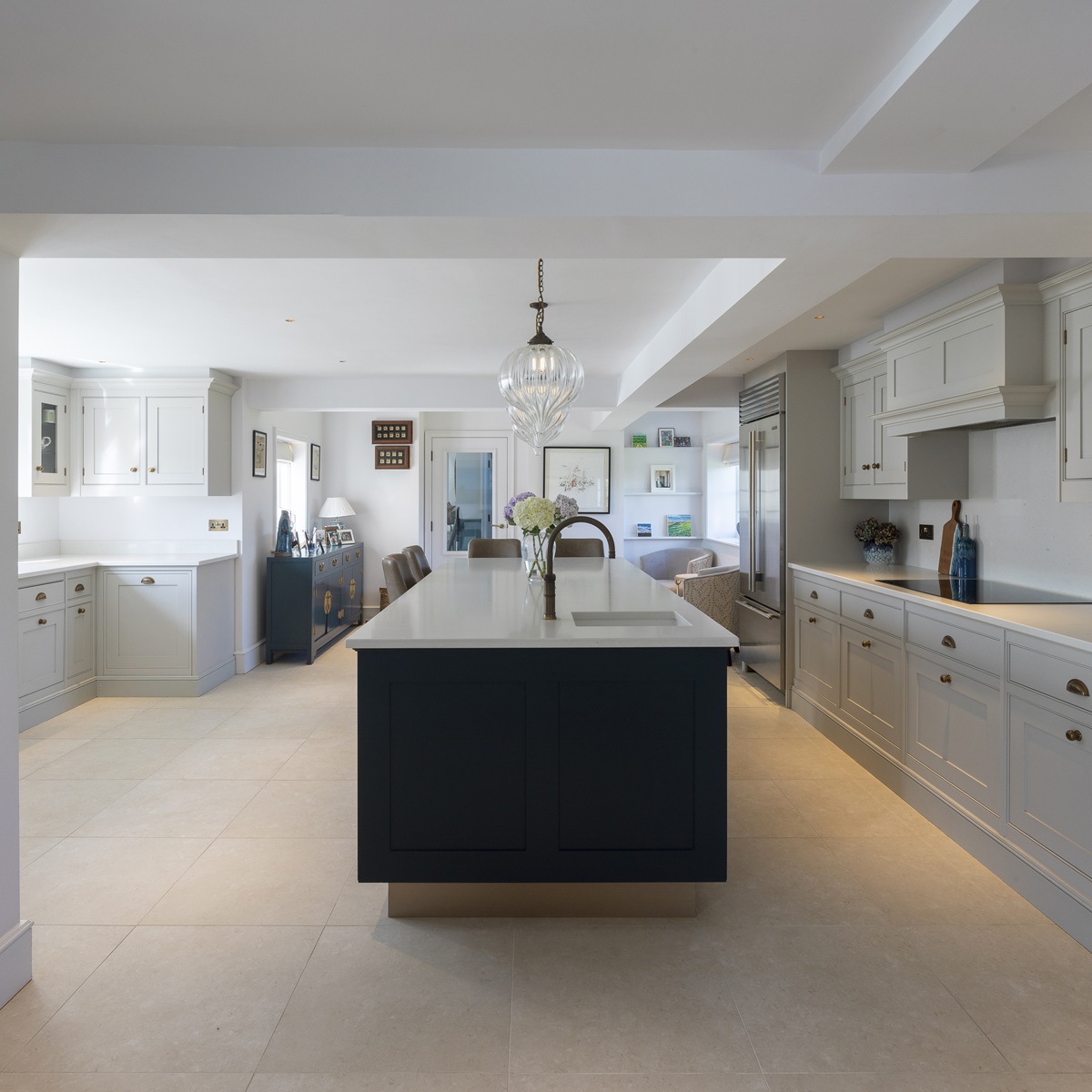
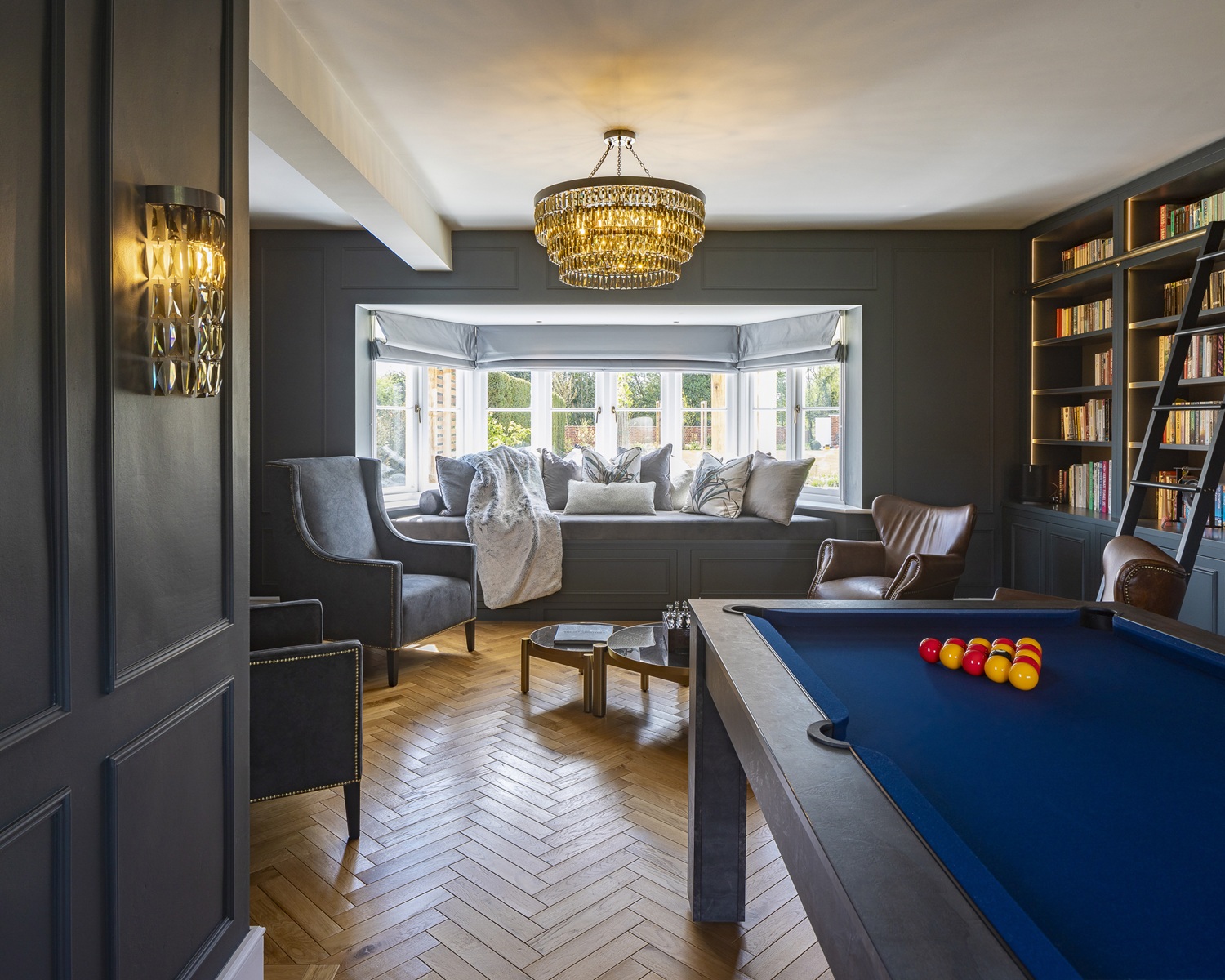
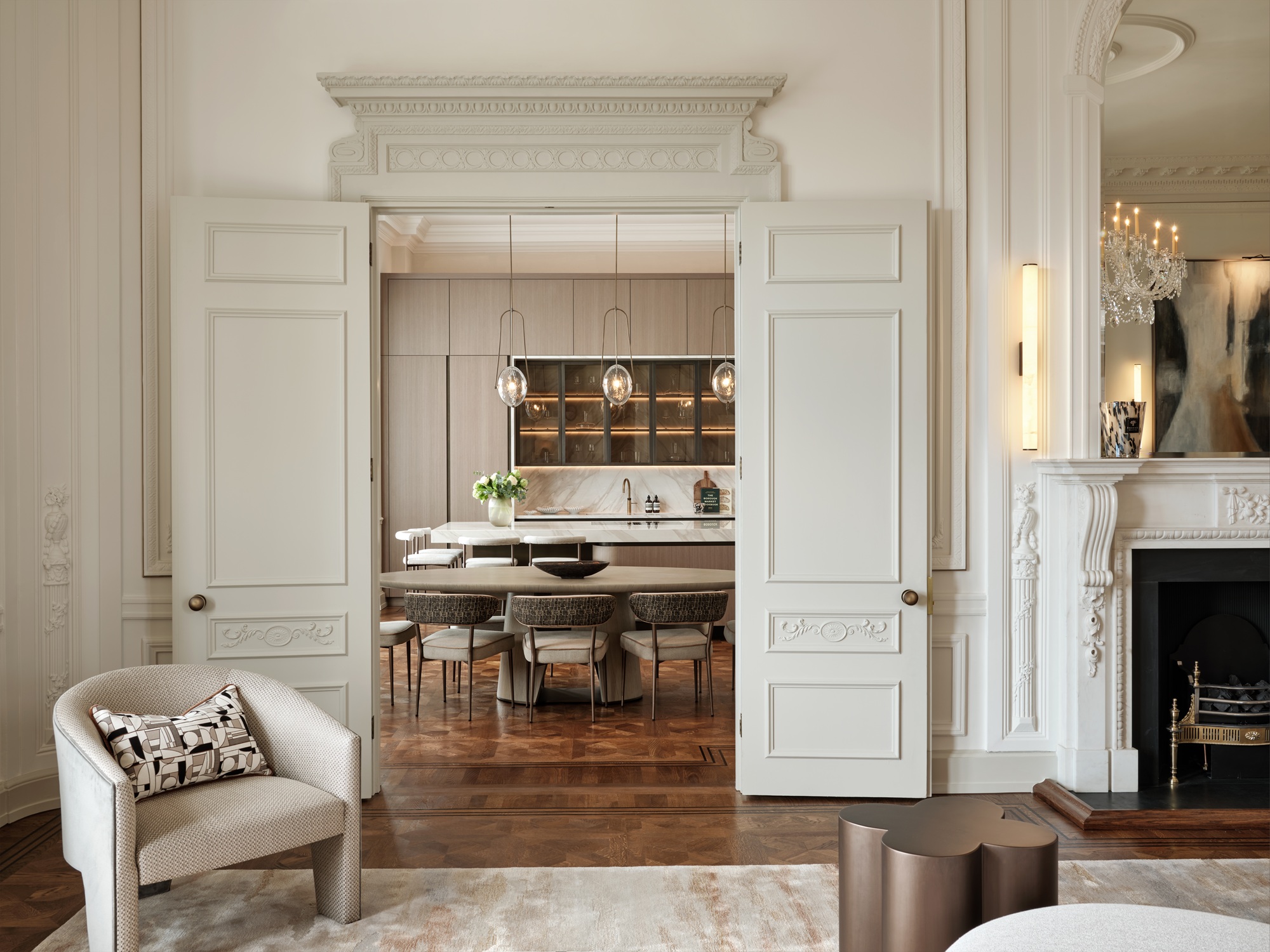
Proportion and flow
Architecture is experienced through movement: we understand a room by approaching it, entering it, passing through it and seeing how it connects to what lies beyond.
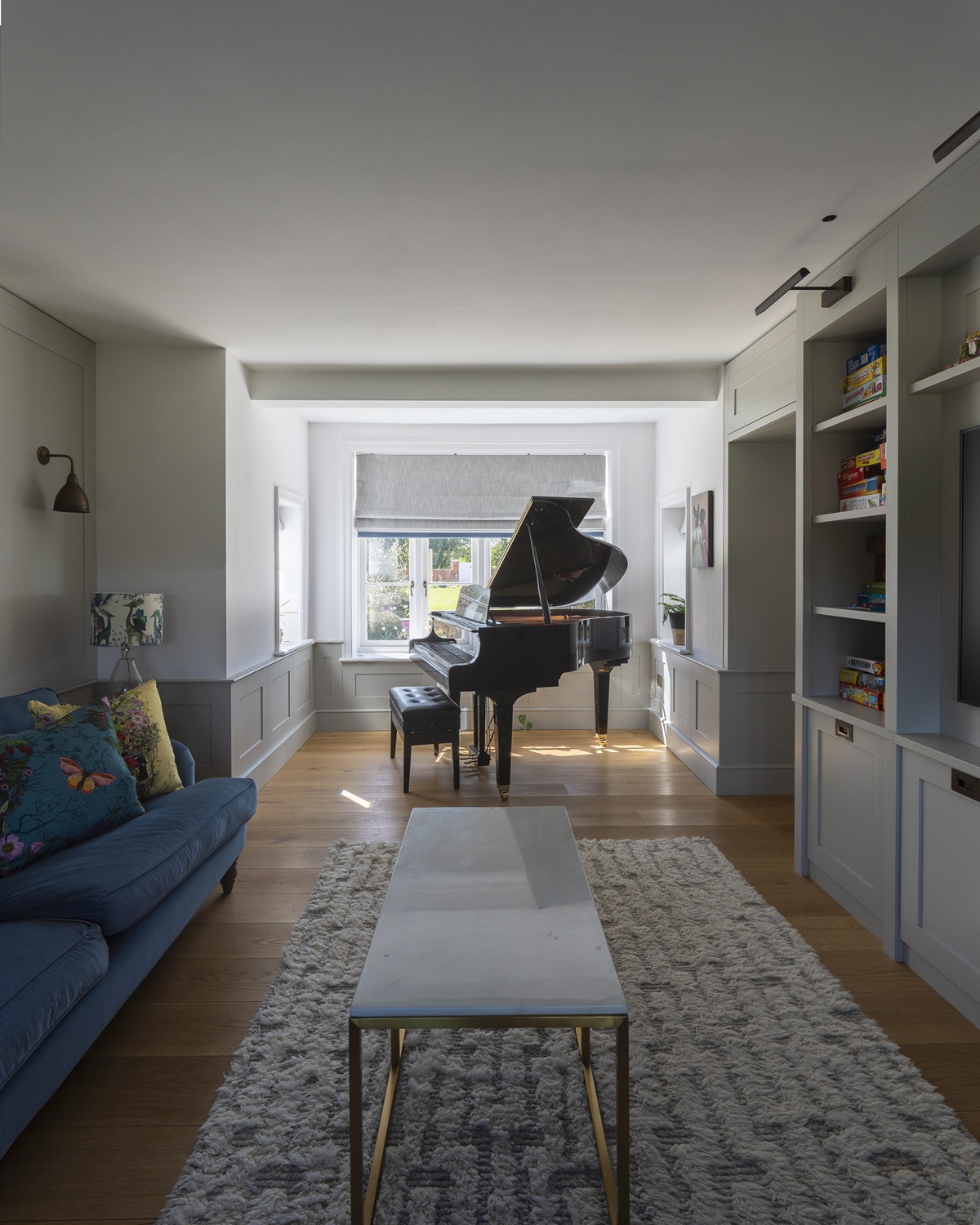
Furniture and cabinetry have a powerful role to play in that sequence. It can draw the eye towards a view, or frame a fireplace, doorway, window or artwork. It can create a sense of arrival. It can make one space feel open and generous, and another feel enclosed, intimate and private.
This is particularly important in whole-home commissions, where kitchens, pantries, bars, dressing rooms, libraries and studies need to feel related without becoming repetitive.
The best schemes develop a spatial language. Materials may recur, but not mechanically. Details may echo from room to room, but with variation. A proportion established in one space might be reinterpreted elsewhere. A detail introduced in a kitchen may find a more private expression in a dressing room or library.
Material as architecture
Materials are often discussed in terms of surface beauty: the veining of a stone, the tone of a timber, the softness of leather, the lustre of metal or lacquer.
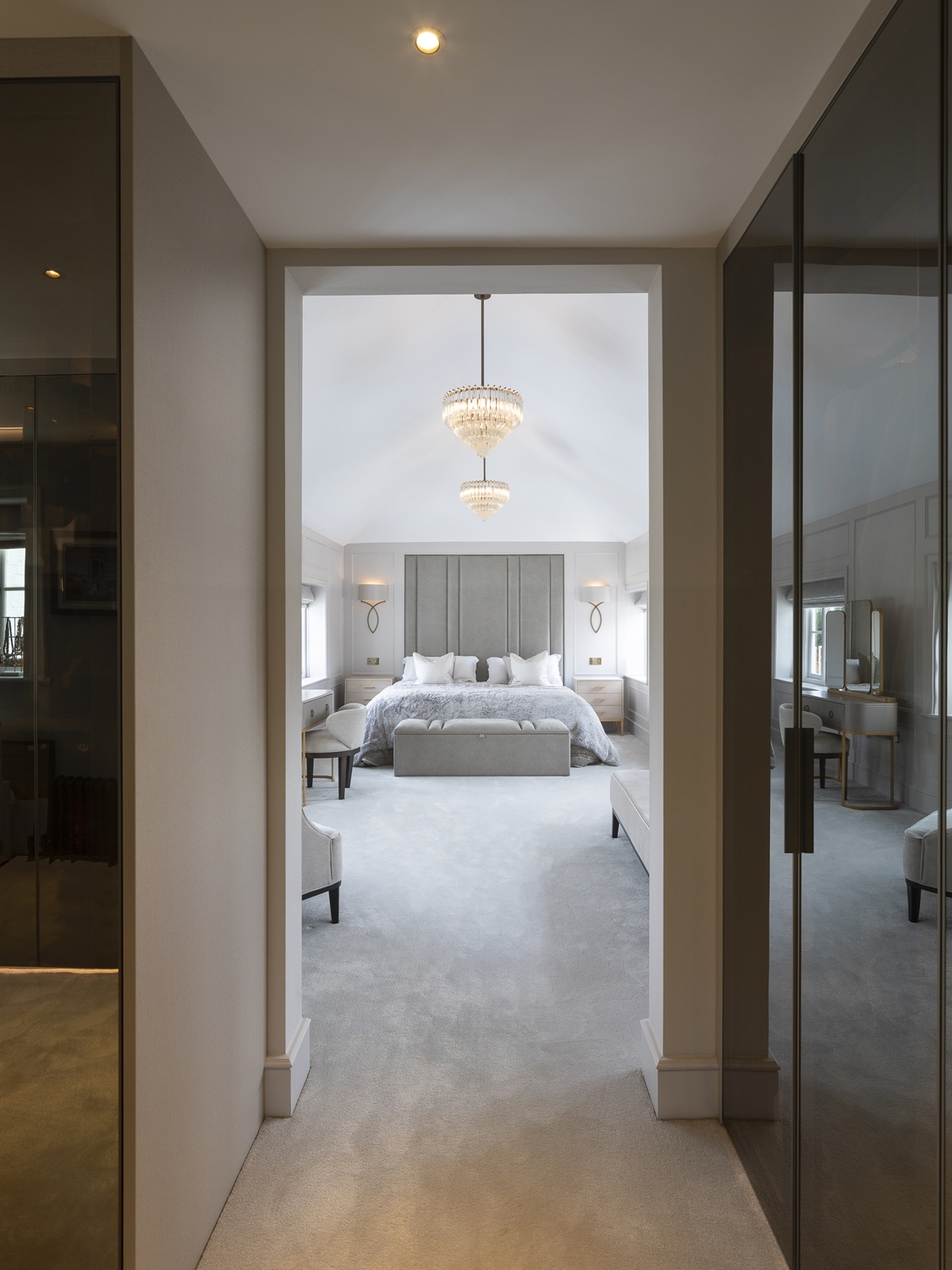
But materials also have architectural force. Stone can give a room weight and permanence, while timber can bring warmth and depth. Metal can sharpen an edge or introduce a fine line of contrast. Glass can lighten a composition, allowing reflection and transparency to become part of the experience. Lacquer can create expanses of colour or sheen that alter the way light behaves.
Used well, these materials define the room’s atmosphere; it can be given an entirely different character through the balance of dark and light, open and closed, matte and reflective, solid and delicate.
Furniture as architecture is therefore inseparable from material intelligence. The choice of material is also a choice about volume, light, mood and presence.
Between architecture and interior design
This concept sits somewhere between architecture and interior design, so requires a particular kind of thinking.
It must understand the architect’s concerns: proportion, plan, elevation, detail, context and coherence. But it must also understand the interior designer’s world: atmosphere, texture, colour, comfort, visual balance and the emotional tone of a room. Finally, it must translate both into beautifully made, precisely fitted, enduring pieces.
Furniture as architecture is not about making cabinetry look monumental or severe, but about recognising that fitted furniture has the power to shape experience at an architectural level. It can influence how a room feels, how a house flows, how materials speak to one another, and how an exceptional home is inhabited.
For Langstaff, this is central to the idea of The Architecture of Living: bespoke fitted furniture conceived not as an addition to the home, but as part of its enduring character.
Book an Appointment
Get in touch today to arrange a personal design consultation in your home or an appointment to visit the Langstaff studio.
Book an appointment
Get in touch today to arrange a personal consultation in your home or an appointment to visit the Langstaff studio.
