


Why Restraint Is One of the Hardest Things to Design
Andrew Nixon
Restraint is one of those qualities that is immediately apparent in a beautiful interior, even if it is difficult to define.
There is a sense of calm to the room, and the architecture can be read clearly. Materials have room to make their presence felt, and individual pieces seem to belong exactly where they are.
Creating that apparent simplicity takes considerable judgement.
At Langstaff, the starting point is always the room itself: its scale, proportions, architectural details, light and the way people move through it. A wall does not automatically require cabinetry simply because there is space available for it. Sometimes the strongest contribution might be panelling, a piece of stone, artwork or simply the wall itself.
The difficult part is knowing when to stop.
Giving the architecture room
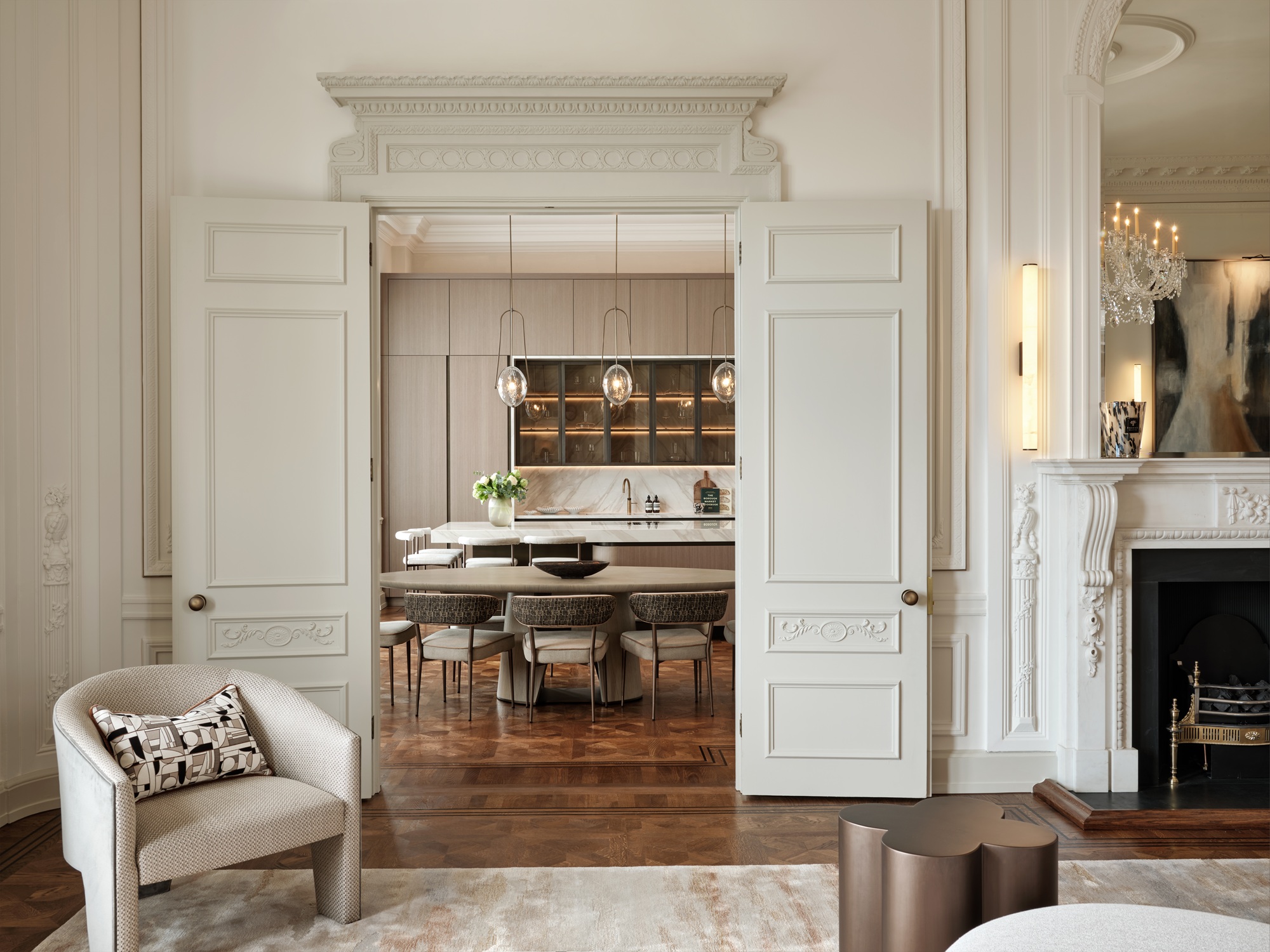
On a recent project in an early nineteenth-century house in Surrey, the kitchen had exceptionally generous proportions, with ceilings around 3.5 metres high, deep coving and beautifully detailed doors, architraves and skirting.
The client initially assumed that the new kitchen would need considerably more cabinetry. Her existing cupboards were overflowing, and the natural response was to imagine storage running around the room.
Instead, the design took its cue from the architecture.
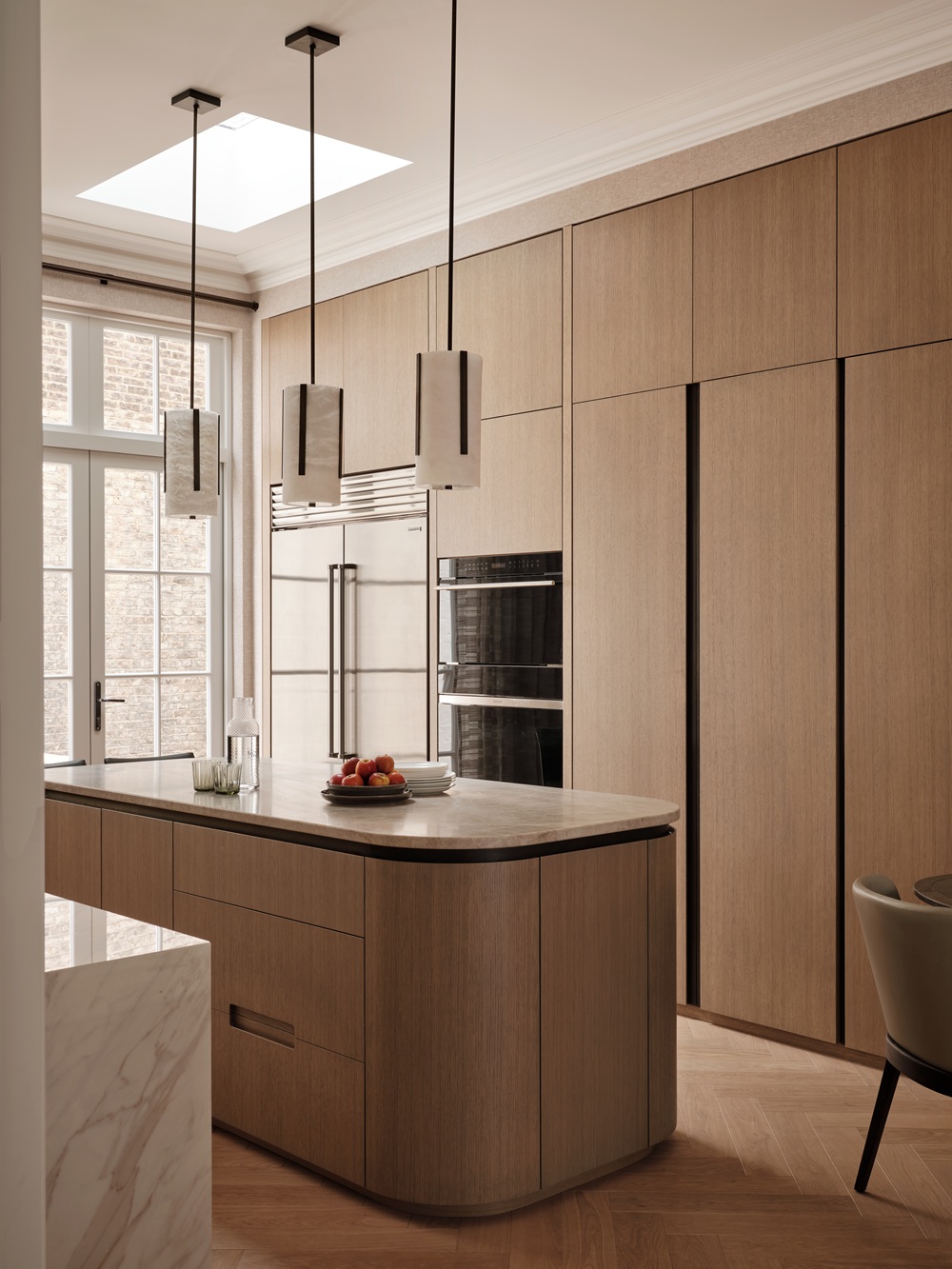
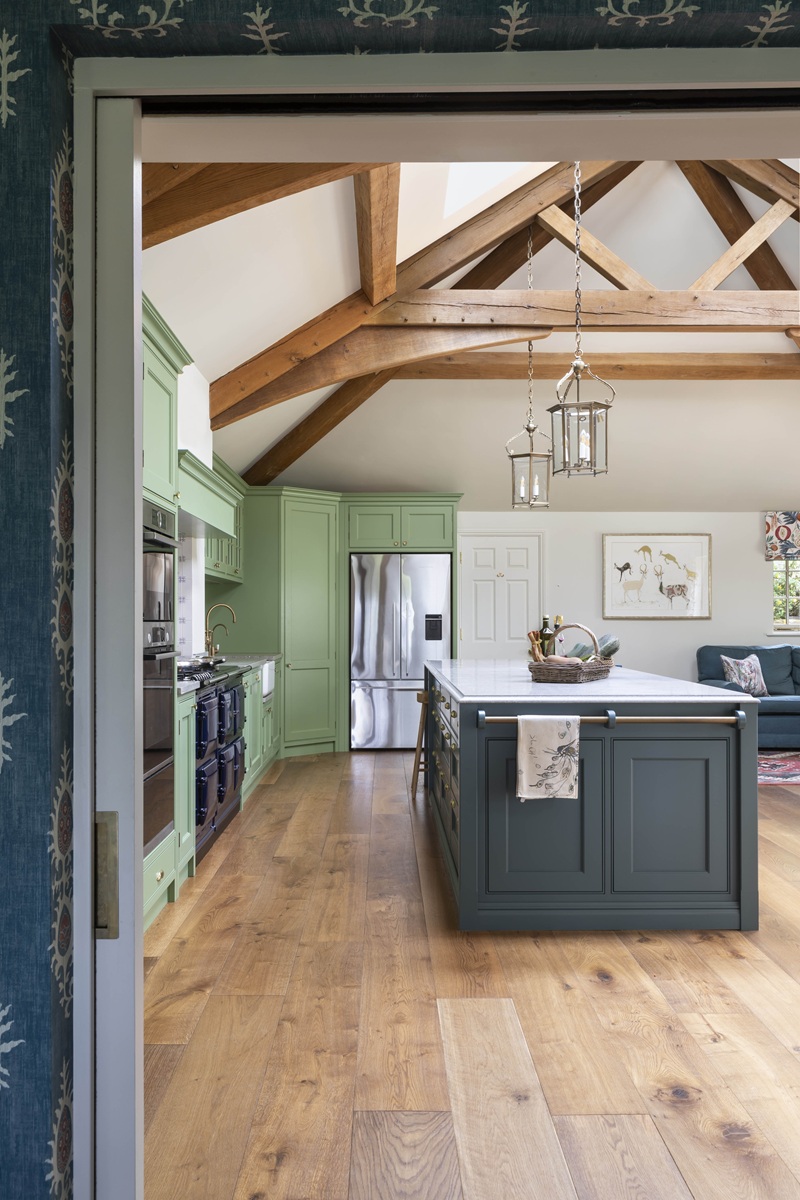
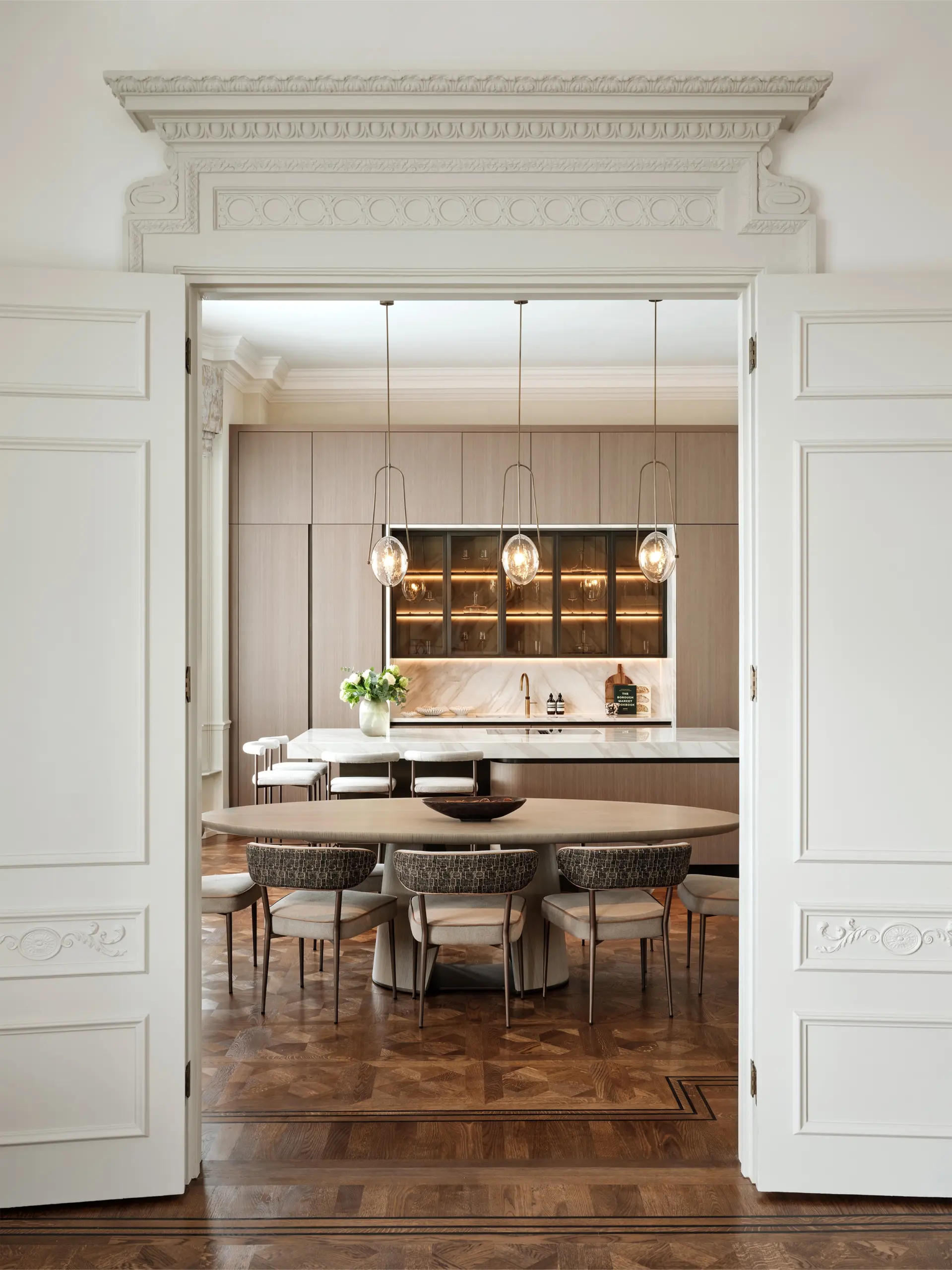
A large central island was combined with a freestanding crockery cupboard food larder, while areas that might conventionally have been occupied by wall cupboards were left open, with marble splashbacks and integrated mirror helping to reflect light and emphasise the scale of the room.
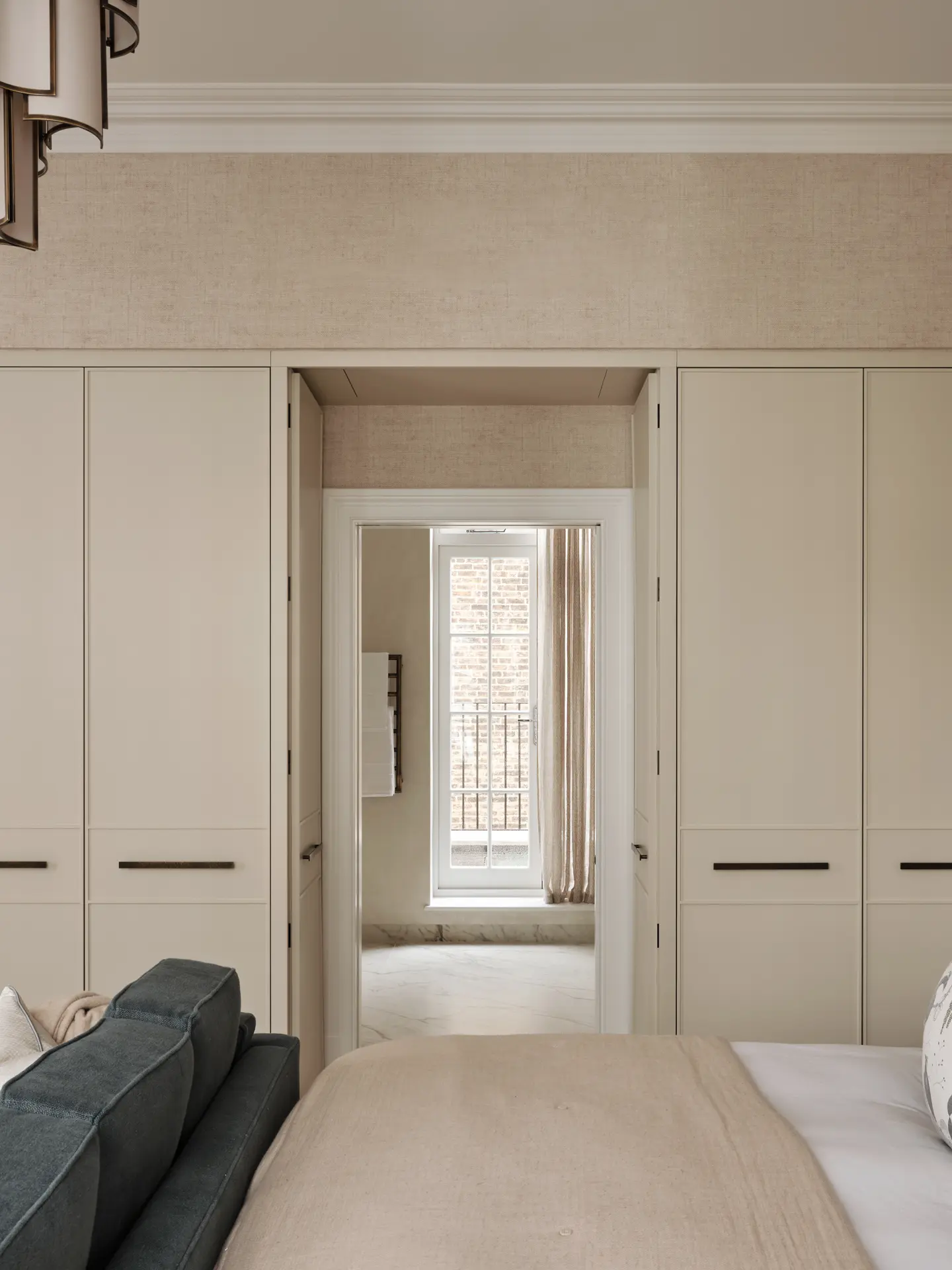
The resulting kitchen has the feeling of furniture placed within a fine period interior, rather than cabinetry imposed upon it. Just as importantly, careful consideration of what actually needed to be stored meant that the practical requirements could be met without overwhelming the space.
This is often where restraint begins: understanding what the room genuinely needs.


Letting materials do more
A restrained design still needs depth and character. Much of that can come from the materials themselves. We sometimes say that materials have an emotional life.
Natural materials reward simplicity because their variation becomes part of the composition. Marble may be honed, polished or leathered; walnut can move from deep, almost chocolate stains to much paler washed finishes. Aged brass and bronze develop character over time, while fluted or bronze mirror introduce light and movement without adding visual clutter.
Used with care, these materials create a sense of richness that is perceived almost subconsciously. This is part of material intelligence.
This also allows individual choices to carry more weight. A beautifully selected slab of stone does not necessarily need another decorative idea beside it. An exceptional timber veneer can become the defining element of an entire elevation.
Restraint gives these materials room to be seen.
The discipline of simplicity
Clients naturally arrive with ideas gathered from many places, and one of the designer’s roles is to decide which of those ideas belong together.
Appliances are a good example. It is easy to specify several ovens, a steam oven, a coffee machine and additional refrigeration, but every appliance brings cabinetry and visual weight with it. Islands can grow beyond comfortable proportions, while an accumulation of individually beautiful materials can begin to compete with one another.
Full-size material samples, setting-out drawings and even marking the footprint of cabinetry on the floor can be invaluable. They allow the scale and composition of a room to be experienced before anything is made.
And the simpler the final design appears, the more precise its execution must become.
A contemporary run of stained timber doors, for example, leaves almost nowhere for inconsistencies to hide. Timber takes stain differently according to the board, its grain and even where it was cut from the tree. Achieving a beautifully consistent elevation begins with selecting and matching the timber long before finishing starts.
The result may look extraordinarily simple, but that simplicity has been earned.
Perhaps that is the real value of restraint. The eye is never distracted from the things that matter: the proportions of the room, the quality of the materials and the precision with which everything has been brought together.
When those elements are right, very little else is required.
Book an Appointment
Get in touch today to arrange a personal design consultation in your home or an appointment to visit the Langstaff studio.
Book an appointment
Get in touch today to arrange a personal consultation in your home or an appointment to visit the Langstaff studio.


How Proportion Defines a Luxury Kitchen
Andrew Nixon
Proportion is a foundation of good design.
When it is right, a kitchen feels settled into the room: the cabinetry relates naturally to windows and doors, an island has presence without dominating, and the eye moves comfortably across the space.
When we begin a new project at Langstaff, the first considerations are architectural. Ceiling height establishes what the room can carry, followed by the existing datums of the building: window heads, door heights, cills, cornices and structural lines.
Movement matters too. How do people enter the room? Which route leads to the dining room, pantry or utility? Which doorway will be crossed twenty times a day? These relationships begin to determine the composition long before individual cabinets are considered. We call this the Architecture of Living.
Reading the architecture
A beautifully proportioned kitchen responds to the architecture of the room.
In a tall space, for example, there can be a temptation to take cabinetry all the way to the ceiling simply because the height is available. Sometimes that works beautifully. At other times, the room needs a visual break: cabinetry stopping at door-head height, an open section, a generous area of stone or simply some clear wall above.
The same principle applies horizontally.
The end of a run of cabinetry deserves particular thought. A final cabinet squeezed into whatever space remains can subtly disturb the whole elevation. Allowing the run to finish in relation to a window, doorway or architectural line may create a far stronger composition, even if it means sacrificing a little storage.
These decisions are often small on paper, but they determine how the room feels every day.


The weight of an island
Islands have become central to many kitchens, particularly in larger homes, but their scale needs careful judgement.
A very large island can quickly become a physical and visual barrier. Depth is important for practical reasons: once an island becomes much deeper than around 1200mm, reaching its centre comfortably becomes difficult. Length brings another consideration. An exceptionally long island can begin to read as a wall across the room.
There are many ways of reducing that sense of mass.
A recessed plinth can make cabinetry appear lighter. An overhang changes the silhouette and creates shadow. Leaving generous space at either end can allow the island to sit within the architecture rather than stretching simply because the room permits it.
Material also affects perceived weight. Stone, timber, metal and painted surfaces all have different visual densities, and their position within the room matters as much as their colour or finish.
Good proportion is therefore partly mathematical, but it is also instinctive: an understanding of how the eye experiences mass and space.
Creating rhythm
The dimensions of individual doors, drawers and panels have a surprisingly powerful effect on an elevation.
At Langstaff, these proportions are considered project by project. Door widths, plinth heights and the balance between cupboards and drawer banks are adjusted to suit the architecture and the character of the scheme.
A lower plinth, for example, can give cabinetry more of the presence of freestanding furniture. Wider or narrower doors alter the rhythm of a run, while the arrangement of drawer banks can introduce moments of symmetry around windows, sinks or other architectural features.
Rather than repeating the same drawer-over-door arrangement indefinitely, a composition might combine full-height base doors with separate drawer banks, each designed around what will actually be stored within them.
A long elevation then begins to develop rhythm.
These are rarely expensive decisions, and most are made at the drawing stage. Their value lies in the cumulative effect: the sense that every line has been considered in relation to the whole.
Small changes, large effects
Sometimes a relatively minor adjustment can transform a design.
Take a long run of base cabinets beneath a window. A conventional layout might repeat the same module from one end to the other. By altering the widths slightly and centring a drawer bank beneath the window, the cabinetry suddenly responds to the symmetry already present in the architecture.
Nothing dramatic has been added. The materials may remain exactly the same. Yet the entire elevation feels more composed.
This is one of the reasons proportion is such an important part of bespoke design. The dimensions of the room are never treated simply as a space to be filled. They provide the framework from which the furniture develops.
An exceptional kitchen can be made from extraordinary timber, stone and metal, but those materials only achieve their full effect when the underlying proportions are right.
Scale, alignment and rhythm give everything else somewhere to belong.
Book an Appointment
Get in touch today to arrange a personal design consultation in your home or an appointment to visit the Langstaff studio.
Book an appointment
Get in touch today to arrange a personal consultation in your home or an appointment to visit the Langstaff studio.
Designing the Whole Home as One Composition
Andrew Nixon
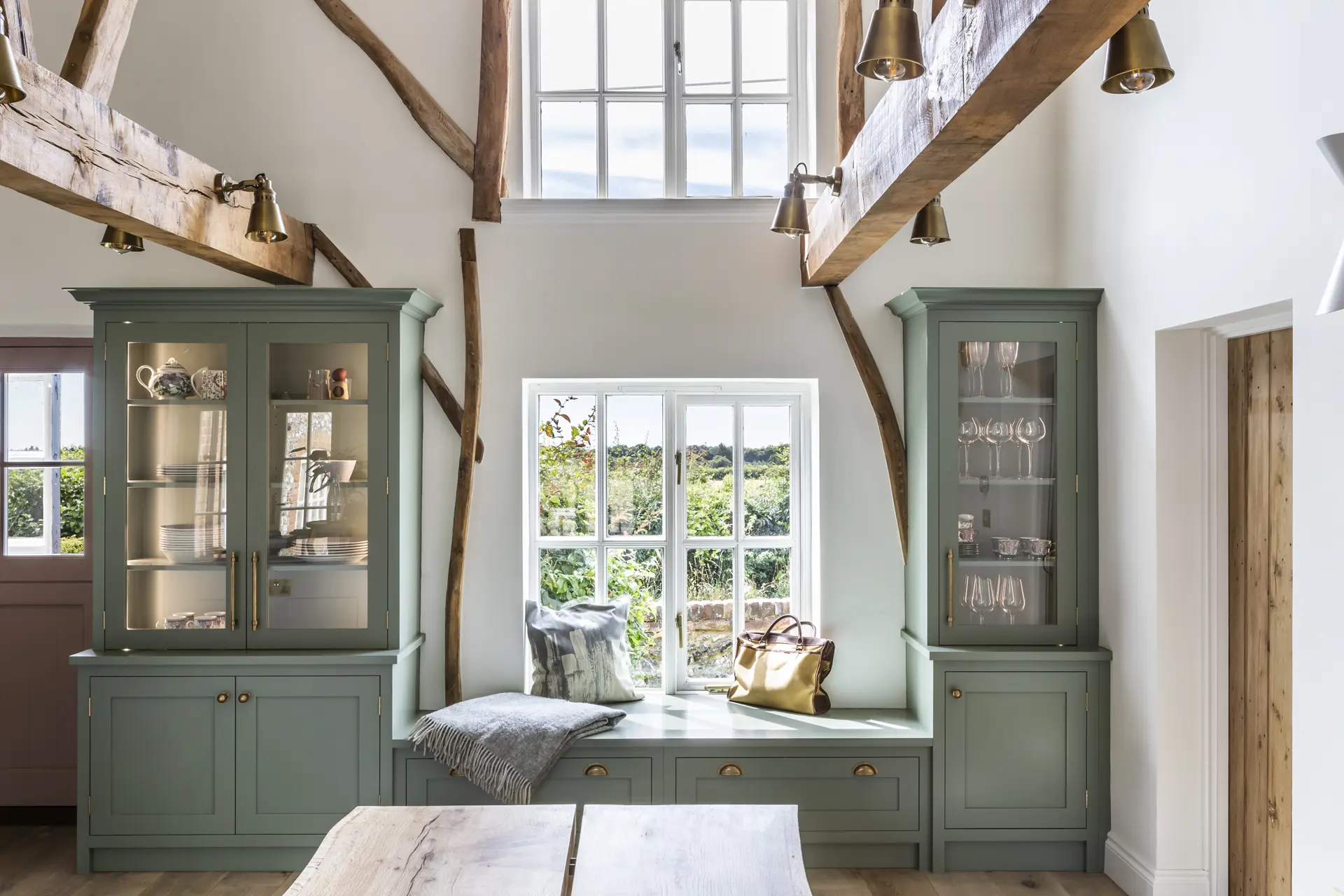
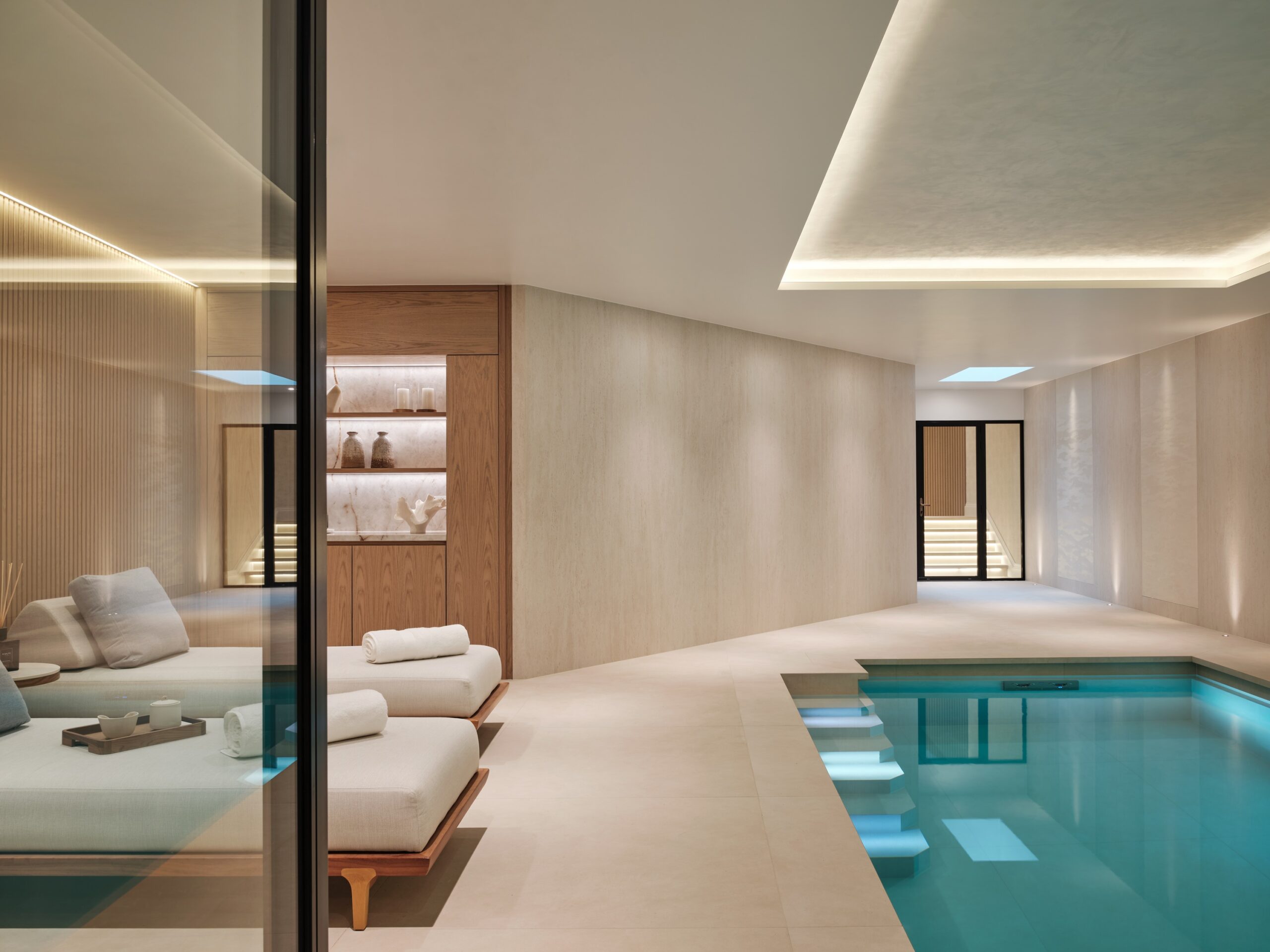
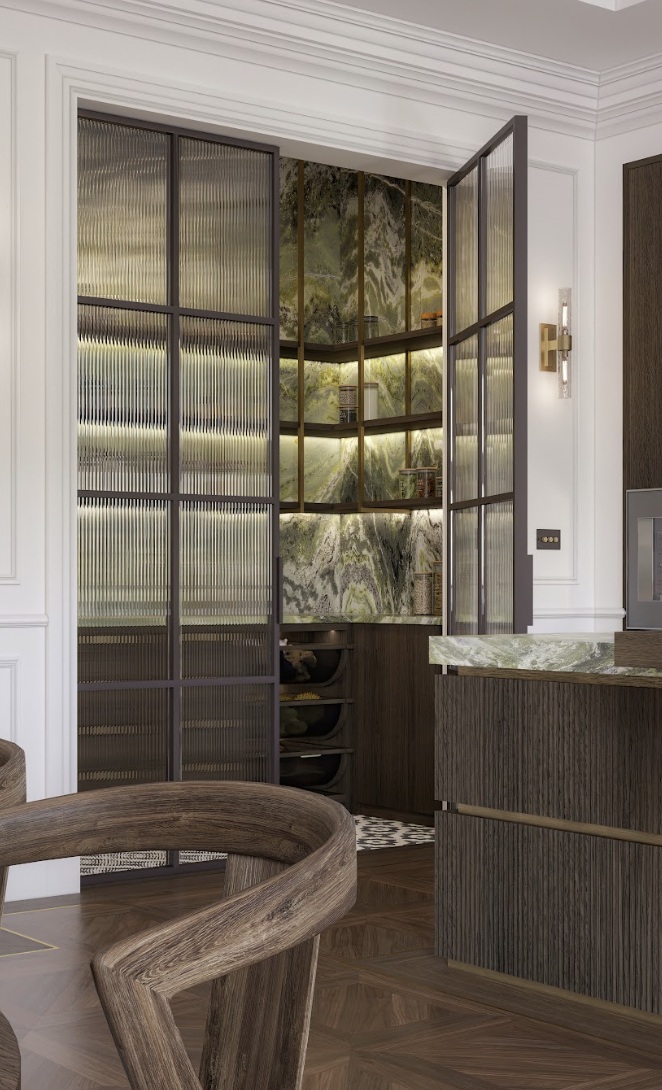
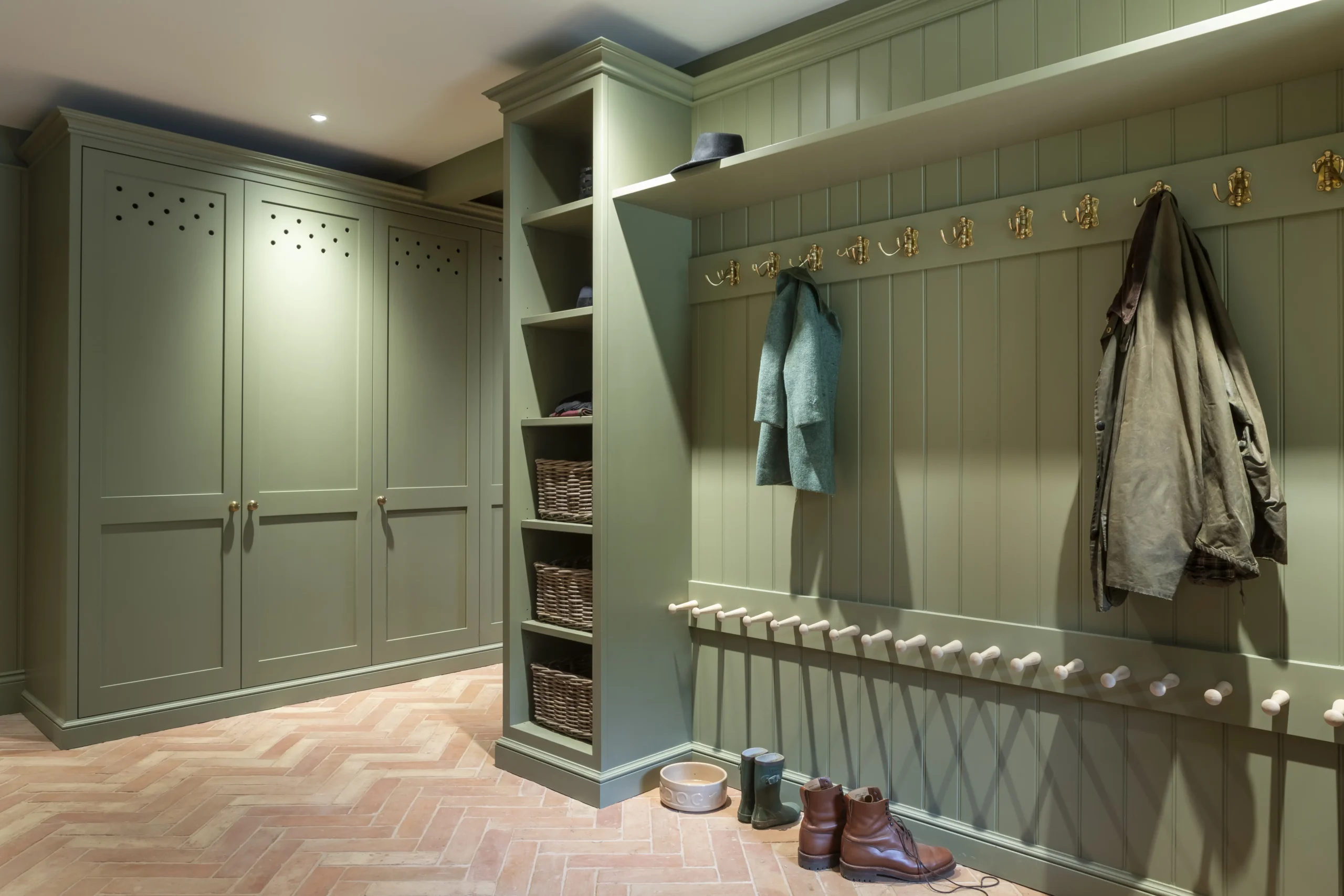
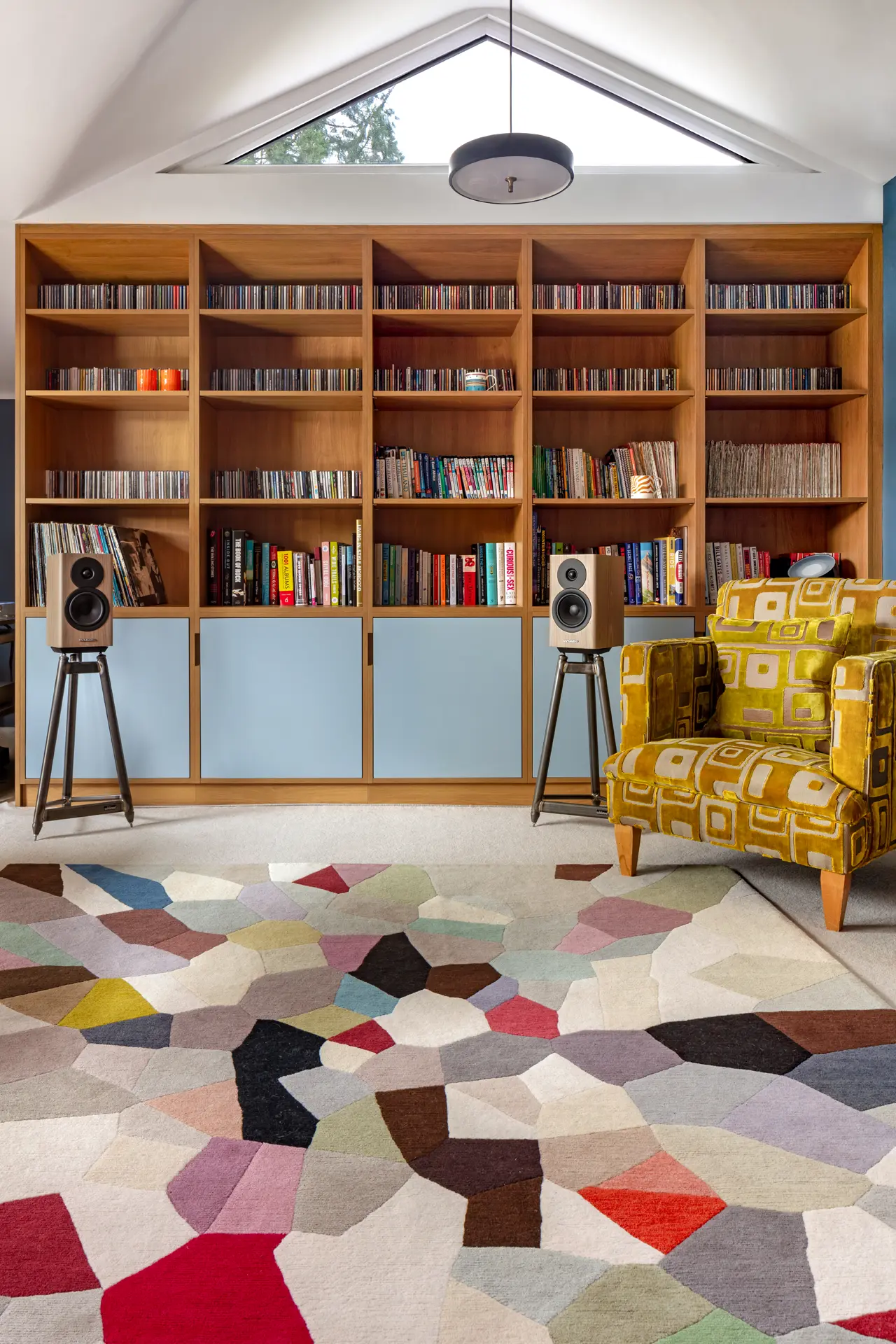
Designing one room well is one challenge. Designing an entire home so that every room feels individually considered yet clearly part of the same whole requires a different kind of thinking.
At Langstaff, that means understanding the architecture early and looking beyond the kitchen as a standalone commission.
On a new-build project, drawings provide the starting point, but site visits are just as important. Rooms reveal things in reality that plans cannot fully communicate: scale, light, views, movement and the way one space leads into another.
From there, the aim is to develop a design language that can run through the house without becoming repetitive.
Coherence without repetition
A whole-home scheme should never feel as though the kitchen has simply been copied into the study, dressing room or bar.
Each room has a different function, mood and relationship to the architecture, so each one needs its own response.
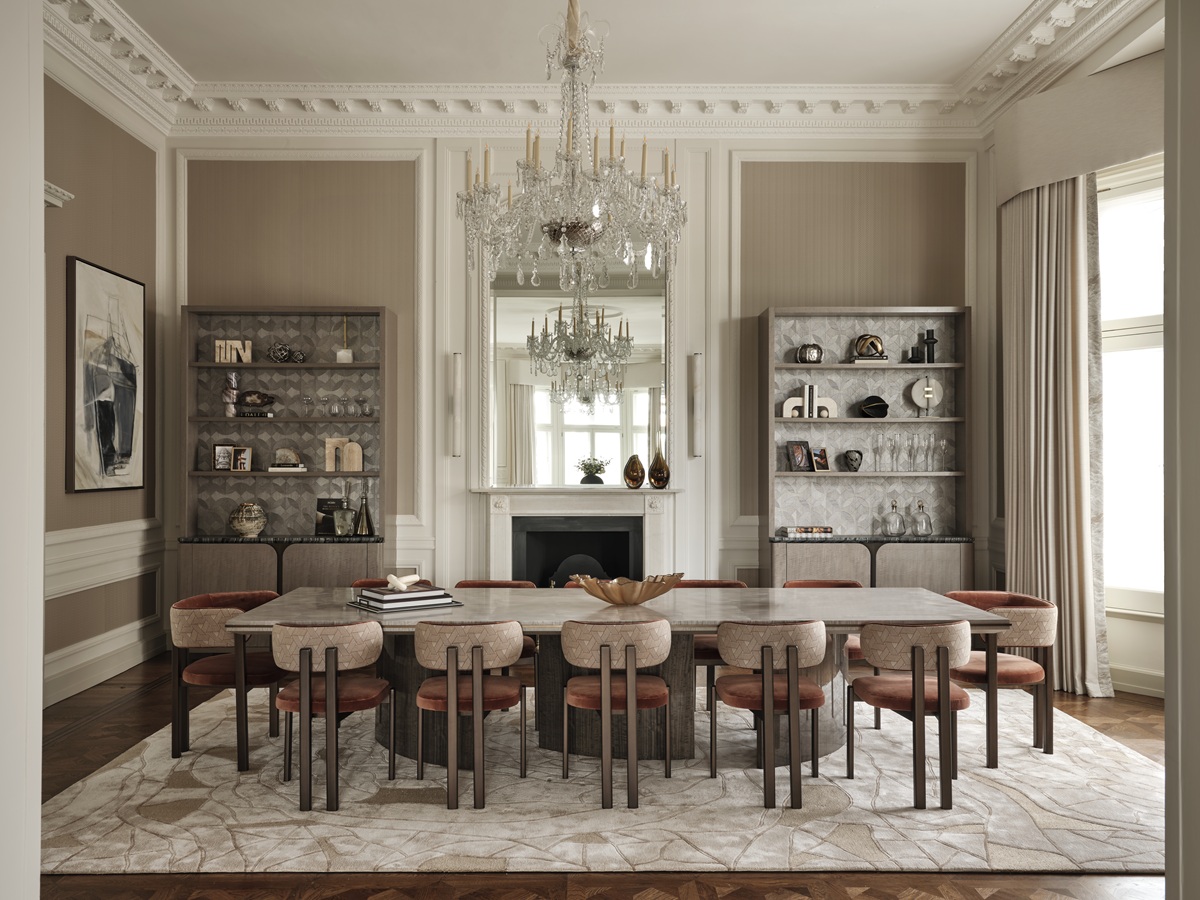
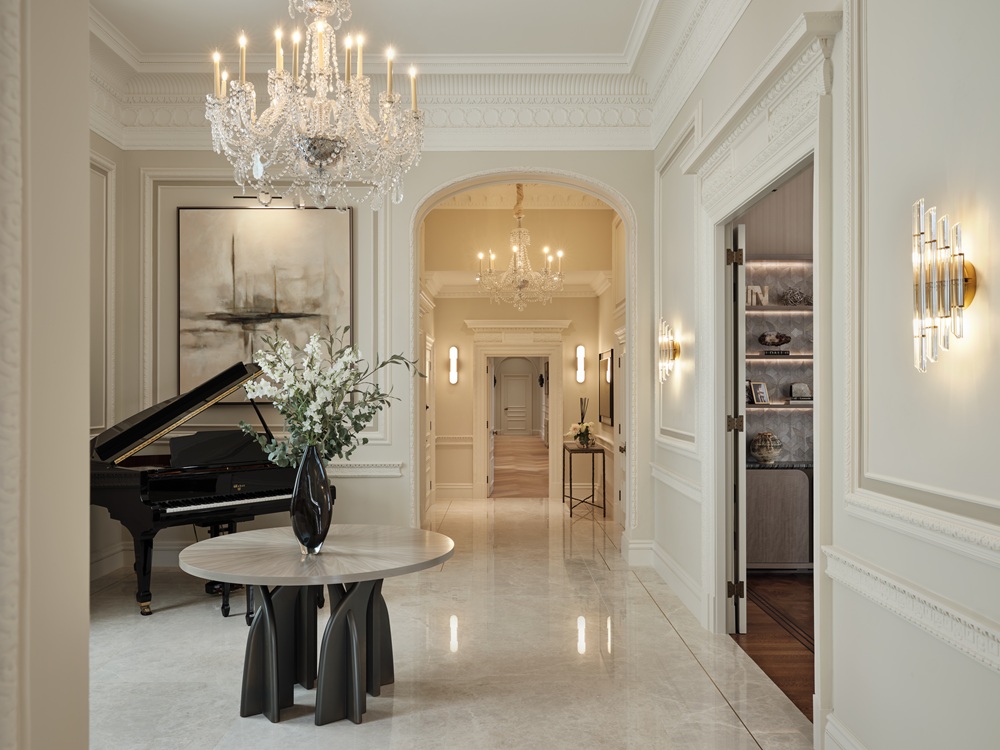
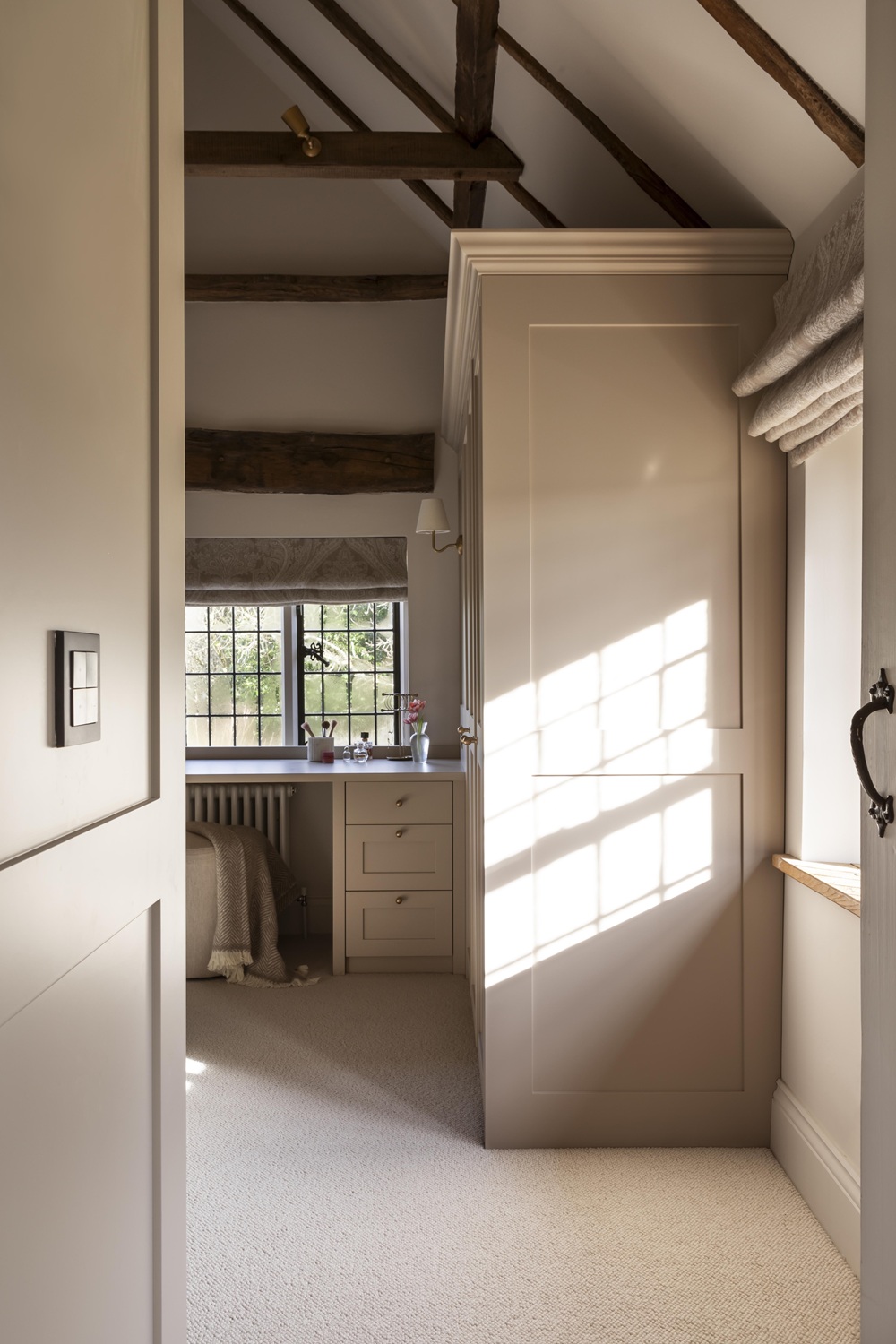
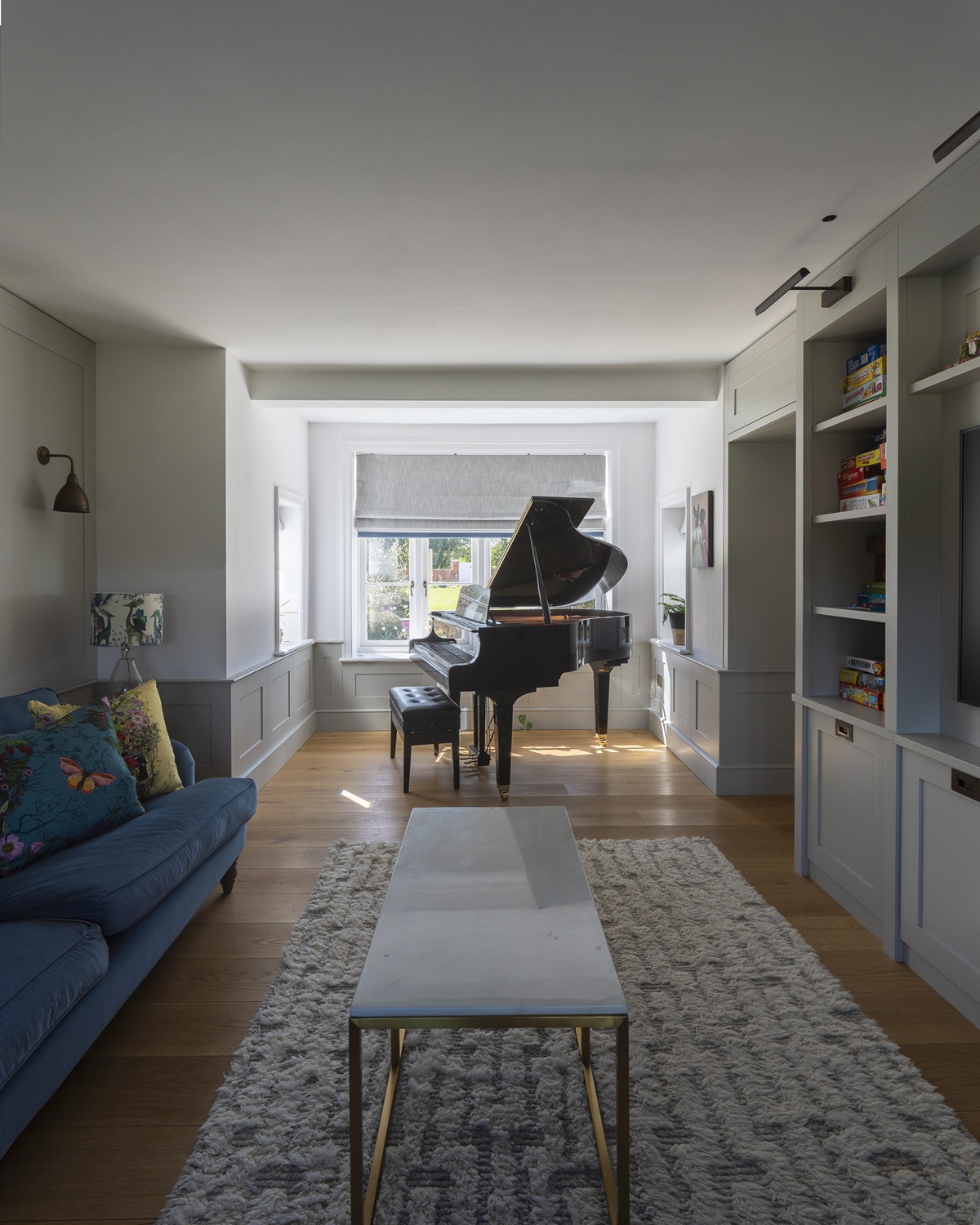
Coherence can come instead from a shared material palette, consistent construction principles, recurring ironmongery, or subtle relationships in proportion and detailing.
The same timber species might appear in several rooms, for example, but in different stains or finishes. A metal detail introduced in one space might return elsewhere in a different form. Cabinetry can share a certain discipline of line and proportion without repeating the same door or layout.
The result is a house that feels connected rather than matched.
Materials in different registers
Materiality is particularly useful in creating this kind of continuity.
Oak and walnut can move comfortably through a home, but their treatment can change significantly according to the room.
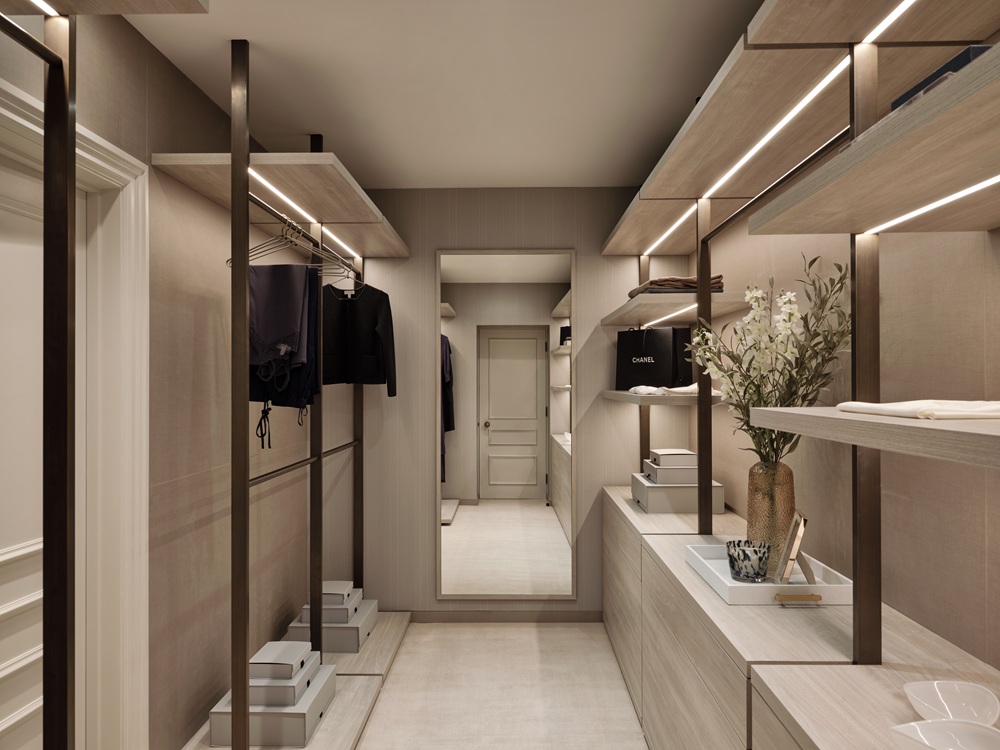
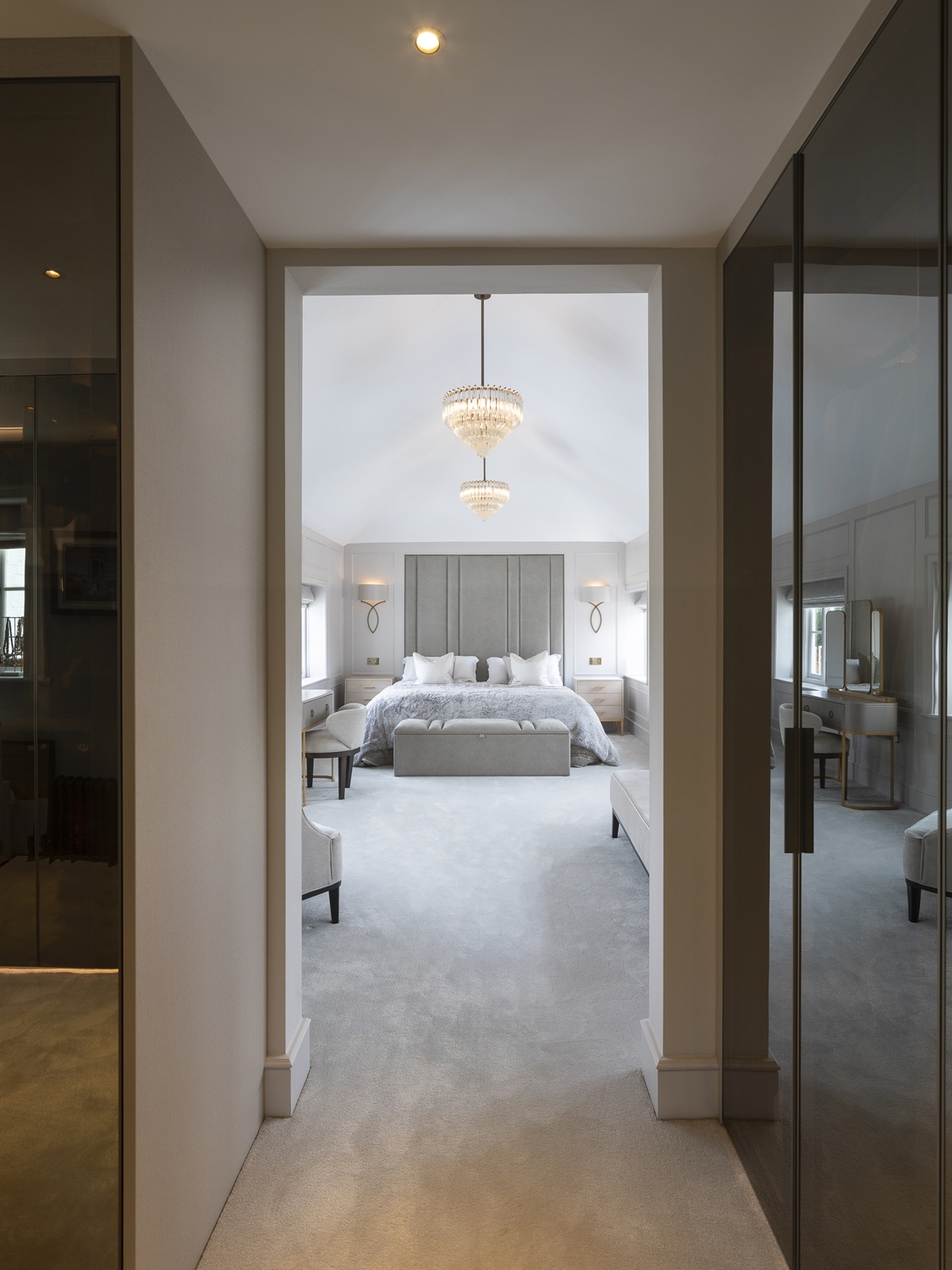
A kitchen might combine dark stained walnut with marble or porcelain, where durability and practicality are important. In a dressing room, the same walnutcan become lighter and more luxurious, paired with bronze inlay, fabric panels or leather-lined drawers.
The material family stays familiar, while the atmosphere changes.
This allows each room to feel appropriate to its purpose while still belonging to the same wider composition.


Creating hierarchy
Not every room in a house needs to carry the same visual weight.
On larger projects, it is useful to establish a hierarchy early: which spaces are most important, which materials should lead, and where greater richness or restraint is appropriate.
On one recent project, our client was drawn to a pale, washed walnut and initially considered using it throughout the house.
Instead, the material became part of a broader sequence.
The kitchen used the washed walnut alongside Calacatta Borghini marble. In the principal suite, the same walnut species continued, but with a noticeably darker stain and the introduction of aged brass detailing.
The connection between the two spaces was clear, but each retained its own identity.
That variation gave both rooms more presence than a single repeated finish would have achieved.
One view of the whole house
There is also a practical advantage to designing multiple rooms as part of one joined-up process.
When one design and project team has sight of the whole house, decisions about material, proportion, function and circulation can be made in relation to one another rather than in isolation.
A design detail developed in the kitchen may influence the dressing room. A timber selected for the study may reappear elsewhere in a more refined form. Sightlines between spaces can be considered alongside the furniture itself.
When different rooms are designed independently, it is easy to end up with a collection of individually successful spaces that do not quite belong to the same home.
The ambition is different when the house is approached as one composition.
Every room should have its own character. But as you move through the home, there should also be a sense of continuity: a shared understanding of material, scale and detail that quietly holds the whole thing together.
Book an Appointment
Get in touch today to arrange a personal design consultation in your home or an appointment to visit the Langstaff studio.
Book an appointment
Get in touch today to arrange a personal consultation in your home or an appointment to visit the Langstaff studio.
Calacatta marble
Andrew Nixon
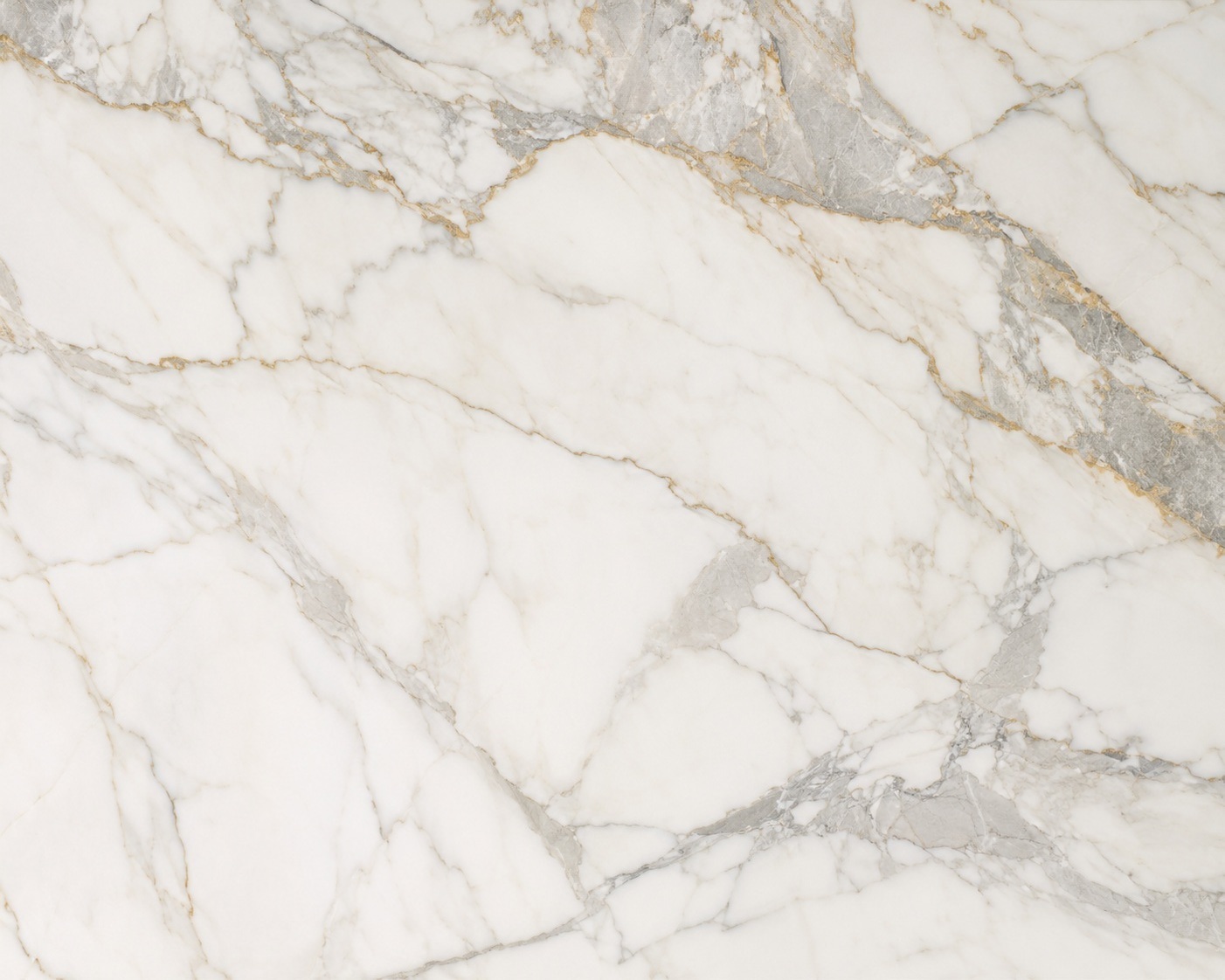
Calacatta is not a single effect. It sits within a family of Italian marbles associated with the historic marble country of Carrara and the Apuan Alps, where stone has been quarried for centuries. Across that family, the essential character is contrast: a white, ivory or creamy ground crossed with mineral veining that can be fine and delicate, broad and expressive, or richly coloured.
Its beauty lies in this relationship between clarity and movement. The pale ground brings lightness and calm, while the veining gives the stone direction, rhythm and individuality. No two slabs are quite alike. Some feel almost restrained, with elegant grey lines moving across a soft white field. Others are more dramatic, with bolder passages of gold, green, violet or warm brown.
Calacatta Gold is one of the most recognisable examples, defined by its pale background and veins that move through grey, honey and golden tones. Calacatta Verde introduces something fresher and more botanical, with moss, sage and deeper green markings running through the stone. Other varieties bring warmer, cooler or more graphic qualities, depending on the quarry, cut and individual slab.

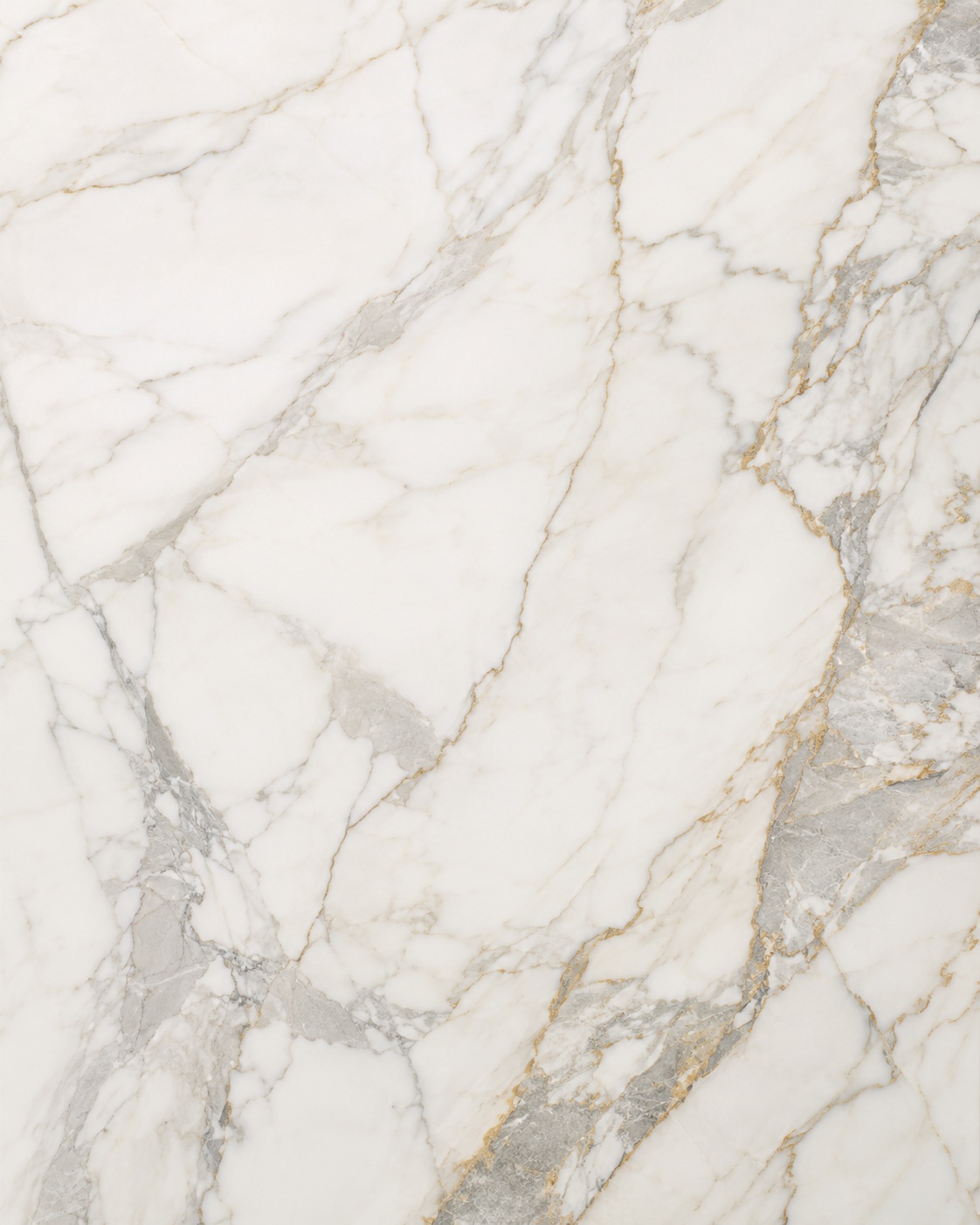

Geologically, marble begins as limestone, transformed by heat, pressure and time until its structure recrystallises into a dense, workable stone. The veining that makes Calacatta so distinctive comes from mineral movement within that process: traces of colour and impurity caught within the stone as it forms.
This is what gives Calacatta its particular authority. Its pattern can feel almost painterly, yet it is entirely natural. It has the brightness of a pale surface, but also the depth and complexity of something formed over immense time.
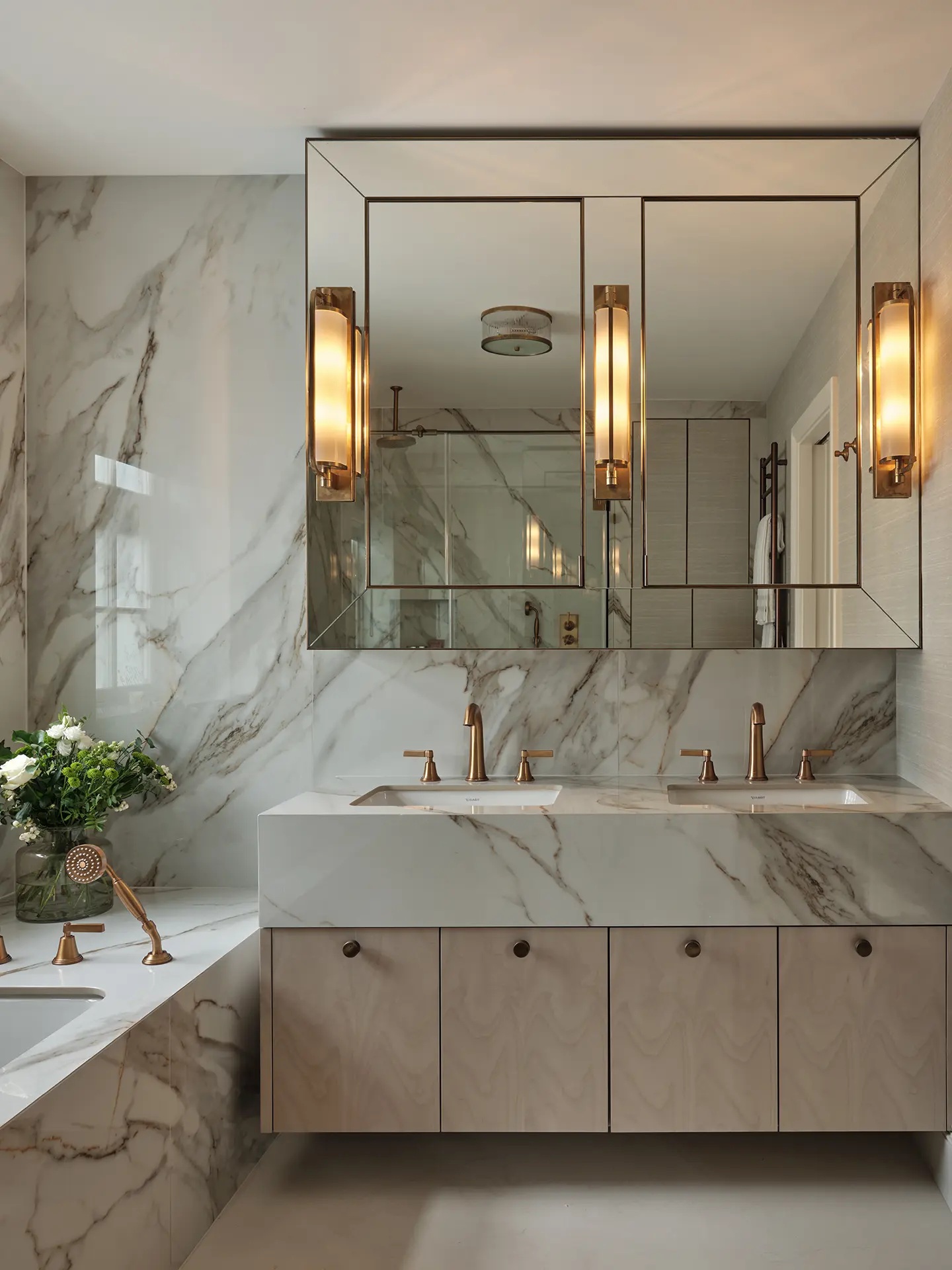
In interiors, Calacatta can be used in many ways. Across a large surface, it can unify a room with light and movement. Used more sparingly, it can create a moment of focus: a vanity, a fireplace, a splashback, a tabletop, a panel or a carefully framed piece of fitted furniture.
The Calacatta language is also interpreted in porcelain, particularly in surfaces inspired by Calacatta Gold. These materials can echo the pale ground and golden veining of the marble while offering a different set of design possibilities.
For Langstaff, the interest lies not in one prescribed use, but in the possibilities of the material. Natural marble, marble-effect porcelain, Calacatta Gold, Calacatta Verde or another closely related stone: each can be selected, framed and composed according to the room, the architecture and the client’s vision.
That is the enduring appeal of Calacatta. It brings light, movement and refinement to a space, while allowing each project to find its own expression of the material.
Book an Appointment
Get in touch today to arrange a personal design consultation in your home or an appointment to visit the Langstaff studio.
Book an appointment
Get in touch today to arrange a personal consultation in your home or an appointment to visit the Langstaff studio.
The Emotional Life of Materials
Andrew Nixon
Long before we analyse a room in terms of technical design, we respond to it, sometimes almost physically.
We immediately feel the coolness of stone, the warmth of timber, the sharpness of metal, the softness of leather, the way glass seems to hold light and release it again. Materials speak to us before we have quite found the words for them, and they have a life beyond appearance.
This is why the choice of material in an exceptional home is firstly emotional, and never simply decorative.
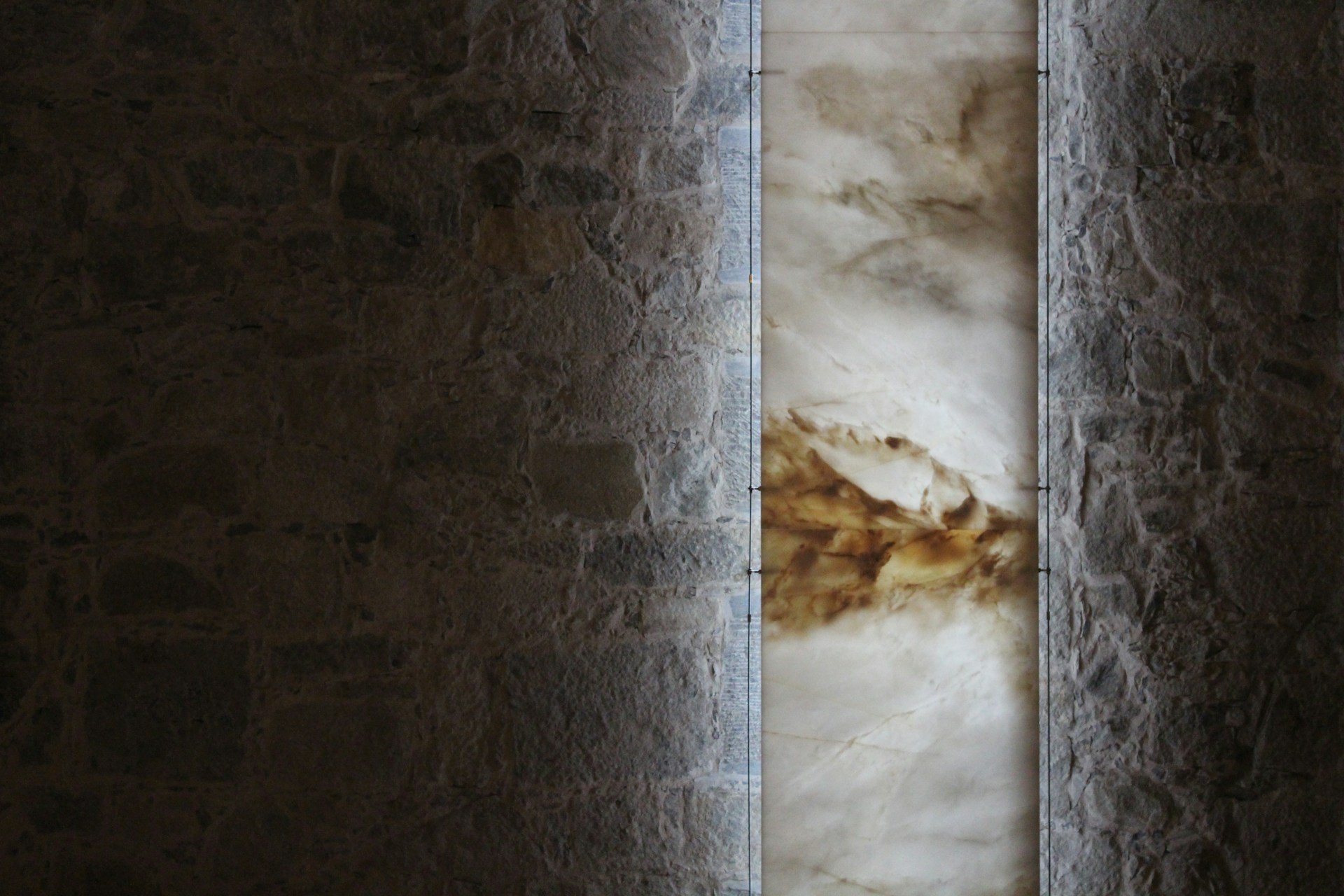
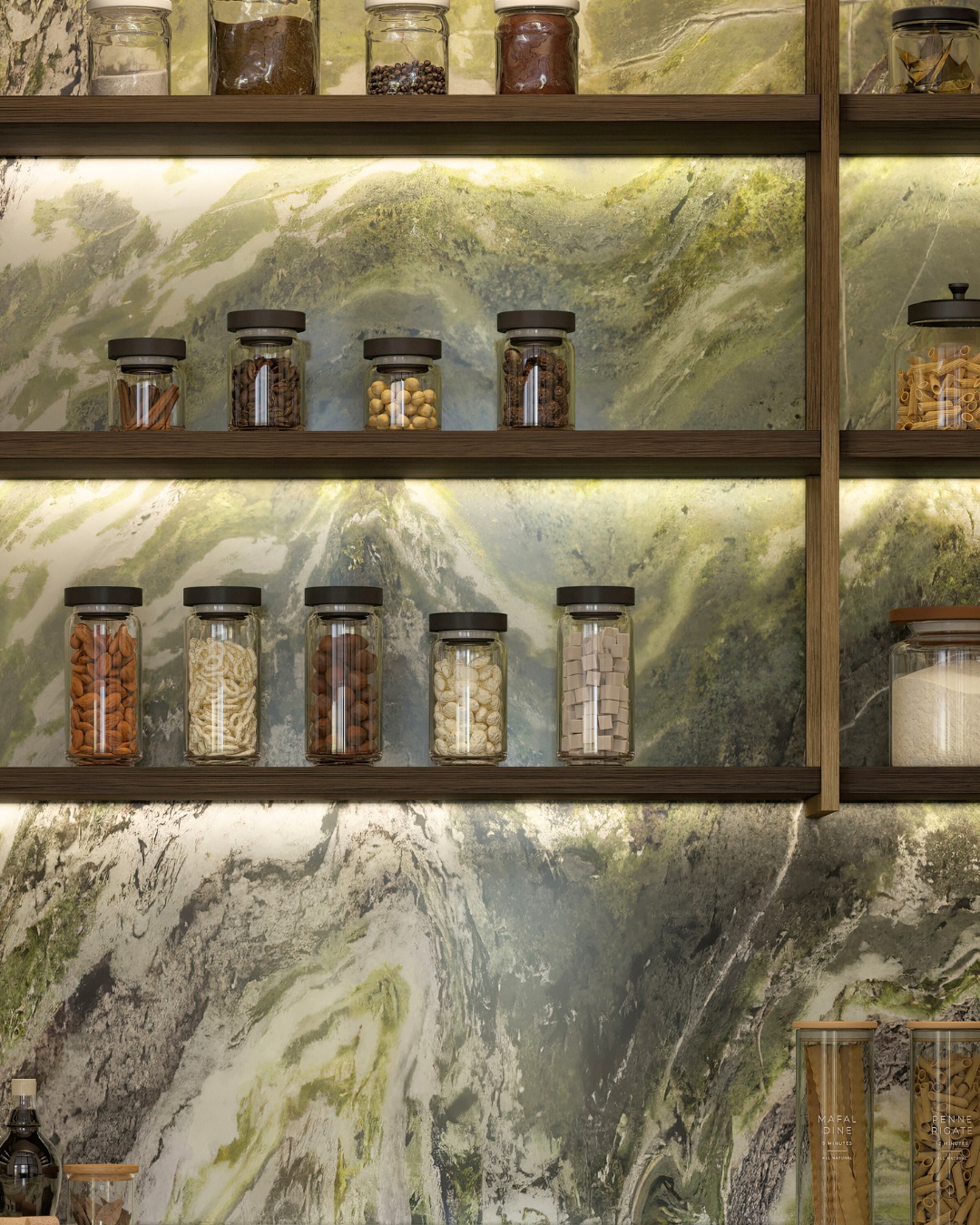
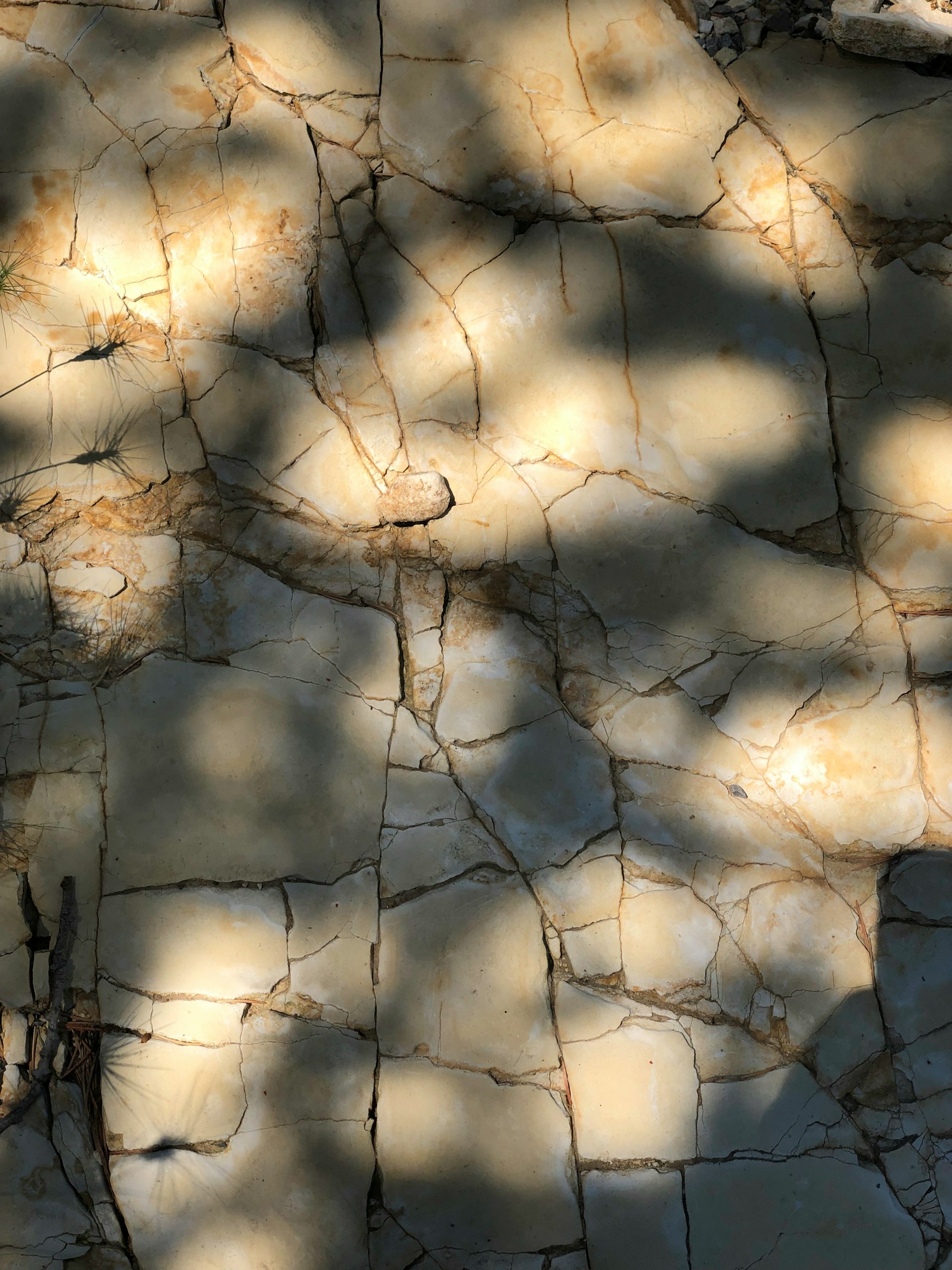
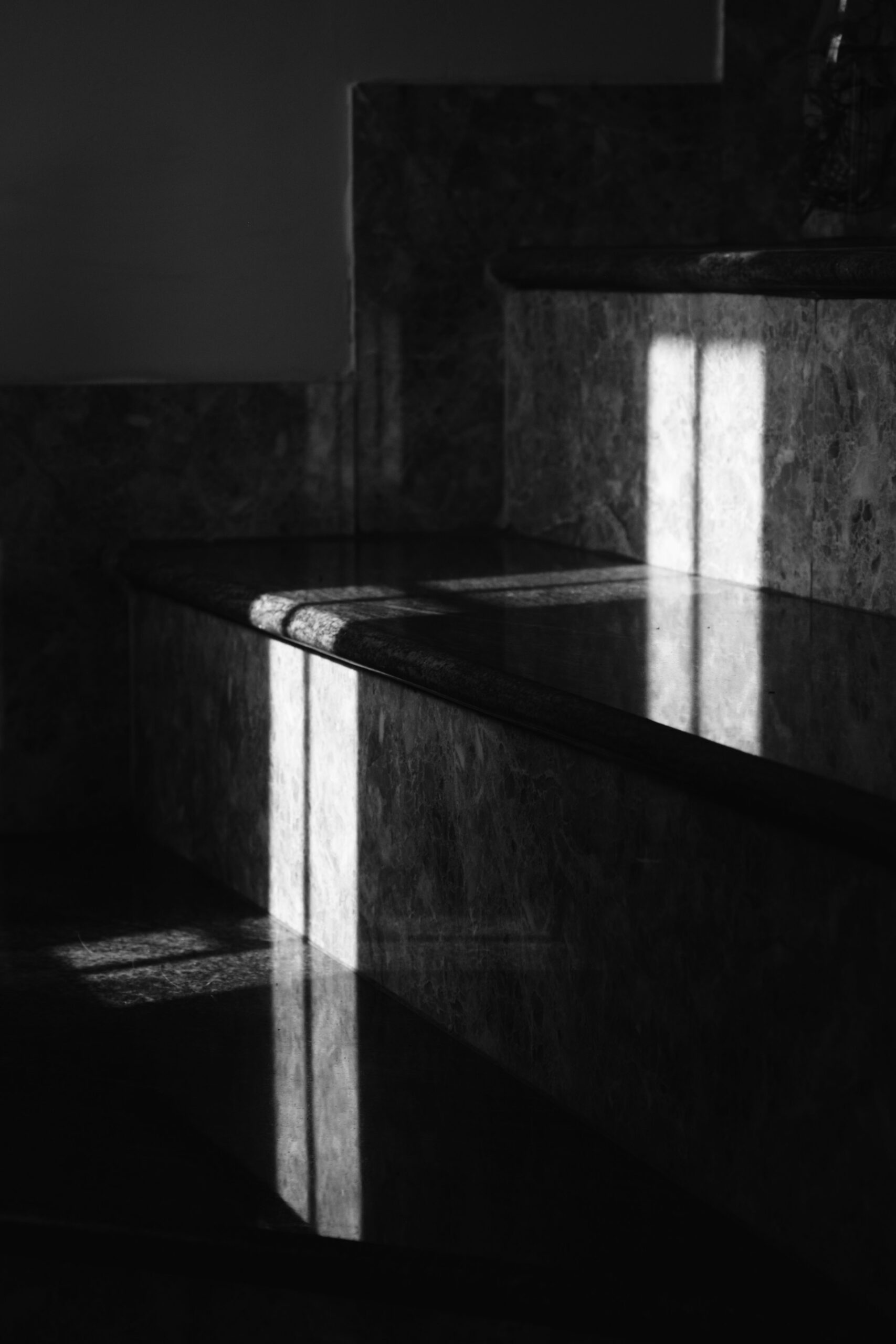
Stone, for example, brings with it a sense of deep time. Even when cut, polished and precisely placed, it retains something of the earth: its weight and permanence. A marble surface in a kitchen or bar introduces gravity and taps into something as old as the planet – you might even say, a sense of the geological sublime.
And in marble, the veins and patterns give a sense that natural materials – even those hewn from quarries – are never entirely still. They contain a certain movement, frozen in place.
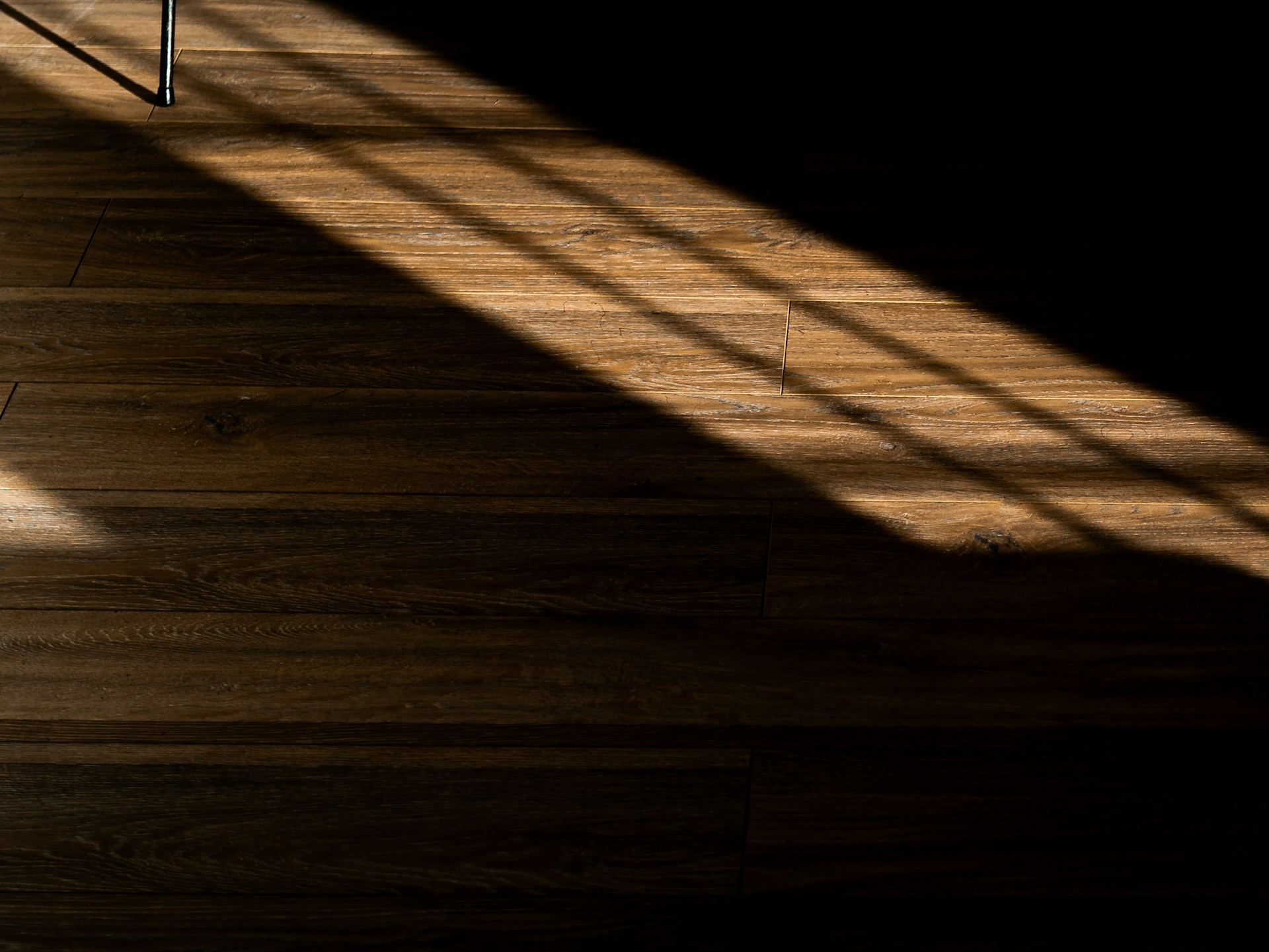
Timber works on us differently. It was once alive, and perhaps we feel that, even without thinking about it. The grain records growth, weather, age and time. Oak, walnut, elm or ash each has its own temperament: pale or dark, calm or dramatic, formal or enveloping. In cabinetry, panelling or a dressing room interior, timber can soften architecture and bring the outside world into the most carefully composed interior.
Metal brings another register again. It has edge, line, coolness, control. A fine brass detail, a bronze frame or a darkened metal shadow gap can sharpen a room. Metal often works best when it is almost restrained: a glint or a border.
Glass is stranger still. It can disappear and still change everything. It can reveal, conceal, reflect, divide, lighten or deepen a composition. In a cabinet, bar or library, glass changes the relationship between what is shown and what is hidden. It creates layers and allows a room to feel more open, or more mysterious.

Perhaps what moves us in materials is partly their human history. Long before design vocabulary, there was stone beneath the hand, wood as shelter and warmth, metal as tool and ornament, glass as a kind of captured light. These associations may sit very deep in us. We do not need to name them to feel them.
There is also memory. A dark timber room may feel protective because it recalls libraries, clubs, old houses or half-remembered places of retreat. A pale stone surface may feel calm because it suggests cliffs, churches, courtyards or summer light. Brass and bronze may carry the atmosphere of age, ceremony and touch.
Materials do not have fixed emotional meanings; they are more like instruments, capable of different notes. Their effect changes with light, proportion, context and how they are combined. The same marble can feel theatrical in one room and serene in another. The same timber can be architectural, rustic, formal or sensual. Materials are not symbols with a single meaning. That is why material choice requires judgement rather than formula.
This becomes especially powerful in whole-home design, where materials can create different emotional worlds within the same architectural language. The same material can move through the home and change character as it goes.
For Langstaff, this is central to The Architecture of Living. Bespoke fitted furniture is not simply made from beautiful materials; it gives those materials architectural purpose, allowing them to shape the character of a room and the emotional life of a home.
Materials give a place more than finish; they give it memory, presence and soul.
Read more: Material Intelligence
Book an Appointment
Get in touch today to arrange a personal design consultation in your home or an appointment to visit the Langstaff studio.
Book an appointment
Get in touch today to arrange a personal consultation in your home or an appointment to visit the Langstaff studio.
Walnut
Andrew Nixon
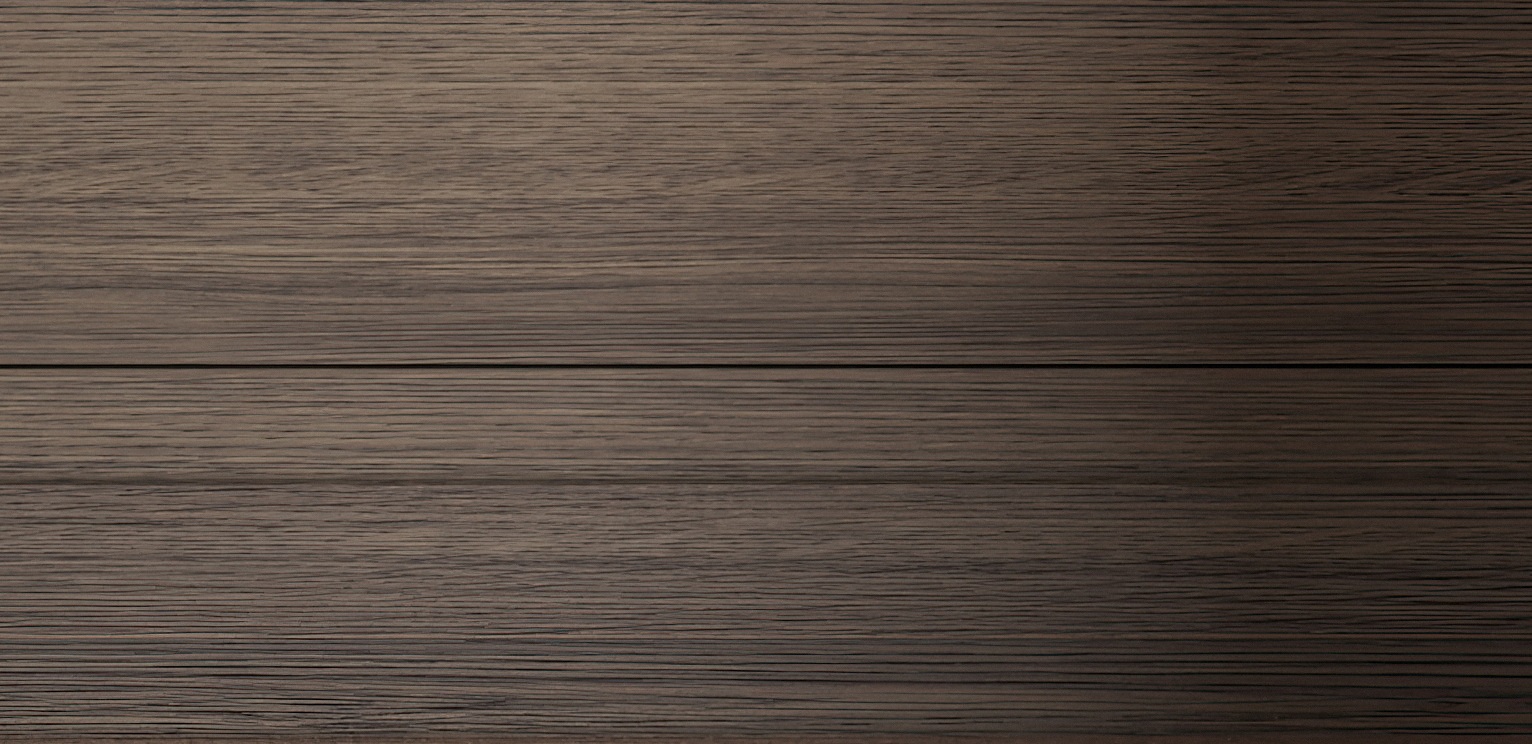
Walnut begins as a tree of the genus Juglans: a broad-leaved hardwood known for its fruit, its generous canopy and the dark, richly figured timber held inside the trunk.
Different species of walnut grow across temperate parts of the world. Common or English walnut, Juglans regia, has a natural range stretching from parts of western Asia towards the Himalayas, and has long been cultivated for its nuts as well as its timber. American black walnut, Juglans nigra, grows across eastern North America and is especially prized for the depth of its heartwood.
This connection between tree, fruit and timber is part of walnut’s appeal. It carries a sense of origin: orchard, woodland, trunk, bark, leaf and nut. Worked into furniture or architectural joinery, it still retains something of that living character.
The colour of walnut is central to its beauty. It can range from warm brown and honeyed grey to deeper chocolate, purple-brown and almost black tones. The grain is often flowing and varied, with a softness that gives the timber movement without harshness.
This makes walnut especially valuable in interiors where warmth and richness are needed. It can be an understated element within a room, or give cabinetry, panelling and fitted furniture a more substantial architectural presence.
Walnut also takes finish beautifully. A walnut stain can deepen the timber’s natural colour, drawing out its darker tones and giving the surface a more intense, layered character. The effect can be subtle or strong, depending on the atmosphere required.

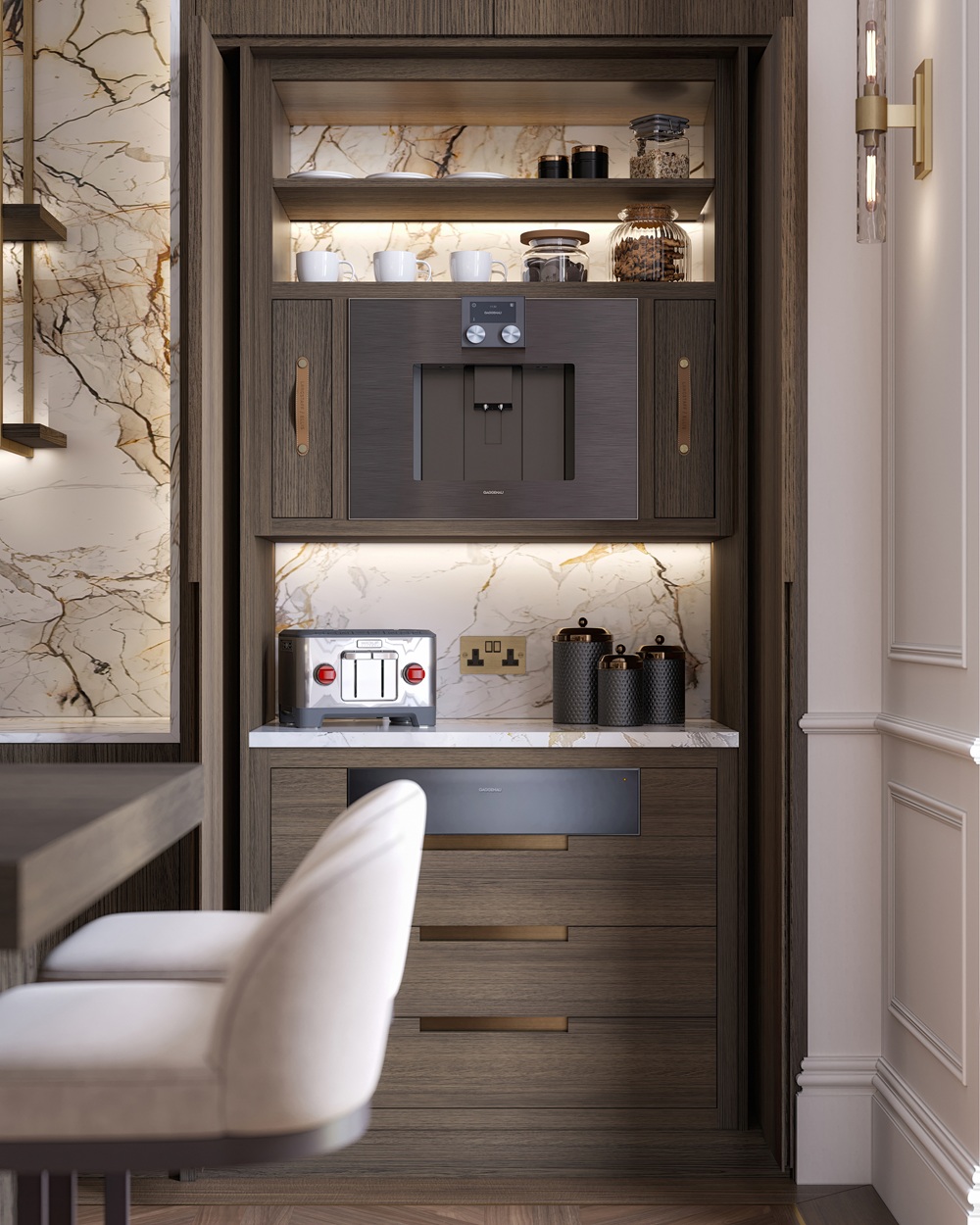

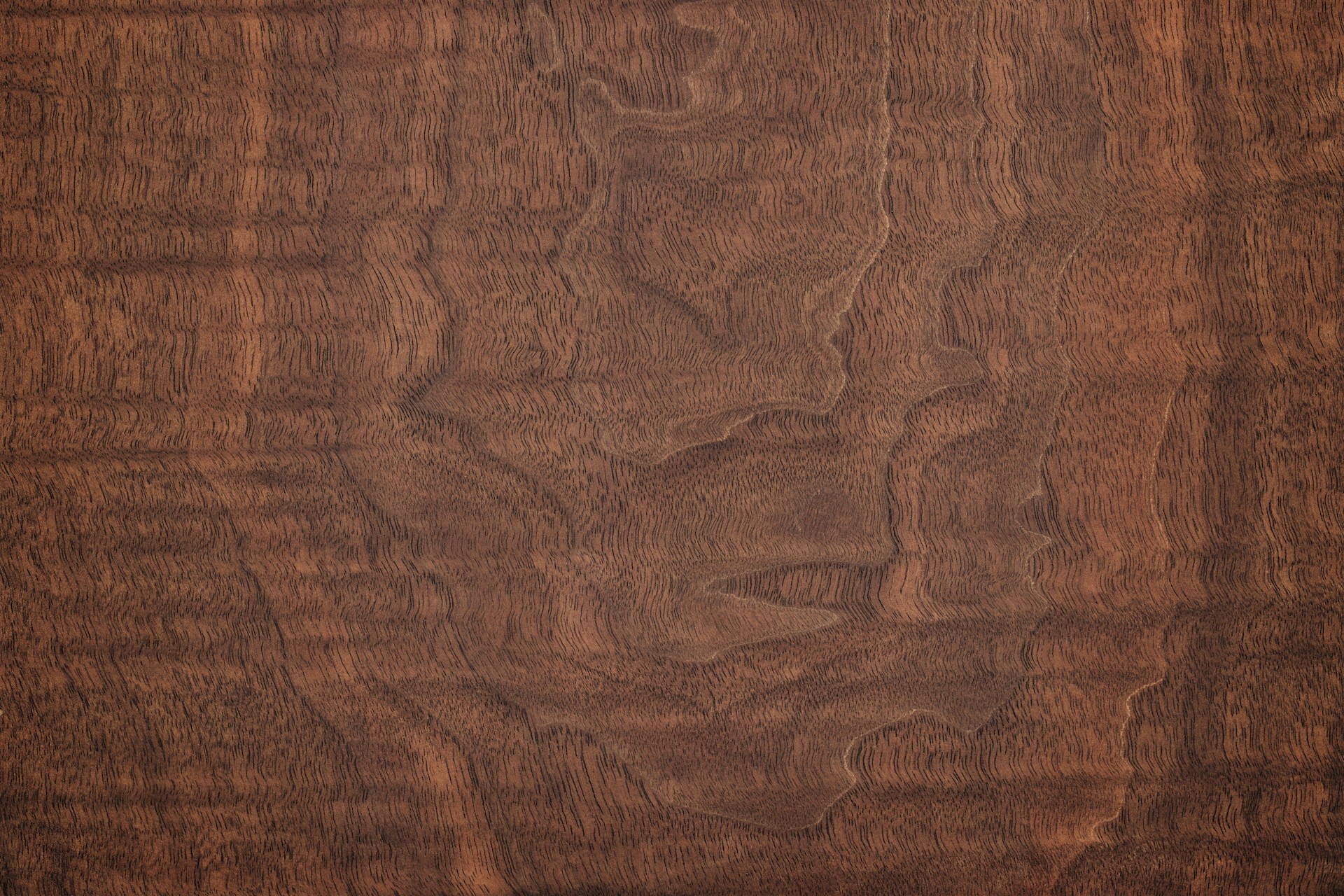

In veneer form, walnut offers another kind of precision. The grain can be selected, matched and composed across doors, panels and larger surfaces, allowing the natural pattern of the timber to become part of the architecture. Bookmatched walnut veneer can create symmetry, while straighter cuts can feel more linear and more architectural.
For Langstaff, walnut is a material of great range. It can be used as a subtle tonal layer, a dark architectural frame, or a defining feature in its own right. It is a natural companion to stone, metal, lacquer or glass, providing a different effect with each. Whether solid, stained, veneered or carefully detailed, it brings texture and permanence to a considered interior.
That is the particular character of walnut: a refined material rooted in tree, fruit and woodland, shaped by craft into furniture, and into architecture with a warm and timeless presence.
Book an Appointment
Get in touch today to arrange a personal design consultation in your home or an appointment to visit the Langstaff studio.
Book an appointment
Get in touch today to arrange a personal consultation in your home or an appointment to visit the Langstaff studio.

Material Intelligence
Andrew Nixon
We first encounter materials sensually rather than intellectually. In other words, before we know what something is called, or anything about its science or physical structure, it evokes a feeling.
Stone, for example, has a sense of weight and age. Timber brings warmth, while metal brings an edge. Glass can convey lightness and space, while lacquer has depth and richness.
Long before these materials are understood as choices on a schedule or samples on a table, they create an instinctive, tactile response.
This is the value of material intelligence.
In an exceptional home, materials are not chosen merely for beauty, but for what they bring to the architecture of a room: atmosphere, balance, a sense of permanence or delicacy, and the relationship with light, shadow, scale and touch.
In a kitchen or bar, a marble surface can become the gravitational centre of the space, giving the room a kind of geological authority. Timber, by contrast, can soften architecture, bringing a connection to nature into cabinetry, wall panelling or a dressing room interior. Metal can sharpen a composition, introducing a line of contrast or a note of cool precision. Glass can reveal, reflect or, used well, disappear completely. Lacquered surfaces can hold colour in a way that feels almost liquid, changing with the light as the day moves.
The intelligence lies in understanding what a material does. Although pale and dark timbers might both bring natural warmth, the effect on the senses is entirely different: one might feel calm and expansive, the other intimate, almost enveloping. Similar contrasts and contradictions apply to different metals, such as brass and bronze; and marbles vary enormously in their feel and effect.
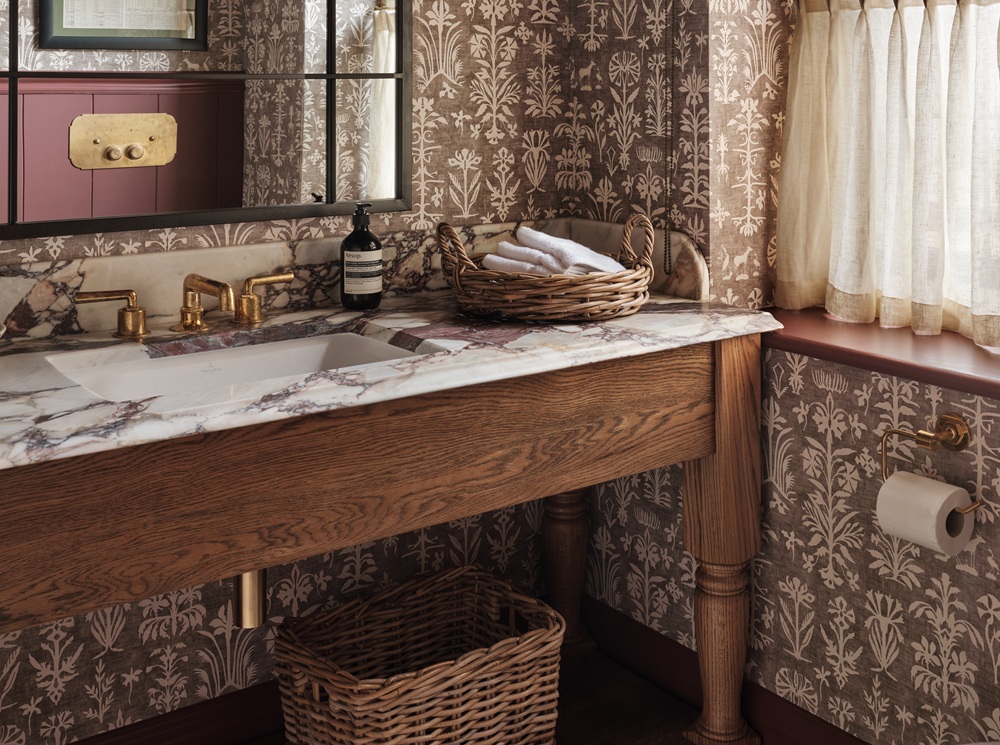
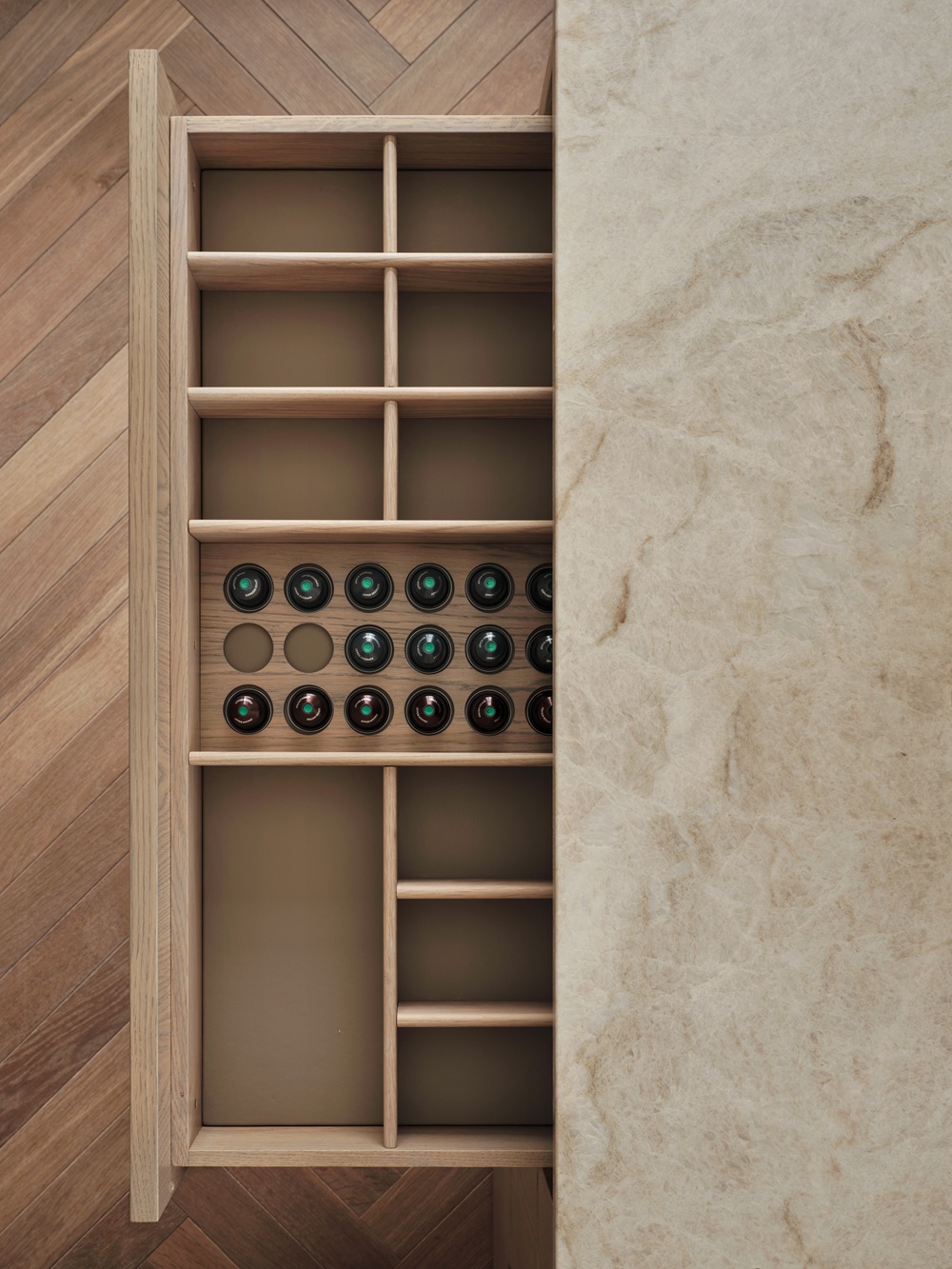
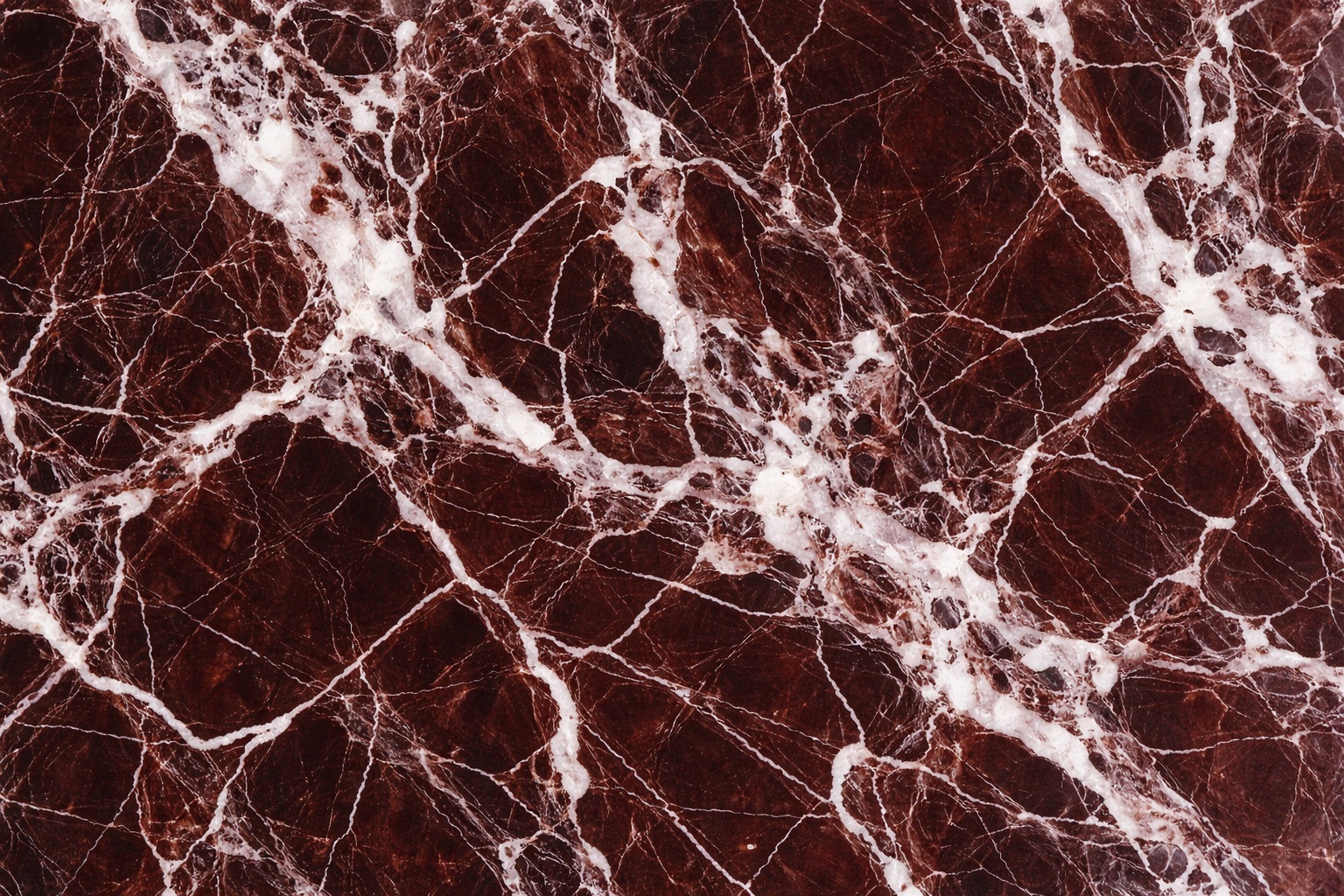

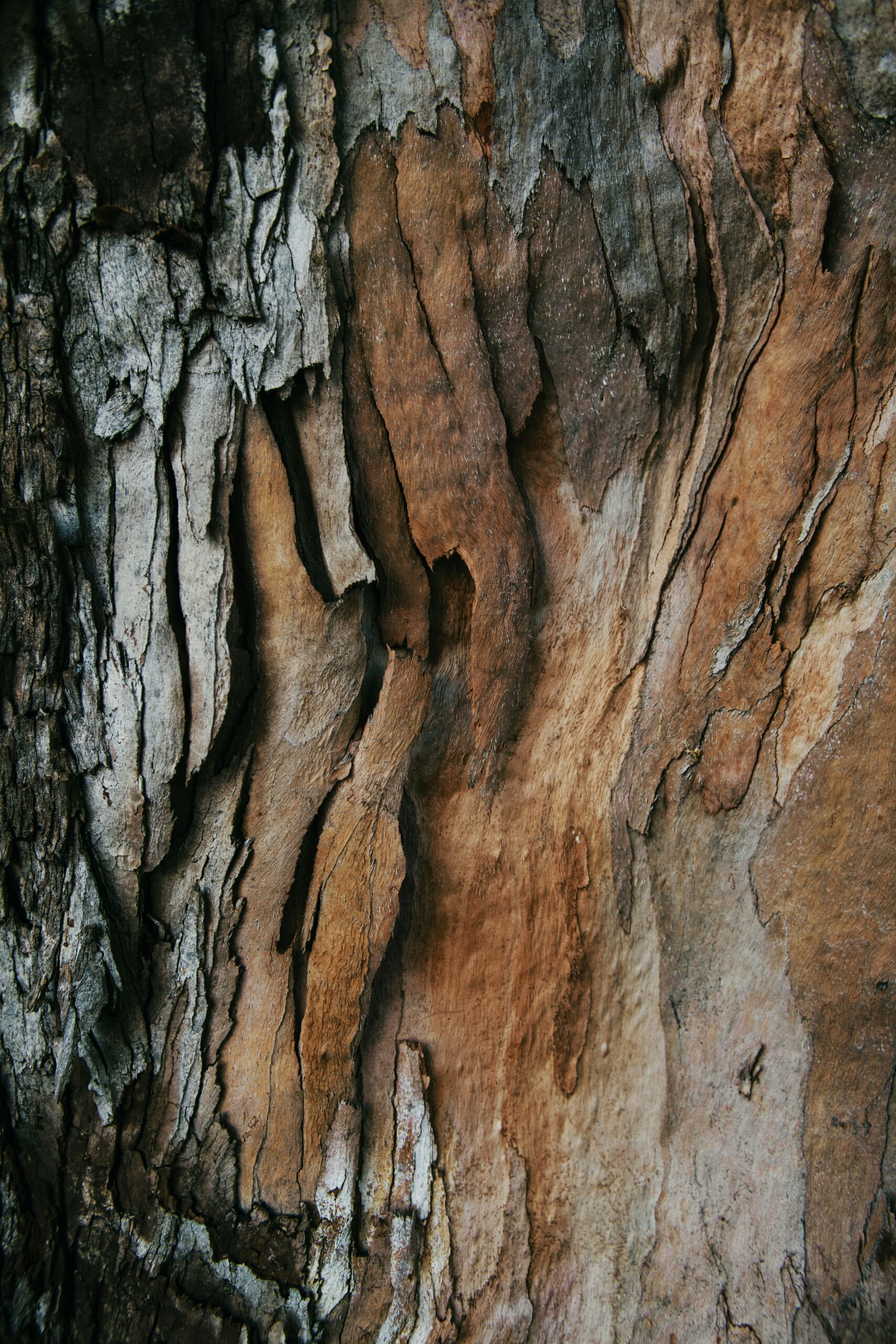
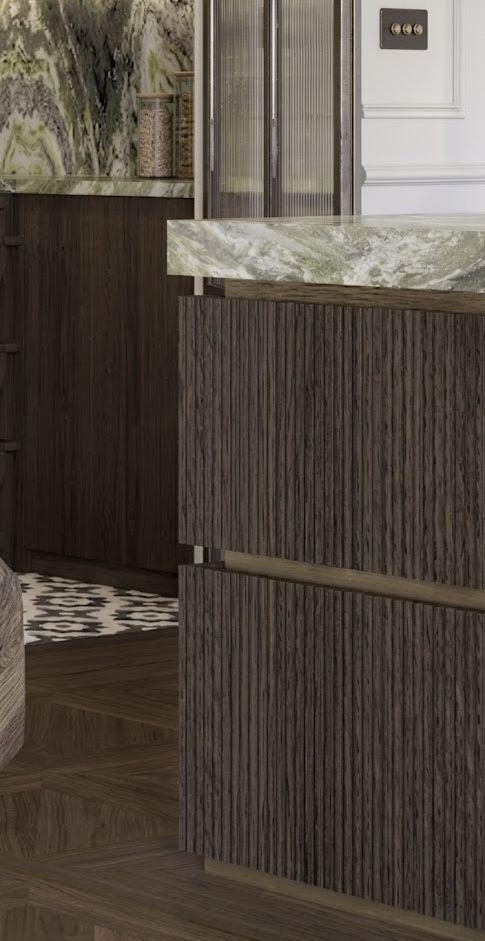
Once it enters a room, no material is neutral, because it changes the atmosphere around it.
This is particularly important in whole-home design, where materials must carry meaning from one space to another without becoming repetitive. For instance, a stone introduced with drama in a kitchen may return more discreetly in a bar or vanity.
Material intelligence also means knowing when to let a material lead, and when to let it recede. Not every surface can be the principal surface. The most refined interiors are often those in which each material understands its role in the complete composition.
Finally, there is also the question of the building itself. Materials do not exist in isolation from architecture: they meet walls, floors, cornices, beams, views and natural light. In a period property, material intelligence may mean allowing natural materials to sit comfortably alongside irregularity and inherited character; while in a contemporary home, it may mean bringing a layer of tactility to a strong architectural vision.
Material intelligence is the art of understanding how materials behave: visually, physically, architecturally, emotionally.
For Langstaff, this is central to The Architecture of Living. A remarkable home is shaped by plan, proportion and craftsmanship, but equally by the materials through which its atmosphere is made. The right materials give architecture its presence, and its soul.
Book an Appointment
Get in touch today to arrange a personal design consultation in your home or an appointment to visit the Langstaff studio.
Book an appointment
Get in touch today to arrange a personal consultation in your home or an appointment to visit the Langstaff studio.
Oak
Andrew Nixon
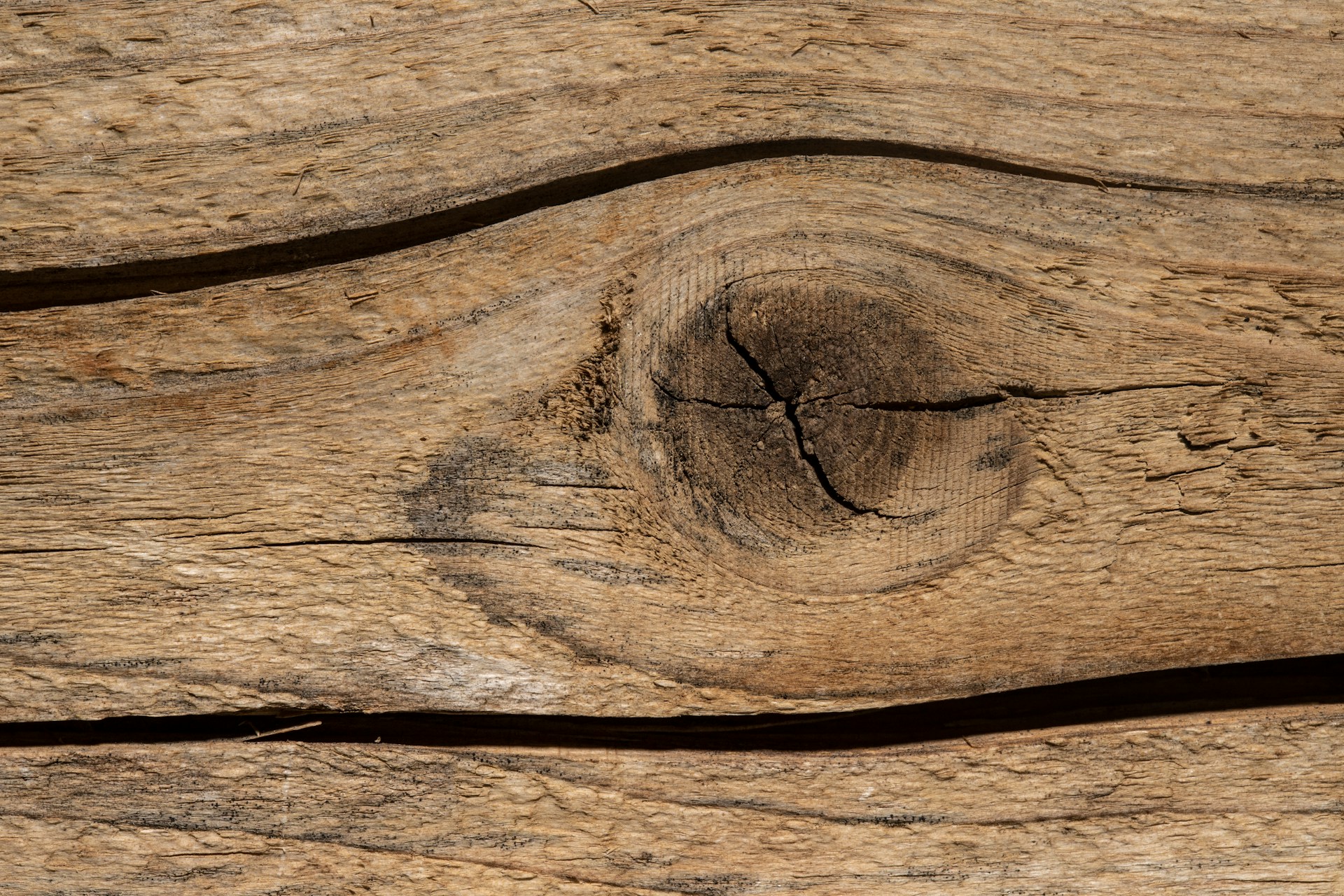
An oak tree grows slowly, develops strength over time and carries a distinctive grain that records the life of the timber. This is part of its enduring appeal. Oak never feels like an anonymous material. Even when it is worked with great craft and precision, it retains something of the forest.
Its colour sits naturally within an interior. Pale oak can feel soft, calm and almost neutral, bringing warmth without heaviness. Richer oak tones bring more depth and age. Smoked oak darkens the timber further, giving it a more intense, atmospheric quality while still allowing the grain to remain visible.
This breadth makes oak unusually versatile. It can be rustic or highly refined, traditional or contemporary, light or dark, plain or deeply expressive. Much depends on the cut and the finish, and on the way the timber is used.


The texture of oak is central to its character. Its grain can be broad and open, with strong movement across the surface, or more measured and restrained. In veneer form, oak can be selected and laid with great control, allowing pattern, tone and proportion to be carefully composed across furniture, cabinetry and architectural panelling.
Oak also responds beautifully to relief and repetition. Fluted oak introduces shadow, rhythm and tactility, transforming a flat timber surface into something more architectural. The material remains natural, but the effect becomes sculptural.
For Langstaff, oak is a material with range. It can form the background of a room, or become one of its defining features. It can bring warmth to stone, softness to metal, depth to painted joinery and a sense of permanence to the architecture of a home.
That is the particular pleasure of oak. It is familiar and natural, yet capable of extraordinary refinement, and entirely at home in the most considered interiors.
Book an Appointment
Get in touch today to arrange a personal design consultation in your home or an appointment to visit the Langstaff studio.
Book an appointment
Get in touch today to arrange a personal consultation in your home or an appointment to visit the Langstaff studio.
The Art of Coherence
Andrew Nixon
There is a great difference between a home that matches and a home that coheres.
Matching is simple. The same finish, the same detail, the same idea carried from room to room can create consistency, but consistency alone is rarely enough. It may be orderly, but it can also feel flat.
Coherence is subtler than that. It allows rooms to differ, while still belonging to the same world. It gives a home rhythm without making it predictable and continuity without uniformity.
In a coherent home, materials do not simply repeat. They return changed. A stone used with drama in one space may reappear with restraint in another. Timber may shift from pale and elegant to dark and enveloping. Metal may become a fine line, a frame, a shadow, a handle, or a glint of light.
Nothing is copied yet everything is related.
This is where whole-home design becomes most interesting. A kitchen may ask for presence: a centre of gravity, composed around light, volume and material confidence; while a pantry may be more discreet and quieter in tone. A bar may bring theatre while a dressing room may introduce softness and privacy.
Each room has its own atmosphere. Coherence gives them a shared intelligence.
That intelligence can be carried in many ways. Typically it might be through proportion and line. It may also be through the relationship between open and closed, solid and reflective, pale and dark, public and private.
Often, the effect is felt before the conscious mind notices it: a room leads naturally to another. A material seems familiar, even though it is not identical. A view is framed with the same discipline found elsewhere in the house. There is variation and surprise, but no discord. A coherent home simply feels resolved.
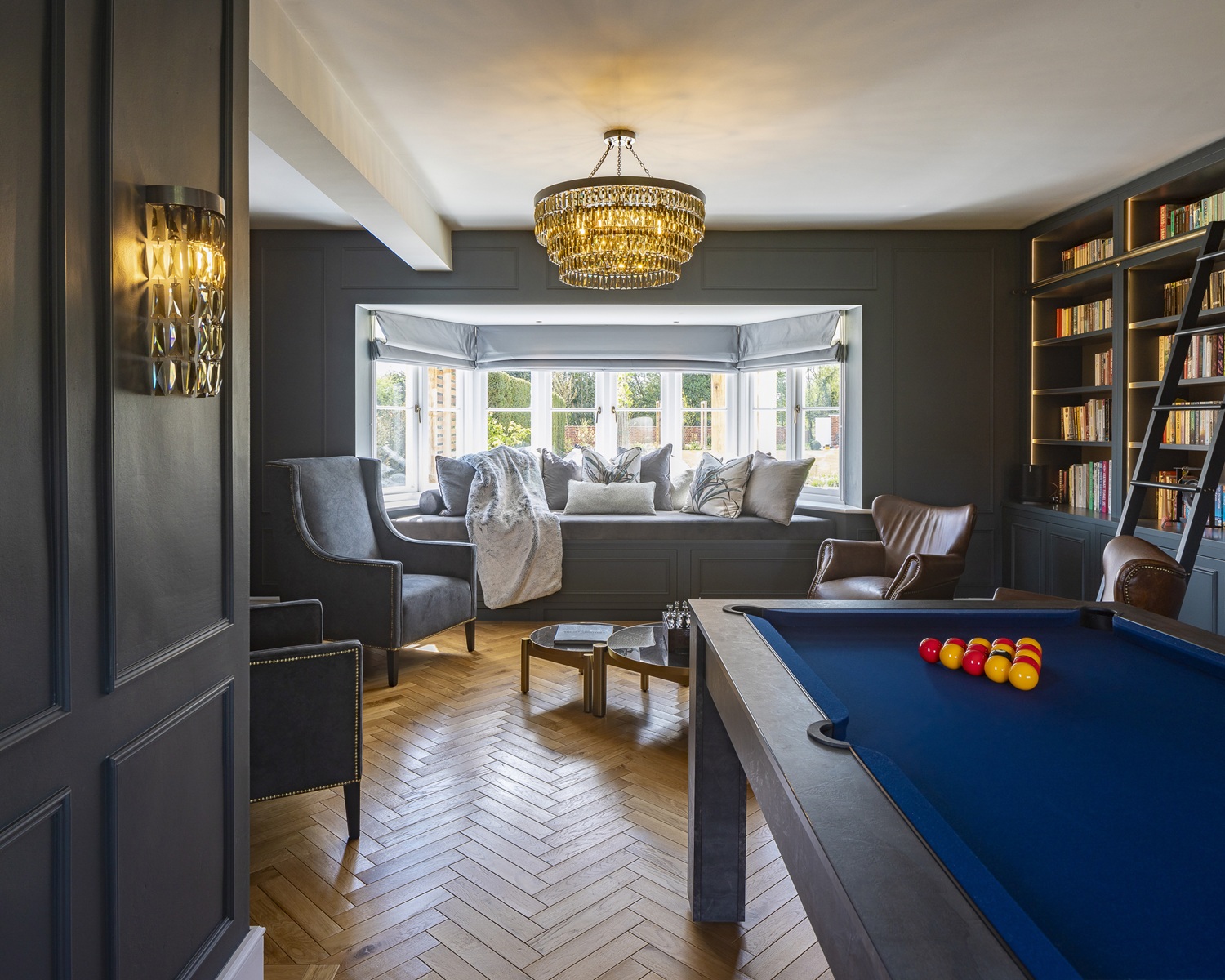
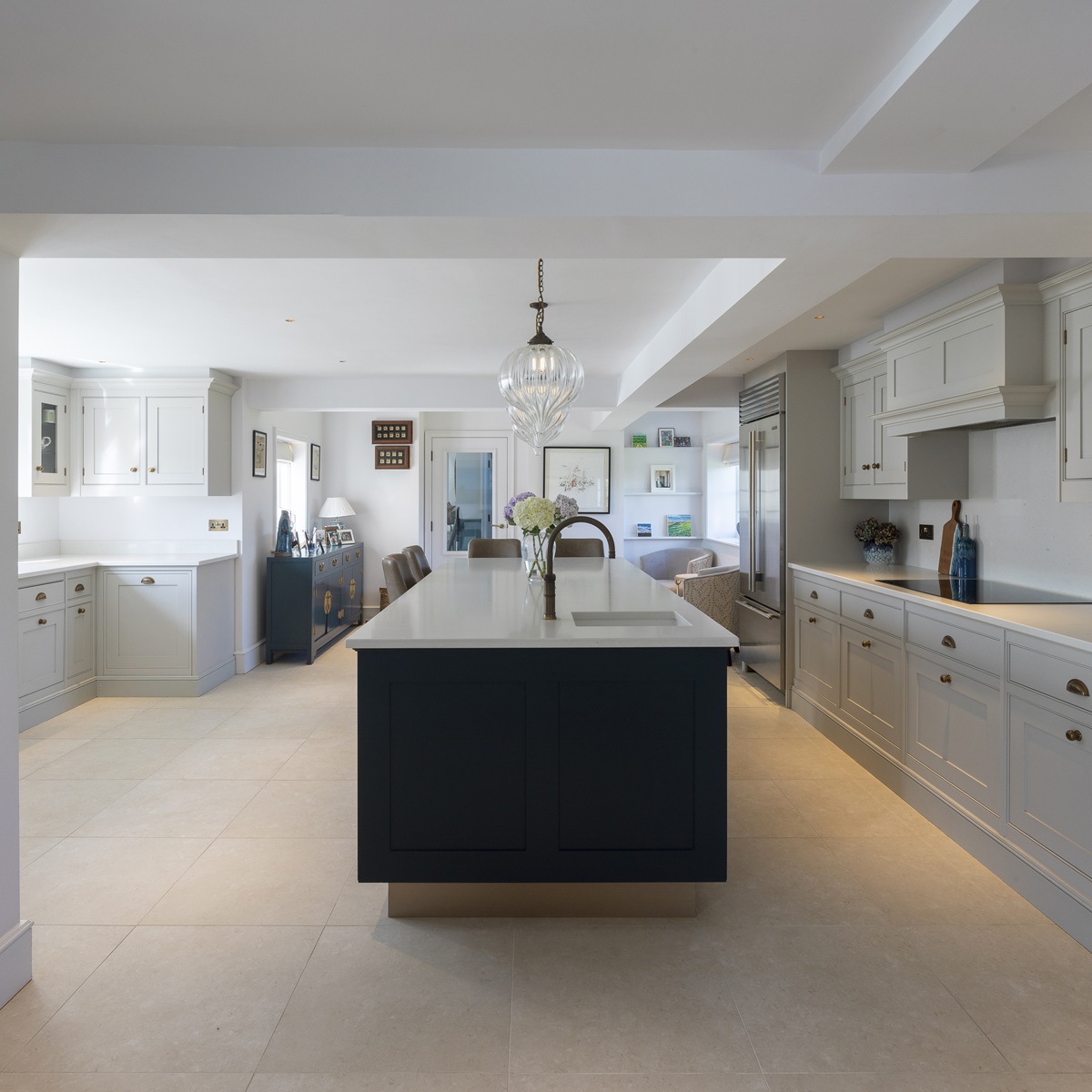
This is especially important in homes of scale and complexity, where different rooms may serve very different purposes. Spaces for entertaining, retreat, display, work, preparation, dressing and privacy each require their own character. Without coherence, that richness can become fragmented. Yet with too much repetition, it can lose its life.
The art lies in holding both: individuality and belonging.
Bespoke fitted furniture is uniquely placed to do this because it sits between architecture and interior atmosphere and make connections across the home without resorting to obvious sameness.
For Langstaff, this is part of The Architecture of Living: creating bespoke fitted furniture that gives coherence to exceptional homes without reducing their complexity or character.
A home does not need every room to say the same thing, but for every room to belong.
Book an Appointment
Get in touch today to arrange a personal design consultation in your home or an appointment to visit the Langstaff studio.
Book an appointment
Get in touch today to arrange a personal consultation in your home or an appointment to visit the Langstaff studio.
Violetta marble
Andrew Nixon
Violetta sits within a family of violet-veined Italian marbles, most closely associated with the historic marble country of northern Tuscany. This is the landscape of Carrara, Seravezza and the Apuan Alps, where marble has been quarried for centuries and where pale calcite stone is often animated by remarkable mineral colour.
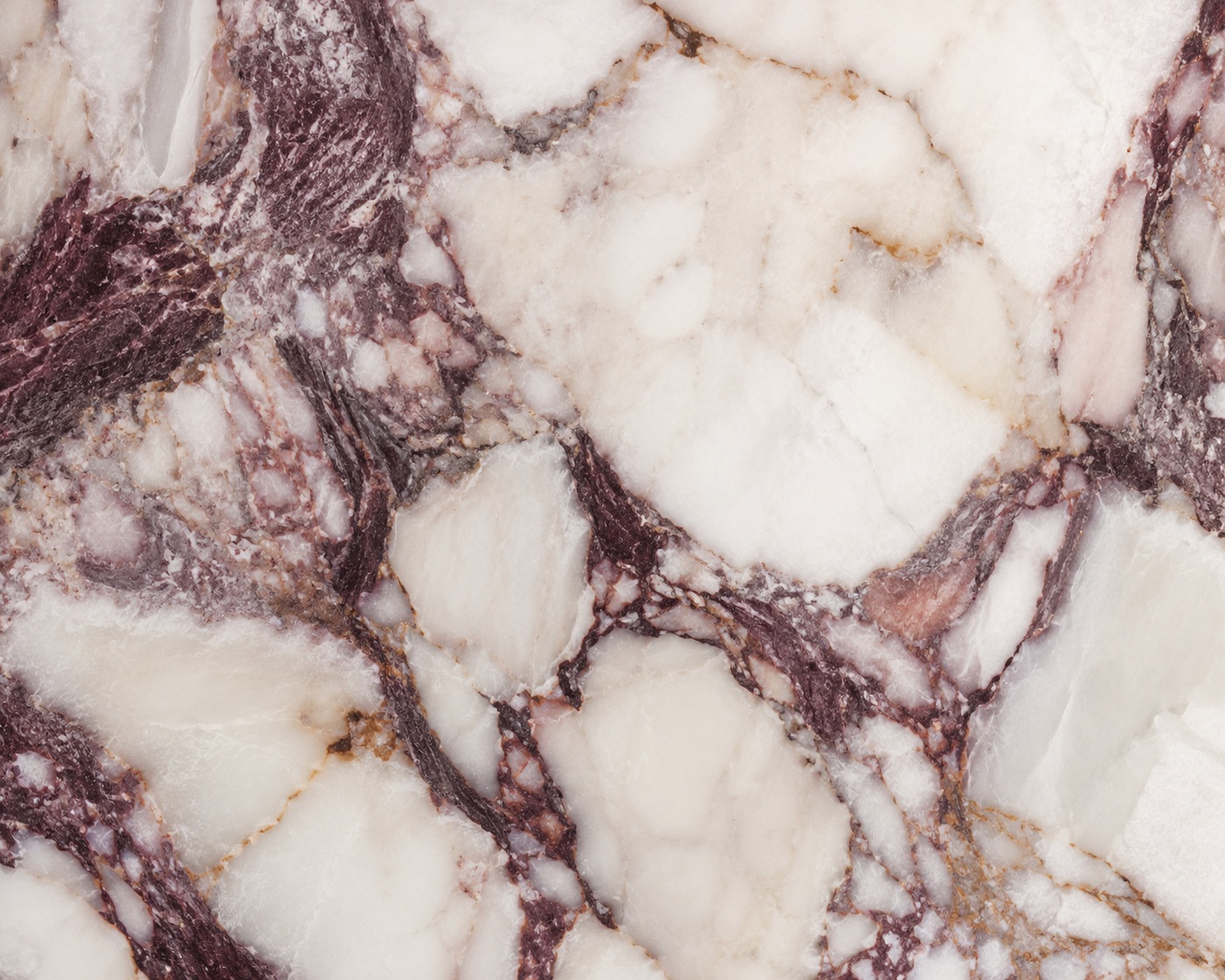
Geologically, marble begins as limestone, transformed by heat, pressure and time until its structure recrystallises. In Violetta, that process produces a pale white, cream or lilac ground crossed with veins of violet, plum, burgundy and warm brown. In some slabs, the pattern is bold and broken; in others, it is softer and more diffused, like colour moving through the stone.
Its appeal lies in the way it introduces colour without losing the authority of a natural architectural material. The violet tones are not applied or decorative. They belong to the stone itself.

This gives Violetta an unusual balance. It can feel expressive, even theatrical, but still grounded. In a polished finish, the veining becomes sharper and more luminous. In a honed finish, the colour sits more quietly within the surface, giving the marble a softer, more tactile quality.
It works particularly well where the stone can be properly framed: across a vanity, bar, splashback, fireplace, table or piece of fitted furniture. Set against timber, aged brass, plaster or painted joinery, the purple veining can feel warm, layered and unexpectedly subtle.
That is the pleasure of a marble like Violetta. No two slabs are the same, and no two interiors need ask the same thing of it. In the right setting, it offers something both highly individual and entirely natural.
Book an Appointment
Get in touch today to arrange a personal design consultation in your home or an appointment to visit the Langstaff studio.
Book an appointment
Get in touch today to arrange a personal consultation in your home or an appointment to visit the Langstaff studio.