

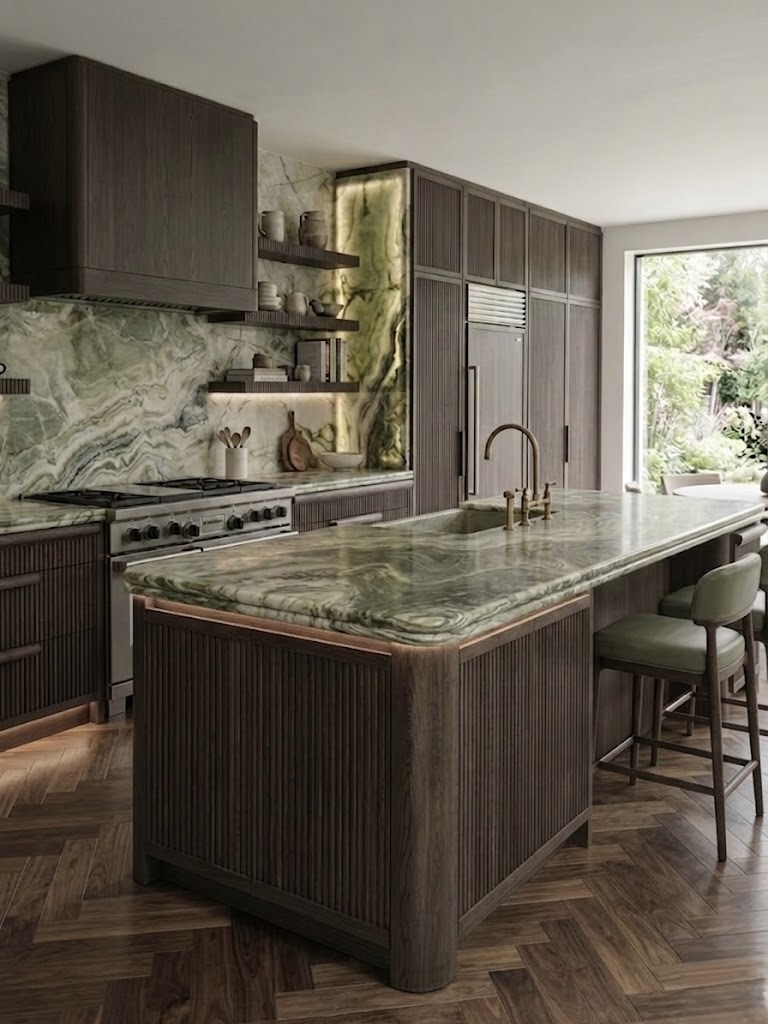
Calacatta Verde is about movement within a tonal range rather than strong contrasts. Greens shift from pale mineral washes to deeper, moss-like veins, often within the same surface.
There is a softness to it — a sense that the pattern has emerged naturally from within, rather than been imposed. In the Elements: Calacatta Verde marble piece, we noted its fluid, almost painterly quality. Here, that movement is allowed to run uninterrupted across worktops, walls and interiors.
Smoked oak meets it on similar terms. Deepened in tone, but still open enough to reveal grain, it carries the same sense of variation: nothing flat or overly controlled. The two materials sit comfortably together in alignment.
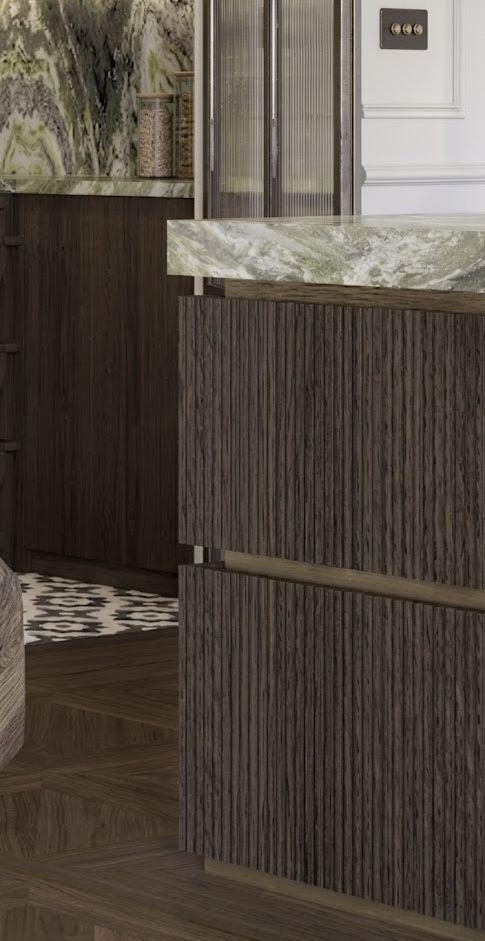
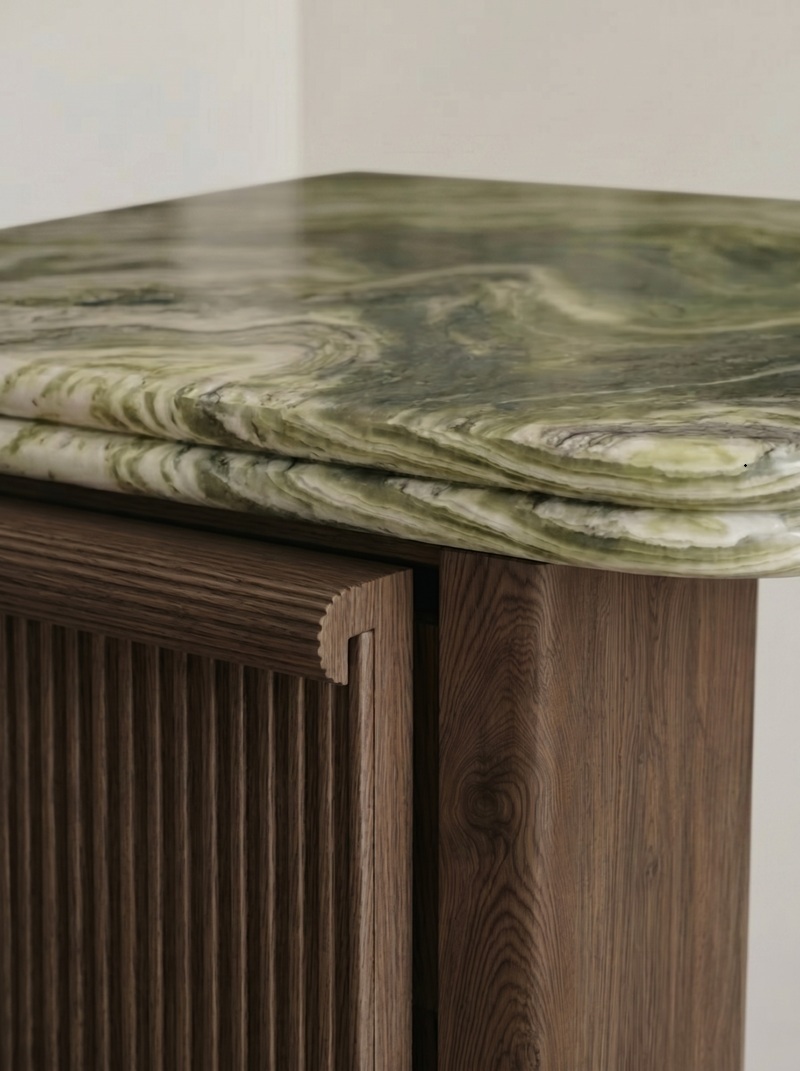
In this kitchen, edges are softened: the island reads as a single, continuous form, with the marble wrapping and turning without interruption. The reeded timber beneath introduces rhythm, but doesn’t distract or pull the focus away from the marble. It sits just behind the stone, providing a sense of structure but without feeling restrictive.
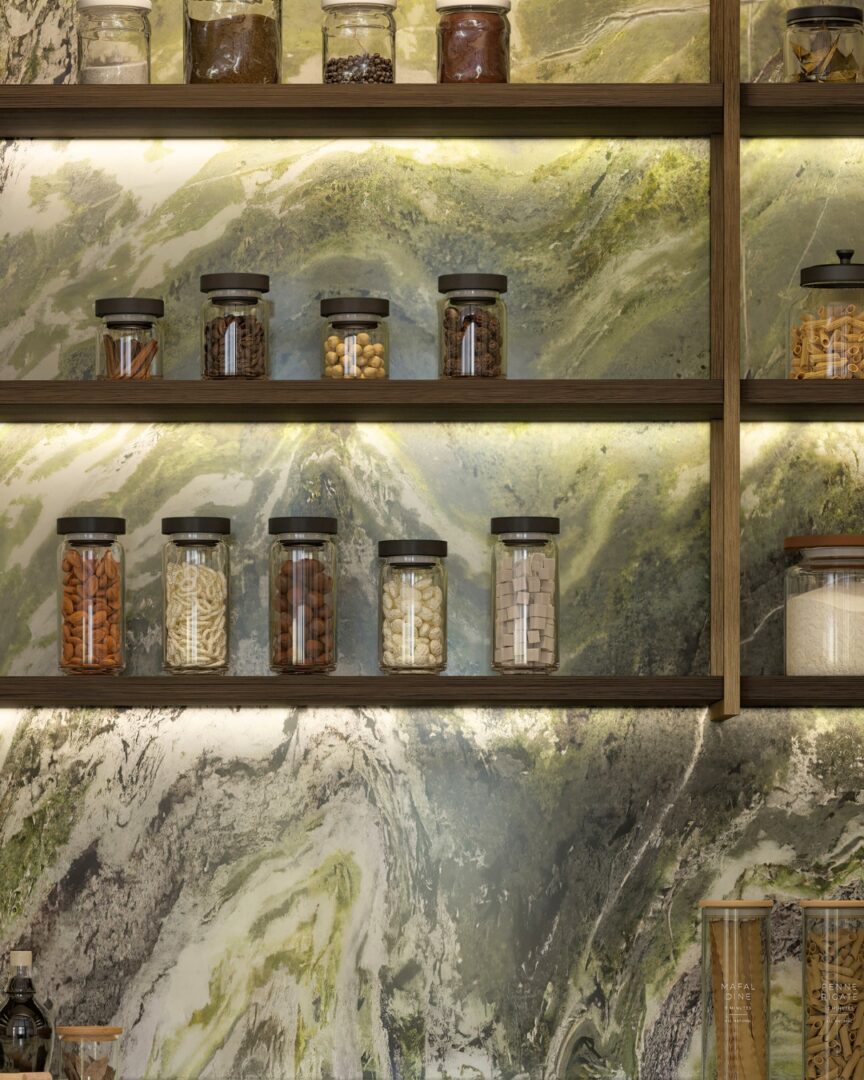
The interiors are a carefully considered combination of timber shelving, light and stone. The larder is lined entirely in Calacatta Verde, so the marble is no longer a backdrop but something that surrounds and encloses the space.
The same applies in the bar — the material extending into the depth of the room, carrying that tonal movement through.
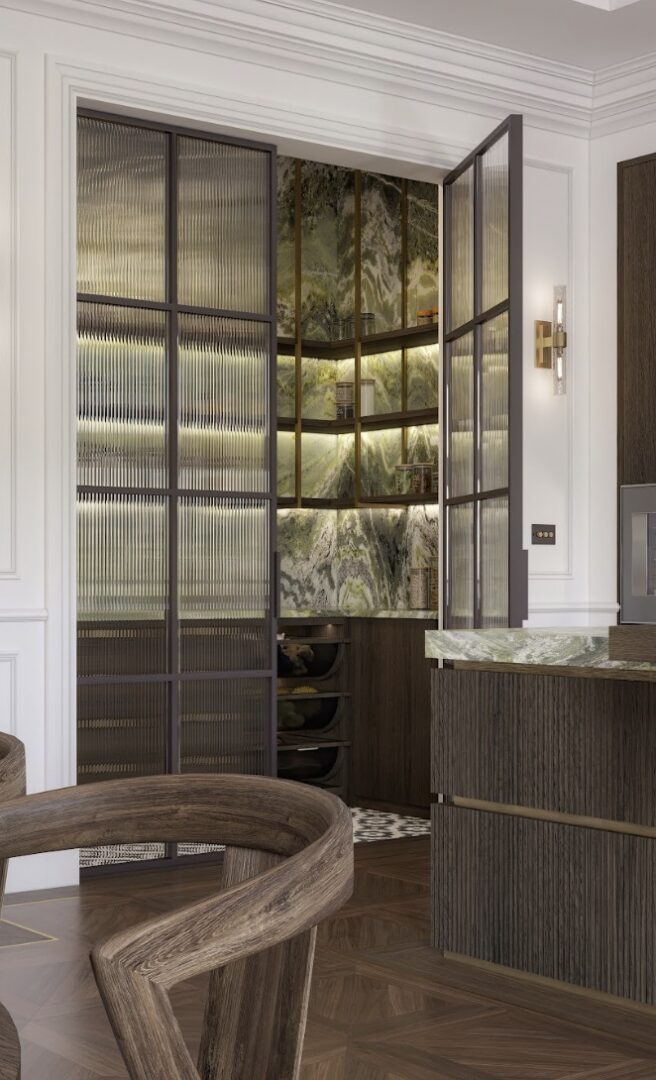
A sense of continuity runs through everything. The island surface becomes an interior; the material carries across scales and functions, a consistent language of tone, texture and depth. Calacatta Verde brings fluidity and variation; smoked oak introduces structure, warmth, and restraint.
Together, they create a space that feels cohesive and immersive.
Read more: Elements: Calacatta Verde marble