

Material Intelligence
Materials do more than finish a room. They alter its atmosphere, its weight, its light, and the way it feels to inhabit.
We first encounter materials sensually rather than intellectually. In other words, before we know what something is called, or anything about its science or physical structure, it evokes a feeling.
Stone, for example, has a sense of weight and age. Timber brings warmth, while metal brings an edge. Glass can convey lightness and space, while lacquer has depth and richness.
Long before these materials are understood as choices on a schedule or samples on a table, they create an instinctive, tactile response.
This is the value of material intelligence.
In an exceptional home, materials are not chosen merely for beauty, but for what they bring to the architecture of a room: atmosphere, balance, a sense of permanence or delicacy, and the relationship with light, shadow, scale and touch.
In a kitchen or bar, a marble surface can become the gravitational centre of the space, giving the room a kind of geological authority. Timber, by contrast, can soften architecture, bringing a connection to nature into cabinetry, wall panelling or a dressing room interior. Metal can sharpen a composition, introducing a line of contrast or a note of cool precision. Glass can reveal, reflect or, used well, disappear completely. Lacquered surfaces can hold colour in a way that feels almost liquid, changing with the light as the day moves.
The intelligence lies in understanding what a material does. Although pale and dark timbers might both bring natural warmth, the effect on the senses is entirely different: one might feel calm and expansive, the other intimate, almost enveloping. Similar contrasts and contradictions apply to different metals, such as brass and bronze; and marbles vary enormously in their feel and effect.
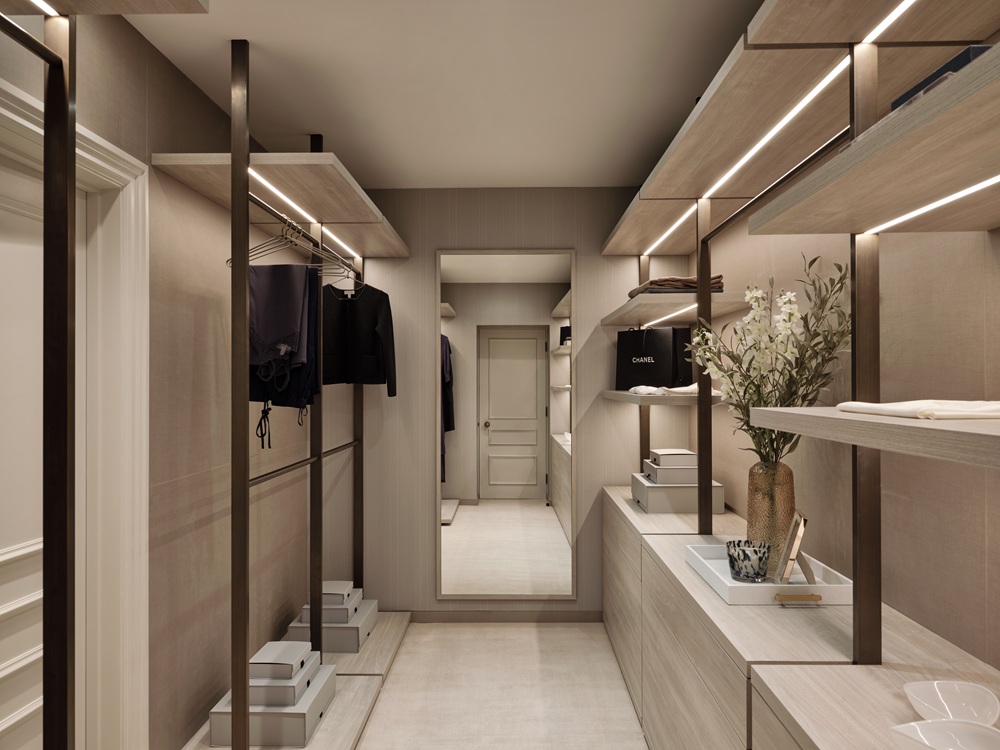
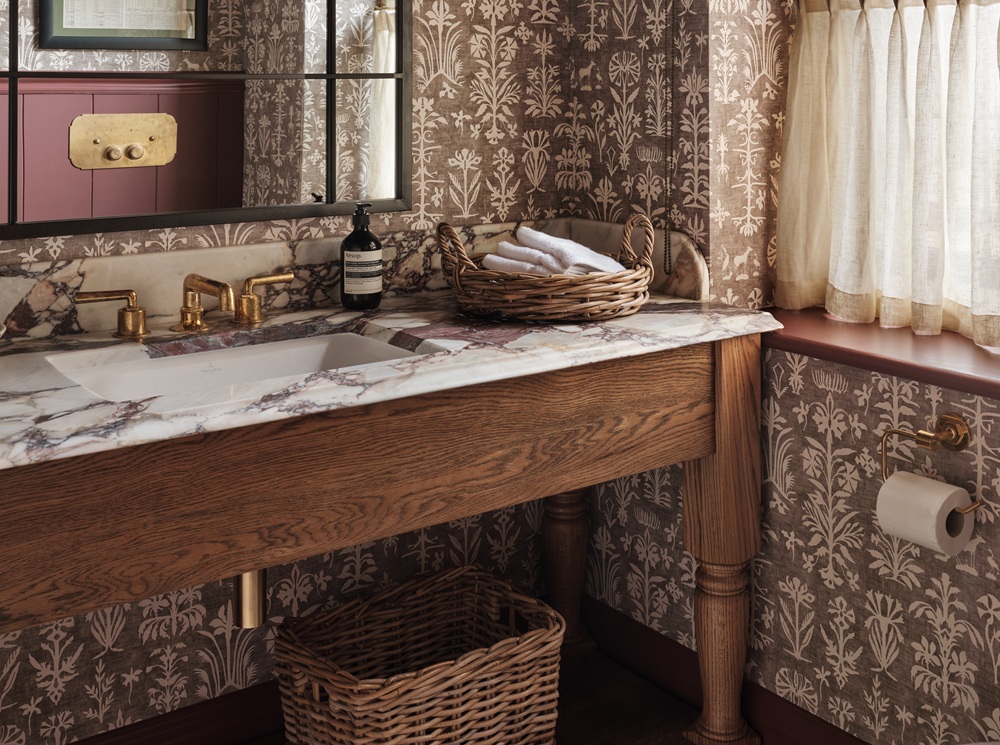
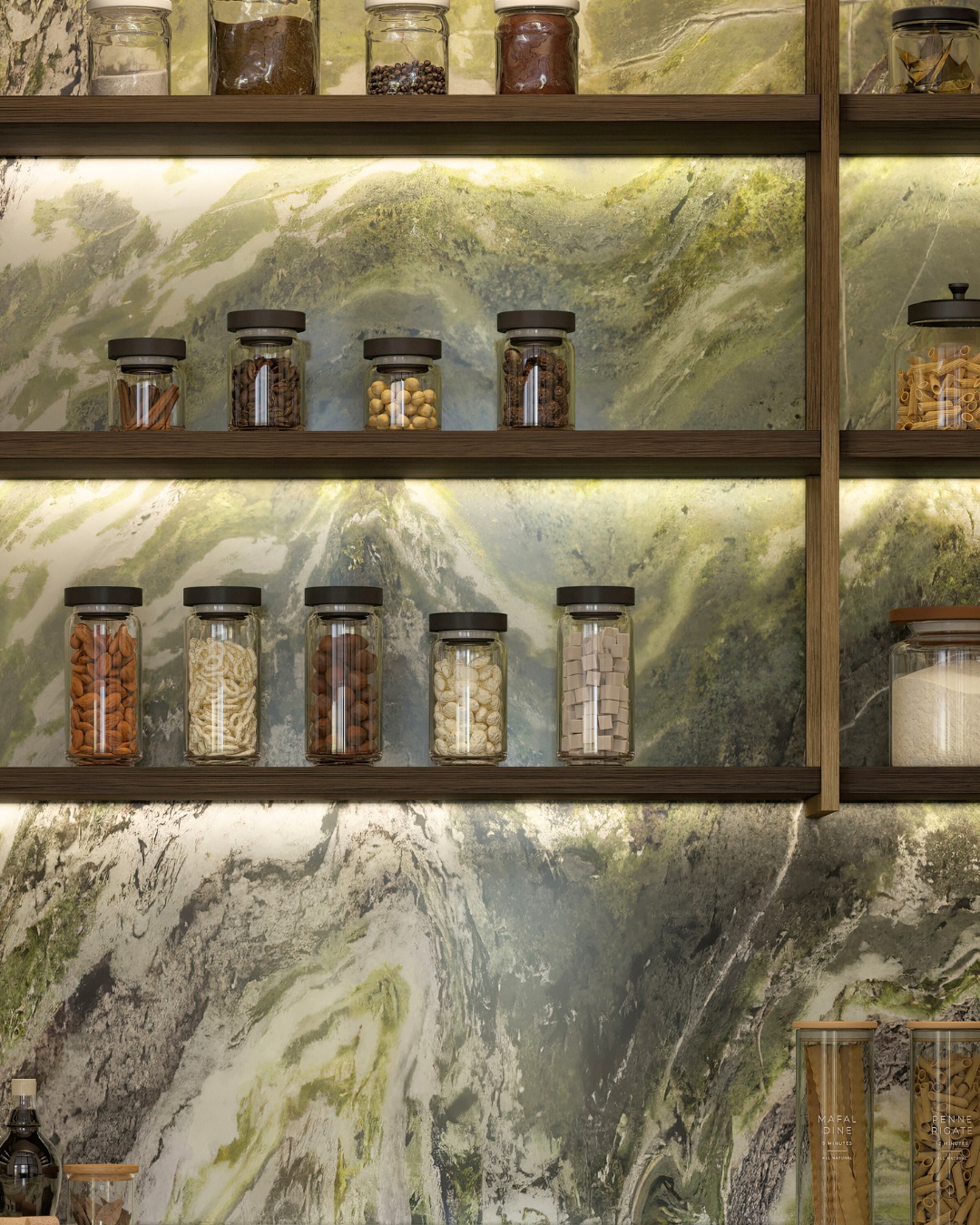
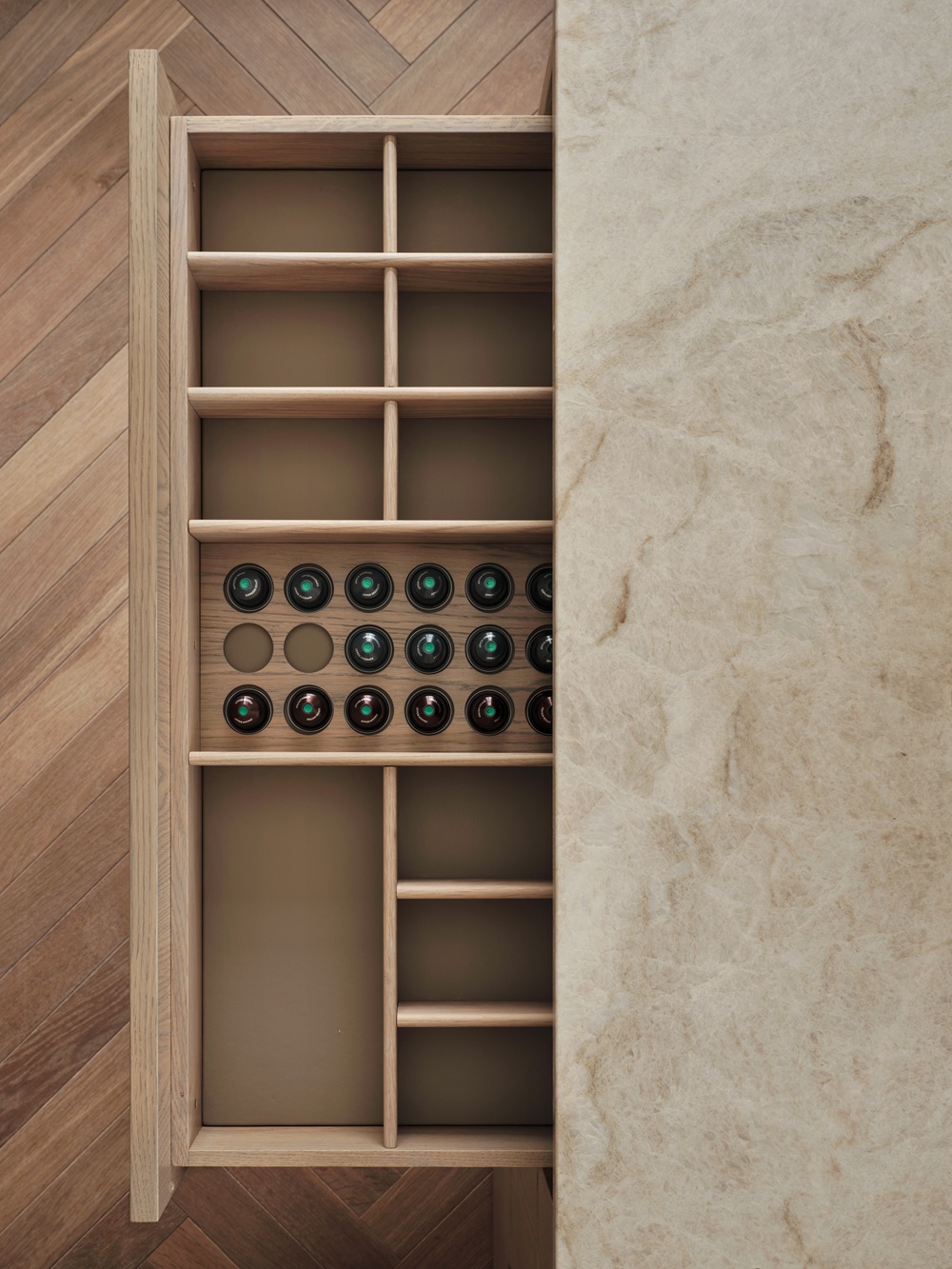
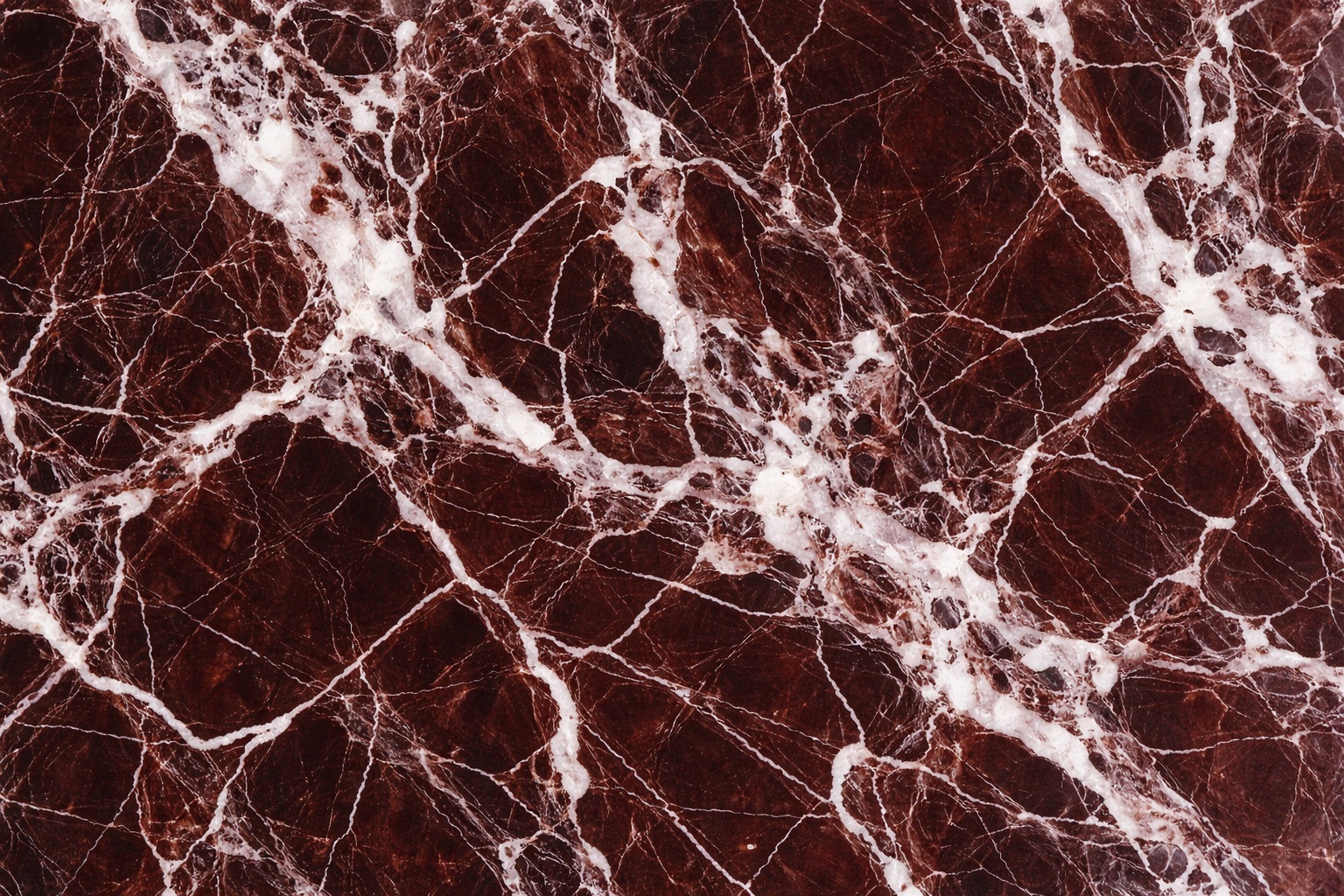

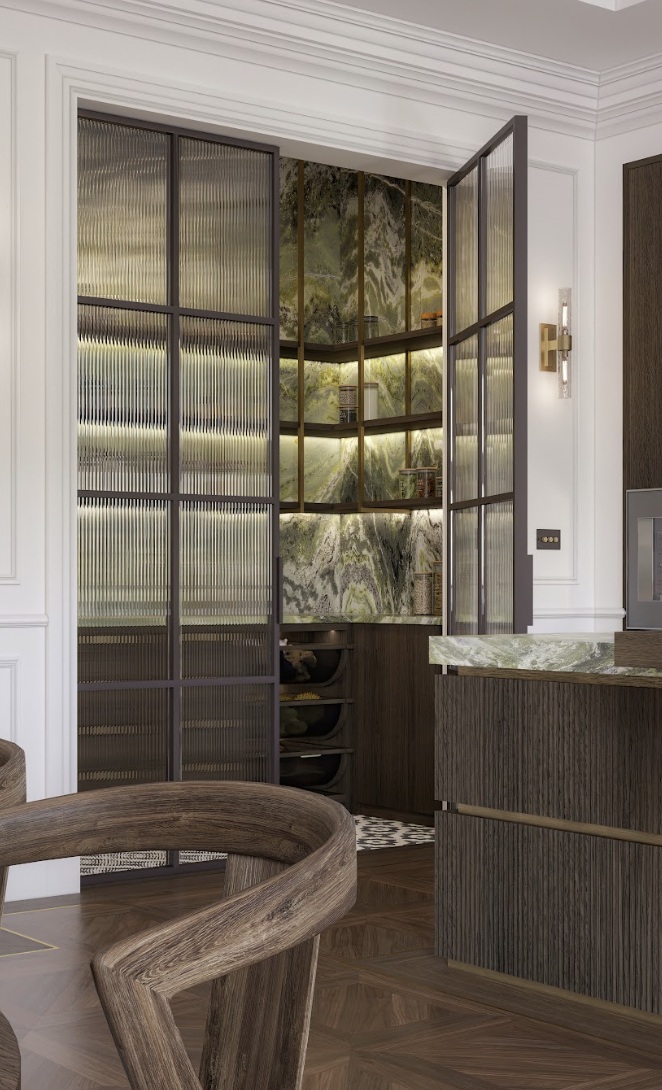

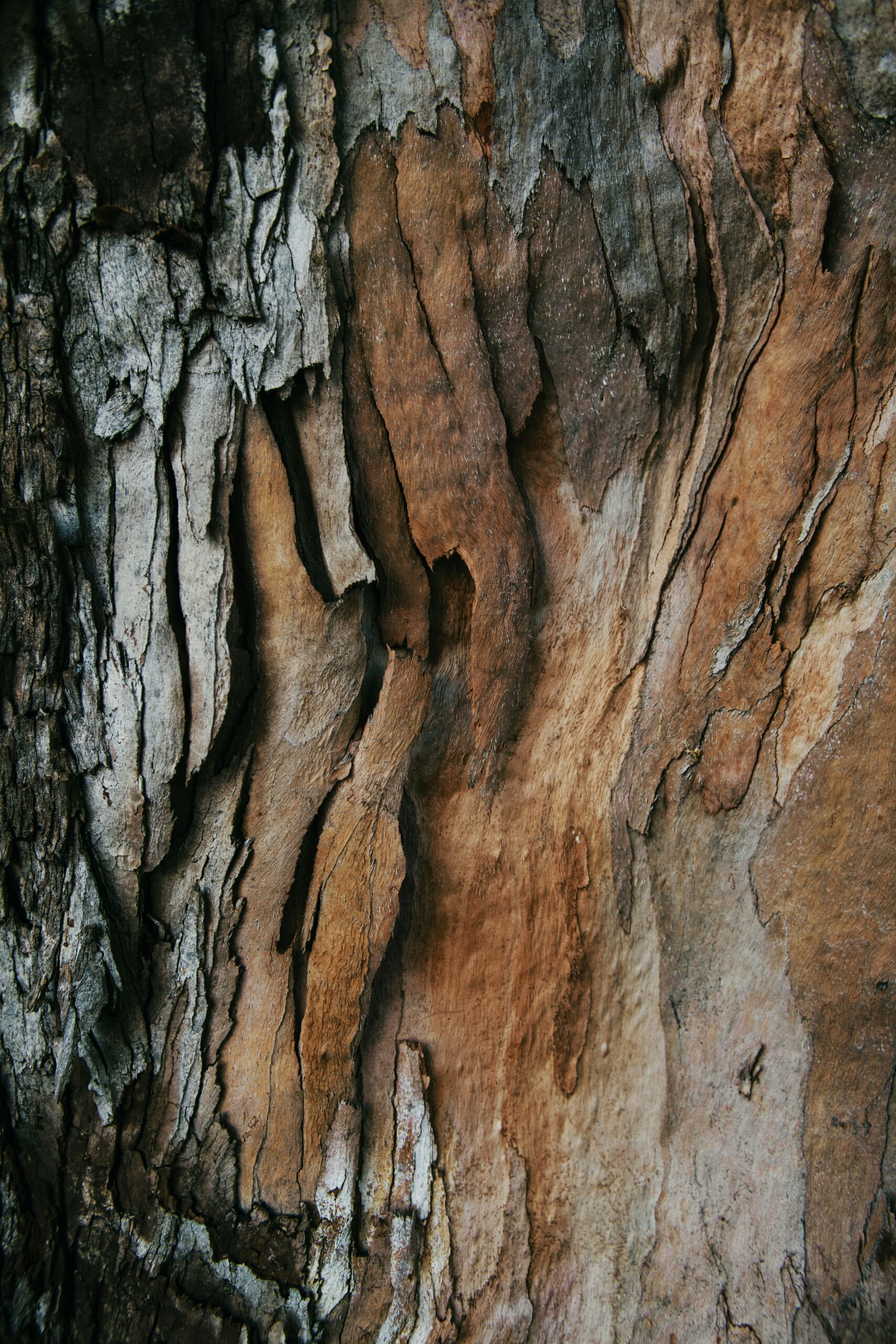
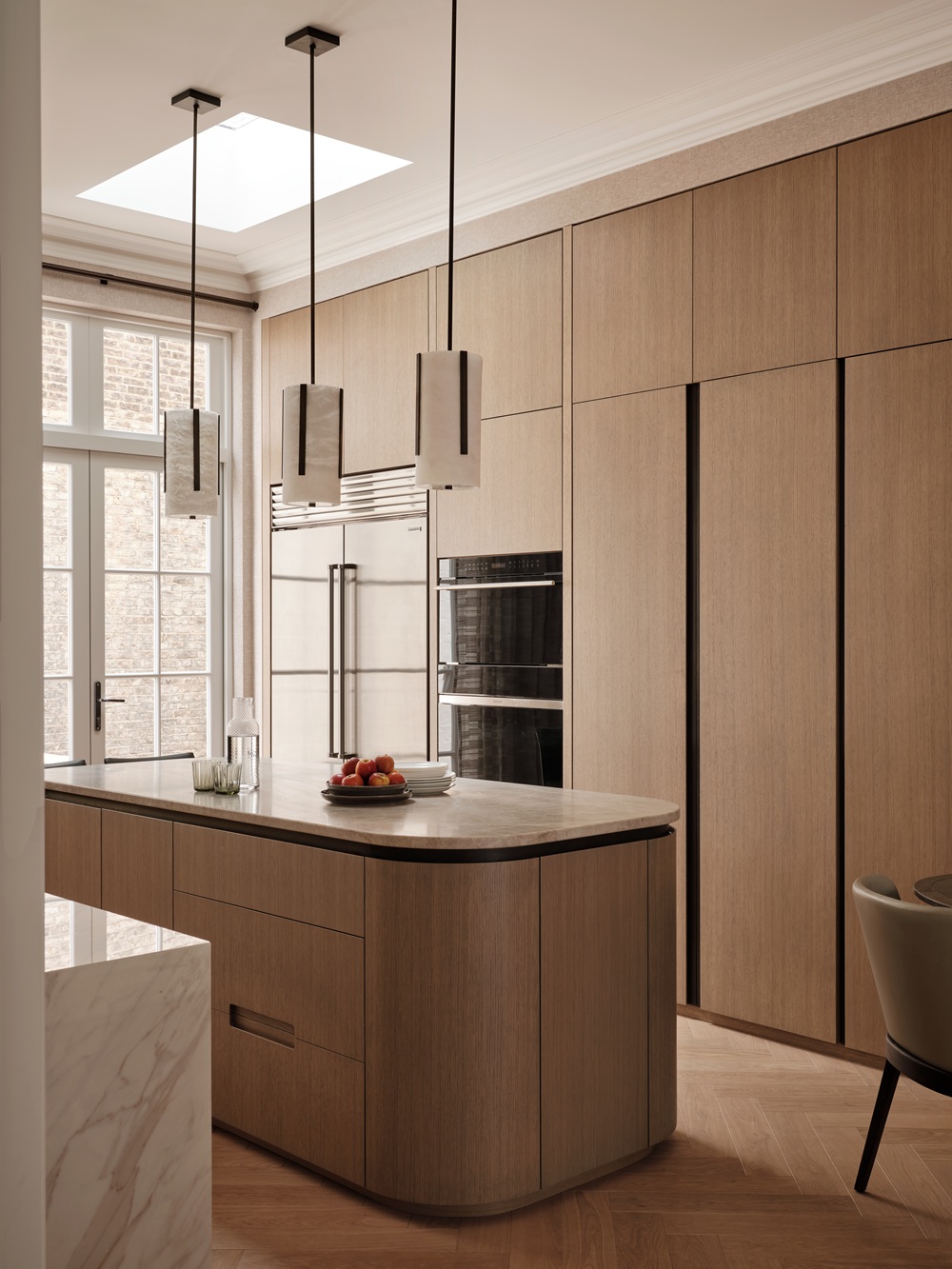
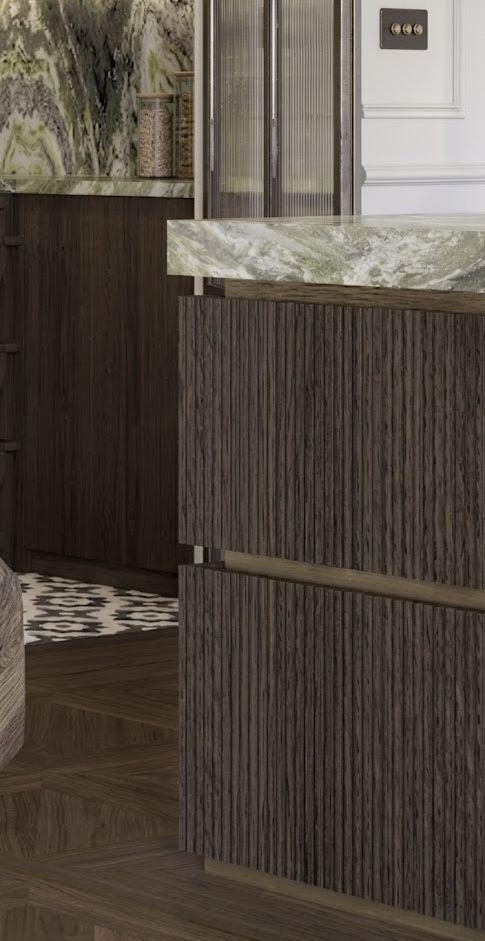
Once it enters a room, no material is neutral, because it changes the atmosphere around it.
This is particularly important in whole-home design, where materials must carry meaning from one space to another without becoming repetitive. For instance, a stone introduced with drama in a kitchen may return more discreetly in a bar or vanity.
Material intelligence also means knowing when to let a material lead, and when to let it recede. Not every surface can be the principal surface. The most refined interiors are often those in which each material understands its role in the complete composition.
Finally, there is also the question of the building itself. Materials do not exist in isolation from architecture: they meet walls, floors, cornices, beams, views and natural light. In a period property, material intelligence may mean allowing natural materials to sit comfortably alongside irregularity and inherited character; while in a contemporary home, it may mean bringing a layer of tactility to a strong architectural vision.
Material intelligence is the art of understanding how materials behave: visually, physically, architecturally, emotionally.
For Langstaff, this is central to The Architecture of Living. A remarkable home is shaped by plan, proportion and craftsmanship, but equally by the materials through which its atmosphere is made. The right materials give architecture its presence, and its soul.
Book an Appointment
Get in touch today to arrange a personal design consultation in your home or an appointment to visit the Langstaff studio.
Book an appointment
Get in touch today to arrange a personal consultation in your home or an appointment to visit the Langstaff studio.
