

Why Restraint Is One of the Hardest Things to Design
The most accomplished interiors often appear effortless. Achieving that sense of calm, however, depends on knowing exactly what the room can carry – and having the confidence to leave space around it.
Restraint is one of those qualities that is immediately apparent in a beautiful interior, even if it is difficult to define.
There is a sense of calm to the room, and the architecture can be read clearly. Materials have room to make their presence felt, and individual pieces seem to belong exactly where they are.
Creating that apparent simplicity takes considerable judgement.
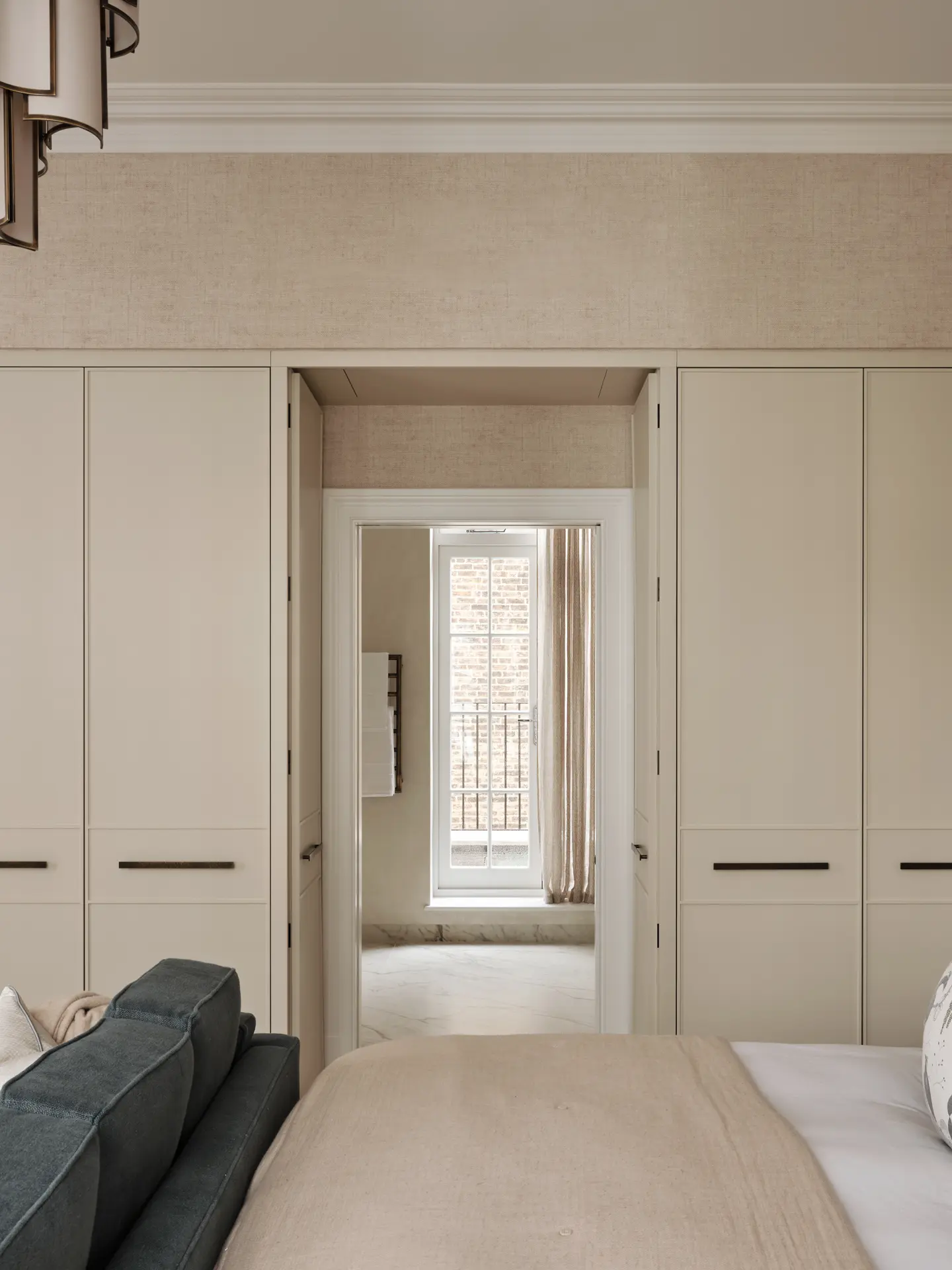
At Langstaff, the starting point is always the room itself: its scale, proportions, architectural details, light and the way people move through it. A wall does not automatically require cabinetry simply because there is space available for it. Sometimes the strongest contribution might be panelling, a piece of stone, artwork or simply the wall itself.
The difficult part is knowing when to stop.
Giving the architecture room
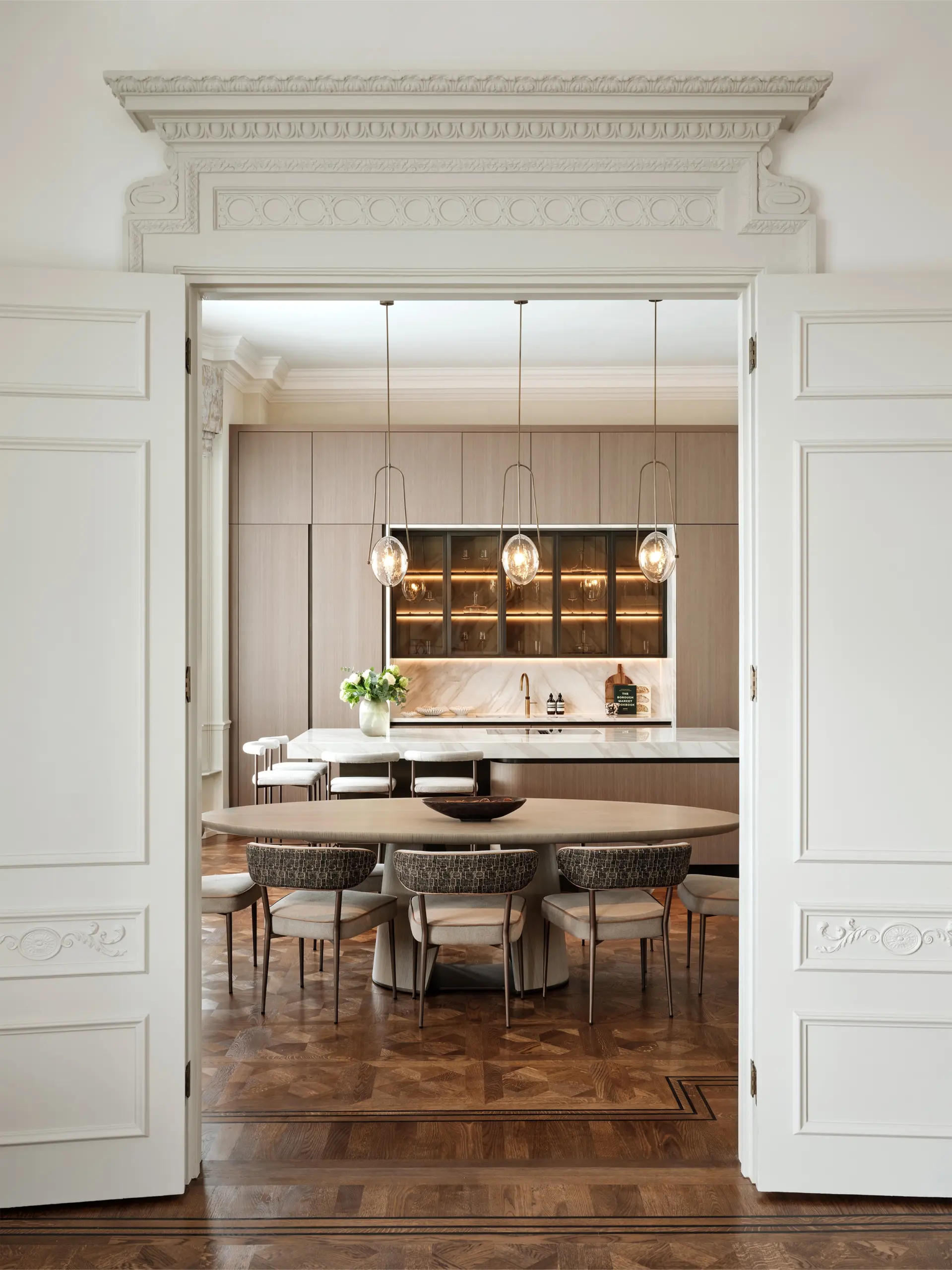
On a recent project in an early nineteenth-century house in Surrey, the kitchen had exceptionally generous proportions, with ceilings around 3.5 metres high, deep coving and beautifully detailed doors, architraves and skirting.
The client initially assumed that the new kitchen would need considerably more cabinetry. Her existing cupboards were overflowing, and the natural response was to imagine storage running around the room.
Instead, the design took its cue from the architecture.
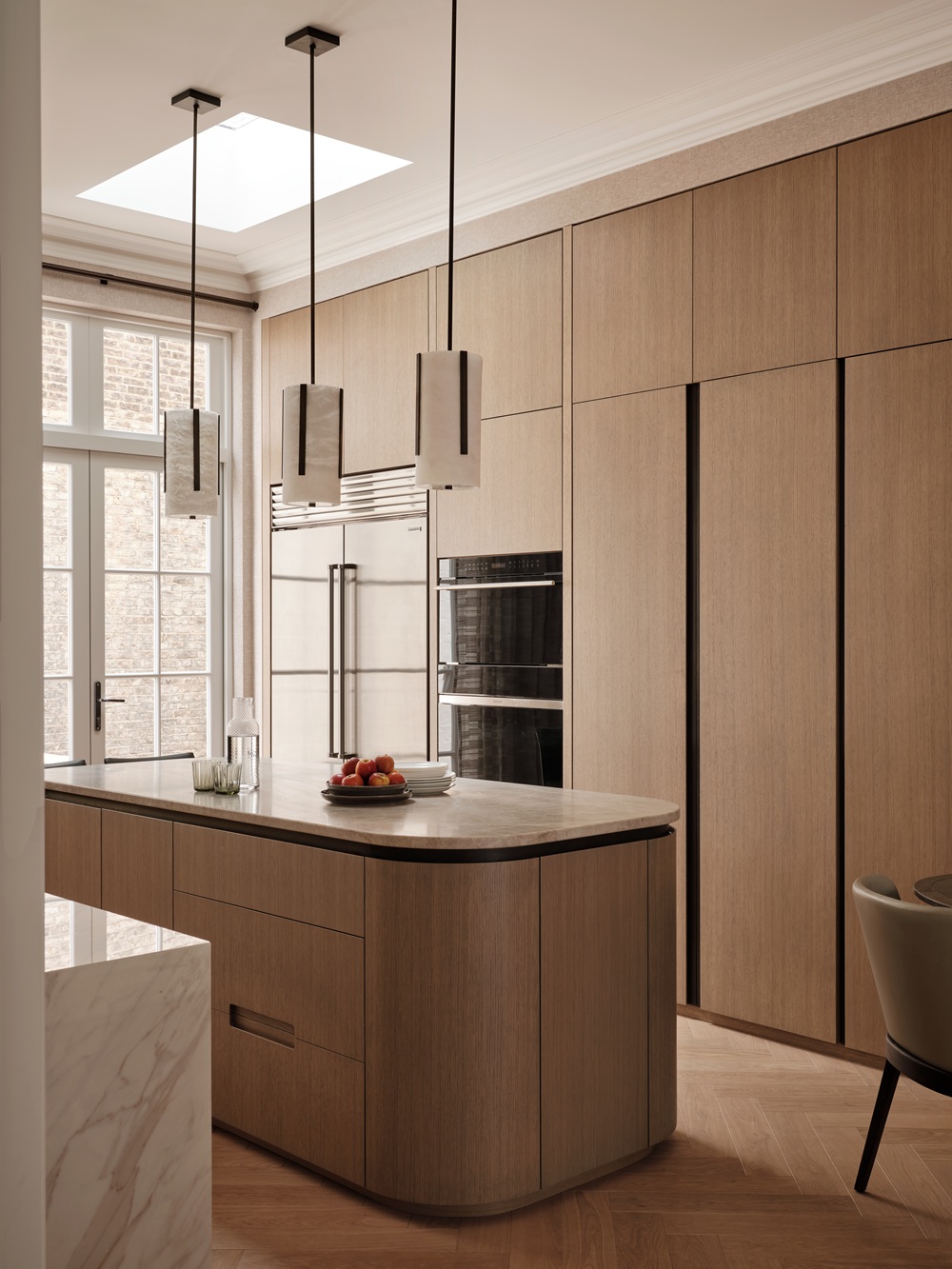
A large central island was combined with a freestanding crockery cupboard food larder, while areas that might conventionally have been occupied by wall cupboards were left open, with marble splashbacks and integrated mirror helping to reflect light and emphasise the scale of the room.
The resulting kitchen has the feeling of furniture placed within a fine period interior, rather than cabinetry imposed upon it. Just as importantly, careful consideration of what actually needed to be stored meant that the practical requirements could be met without overwhelming the space.
This is often where restraint begins: understanding what the room genuinely needs.


Letting materials do more
A restrained design still needs depth and character. Much of that can come from the materials themselves. We sometimes say that materials have an emotional life.
Natural materials reward simplicity because their variation becomes part of the composition. Marble may be honed, polished or leathered; walnut can move from deep, almost chocolate stains to much paler washed finishes. Aged brass and bronze develop character over time, while fluted or bronze mirror introduce light and movement without adding visual clutter.
Used with care, these materials create a sense of richness that is perceived almost subconsciously. This is part of material intelligence.
This also allows individual choices to carry more weight. A beautifully selected slab of stone does not necessarily need another decorative idea beside it. An exceptional timber veneer can become the defining element of an entire elevation.
Restraint gives these materials room to be seen.
The discipline of simplicity
Clients naturally arrive with ideas gathered from many places, and one of the designer’s roles is to decide which of those ideas belong together.
Appliances are a good example. It is easy to specify several ovens, a steam oven, a coffee machine and additional refrigeration, but every appliance brings cabinetry and visual weight with it. Islands can grow beyond comfortable proportions, while an accumulation of individually beautiful materials can begin to compete with one another.
Full-size material samples, setting-out drawings and even marking the footprint of cabinetry on the floor can be invaluable. They allow the scale and composition of a room to be experienced before anything is made.
And the simpler the final design appears, the more precise its execution must become.
A contemporary run of stained timber doors, for example, leaves almost nowhere for inconsistencies to hide. Timber takes stain differently according to the board, its grain and even where it was cut from the tree. Achieving a beautifully consistent elevation begins with selecting and matching the timber long before finishing starts.
The result may look extraordinarily simple, but that simplicity has been earned.
Perhaps that is the real value of restraint. The eye is never distracted from the things that matter: the proportions of the room, the quality of the materials and the precision with which everything has been brought together.
When those elements are right, very little else is required.
Book an Appointment
Get in touch today to arrange a personal design consultation in your home or an appointment to visit the Langstaff studio.
Book an appointment
Get in touch today to arrange a personal consultation in your home or an appointment to visit the Langstaff studio.
