

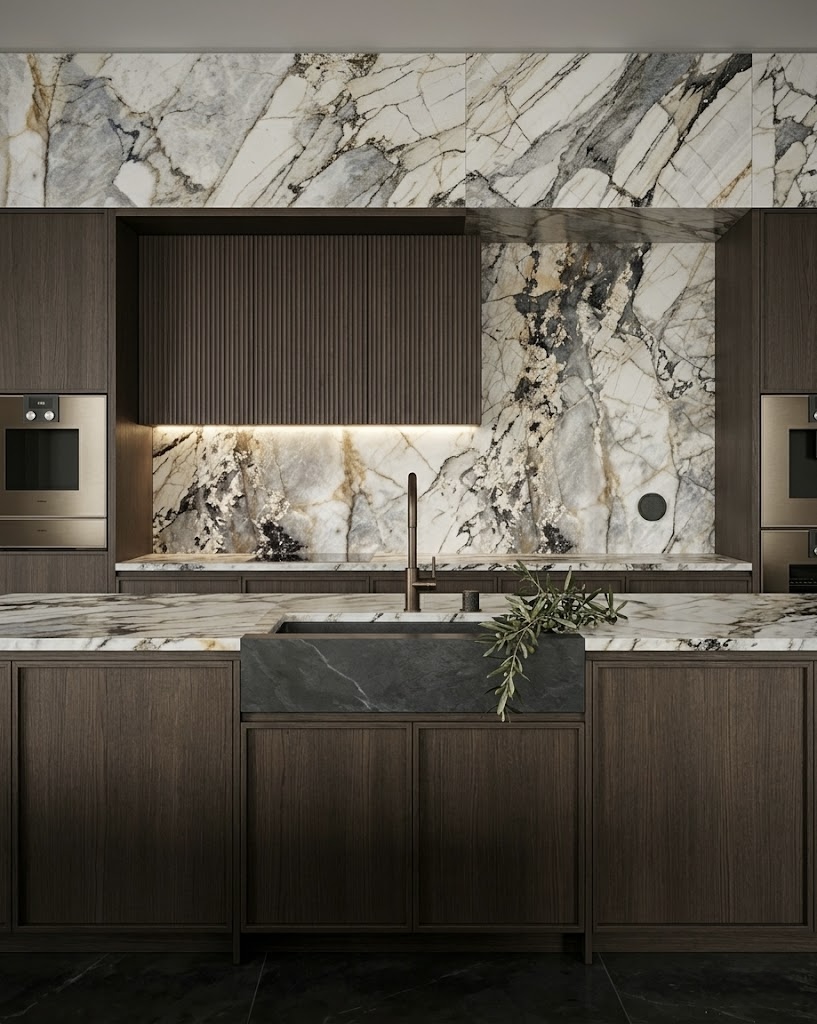
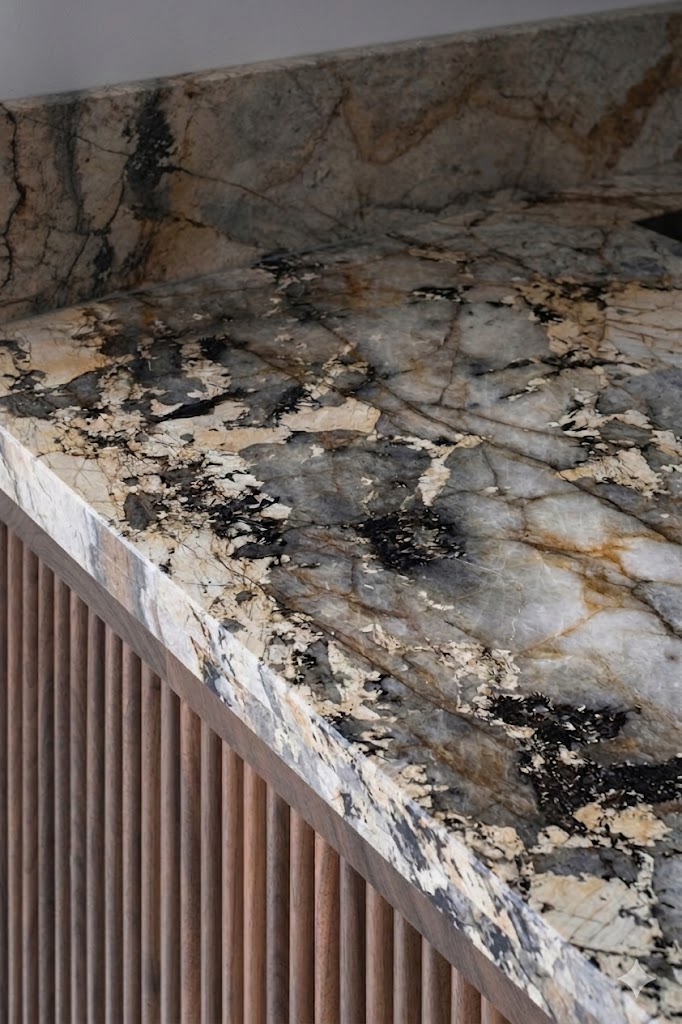
Patagonia marble sits somewhere between surface and landscape. Quartz, mineral, shadow and light are layered into a kind of geological collage. In the Elements: Patagonia marble piece, we touched on its ability to catch and carry light. In a well-designed kitchen, that quality is allowed to spread across planes, edges and junctions.
The vertical timber reeding introduces both rhythm and an architectural order. It takes the wildness of the stone and gives it a framework: not to contain it, exactly, but to set up a contrast. In terms of texture, the eye moves differently across each surface — gliding across the timber, then catching and pausing in the stone.
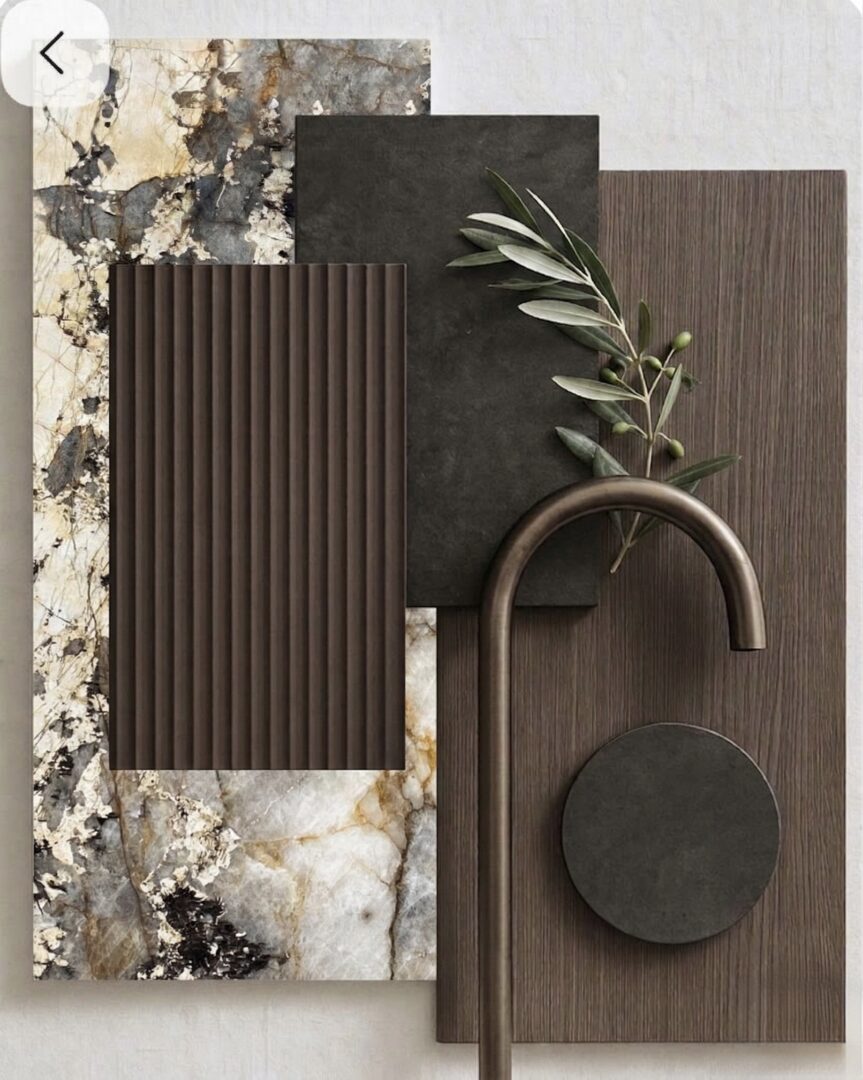
Tone plays its part too. The timber sits in that darker, smoked register, with enough depth to lend the composition a certain density, but still open enough to reveal grain and variation. Nothing is flat; nothing is overly resolved. The metalwork follows suit — warm, muted, closer to bronze than brass.
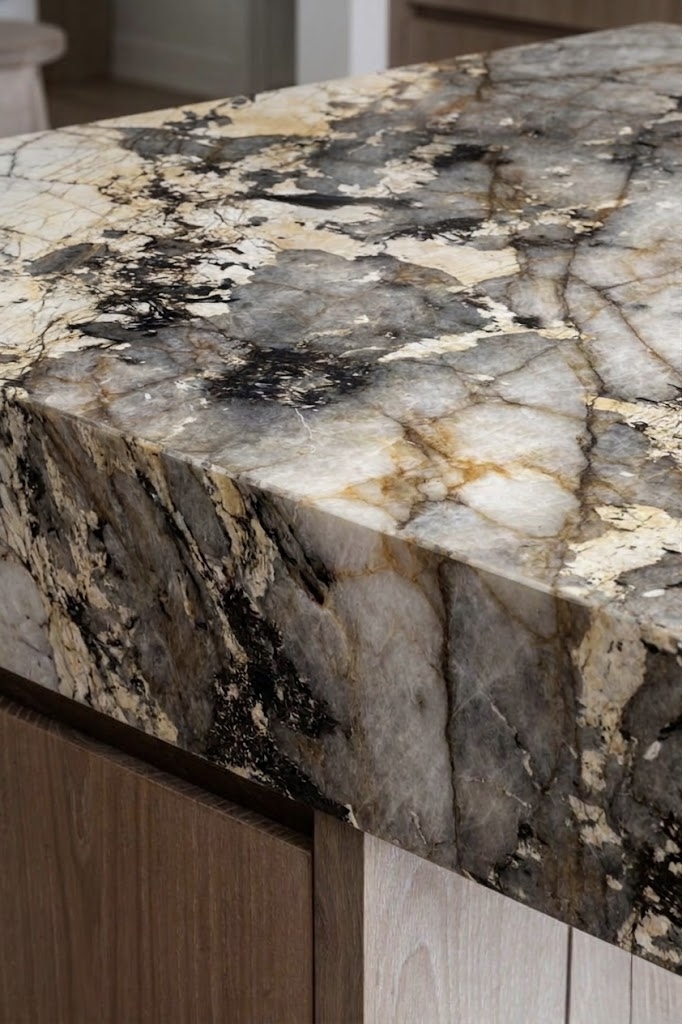
A substantial Patagonia worktop reads as mass rather than surface: something cut from a larger whole, giving weight and presence. It shifts Patagonia from something applied to something constructed.
Behind it, the joinery is structured and precise, with everything in its place: a counterpoint to the movement in the stone.
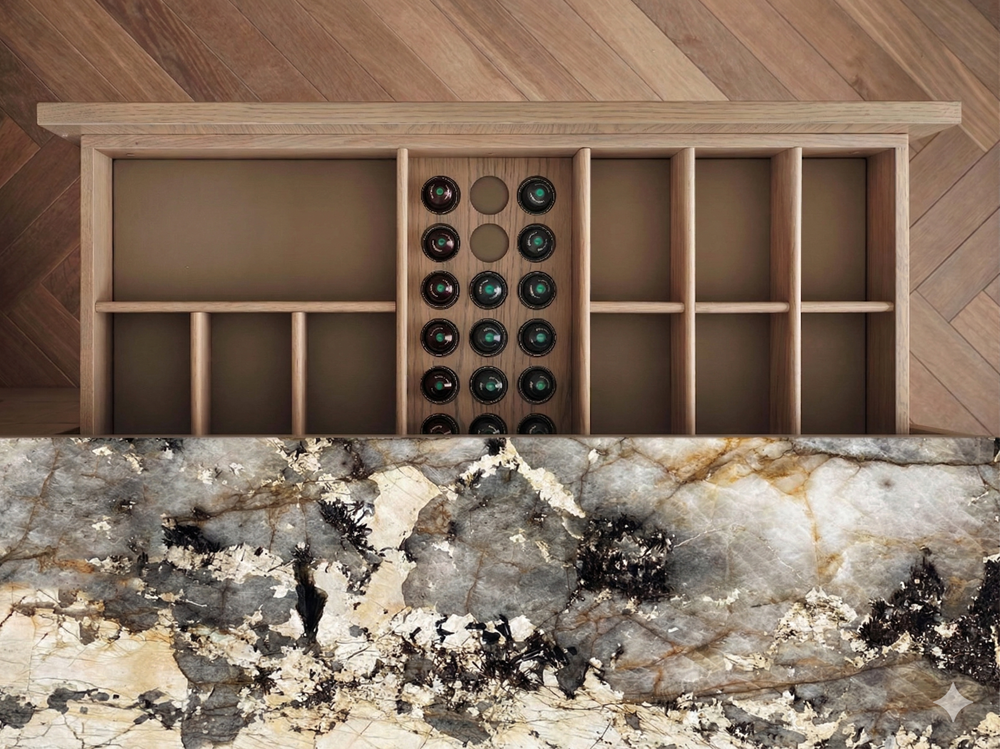
There is no single focal point here. Instead, a balance of movement and control: Patagonia brings variation, light, unpredictability; reeded timber introduces rhythm, repetition and order.
Held together, they create something composed, but full of life.
Read more: Elements: Patagonia marble